
home · Articles
Spray Painting and Upcycling Furniture
Spray Painting and Upcycling Furniture
 Transact Shopping
HOME · GLOBAL
Spray Painting and Upcycling Furniture
Preparation, primer, technique, safety and what goes wrong
Spray paint gives a smoother finish than a brush and is far less forgiving of poor preparation. Almost every failed job comes from skipping the first step.
Preparation is most of the work
Clean thoroughly to remove grease, polish and old furniture wax, which repels paint. Sugar soap or a degreaser, then a rinse and a full dry.
Sand lightly to key the surface. On a glossy or laminated finish, that scuffing is what gives the paint something to grip.
Fill damage, sand flush, and remove all dust with a tack cloth.
Primer is not optional
Primer bonds to the substrate and gives the topcoat something to hold. Use a primer suited to the material — metal, wood, plastic and melamine all need different ones.
Anything with tannins, such as oak or knotty pine, needs a stain-blocking primer or brown patches will bleed through.
Technique
Shake for the full time stated, usually a couple of minutes. Hold the can around 25 to 30 centimetres away and keep it moving, starting the spray before the object and releasing after it.
Several thin coats rather than one thick one. Runs are caused by too much paint in one pass and cannot be fixed without sanding back.
Respect the recoat window on the tin — either within it or after full cure, since recoating in between wrinkles the finish.
Safety
Spray outdoors or in a well-ventilated space, never in a closed room. Use a respirator rated for organic vapours rather than a dust mask, plus eye protection and gloves.
Aerosols are flammable and the vapour is heavier than air, so keep away from pilot lights, boilers and any ignition source. Never spray near a naked flame.
Colour and finish
Test on a hidden area or an offcut first, since colour on a lid rarely matches the sprayed result. Matt hides imperfections, satin is the most forgiving for furniture, gloss shows every flaw.
Buy enough for the whole job in one batch, since shades vary between production runs.
Temperature and humidity
Spray between about 10 and 25 degrees. Cold slows curing and traps moisture; damp air causes a cloudy bloom in the finish.
Avoid spraying in direct sun, which dries the surface before the paint has levelled.
Disposal
Aerosol cans must not go in general waste or be punctured, even when they feel empty, since residual propellant makes them a fire risk. Take them to a household waste site that accepts them.
Curing
Touch dry is not cured. Most finishes need days to a week before they tolerate handling, and a clear lacquer protects surfaces that get daily use.
WHERE TO BUY
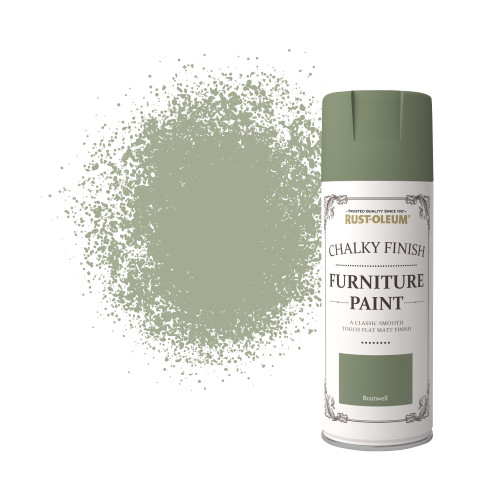
Ready to shop Rust-Oleum? Use the link below to visit the official store.
→ Shop Rust-Oleum — official site
Visit this site