other · Articles
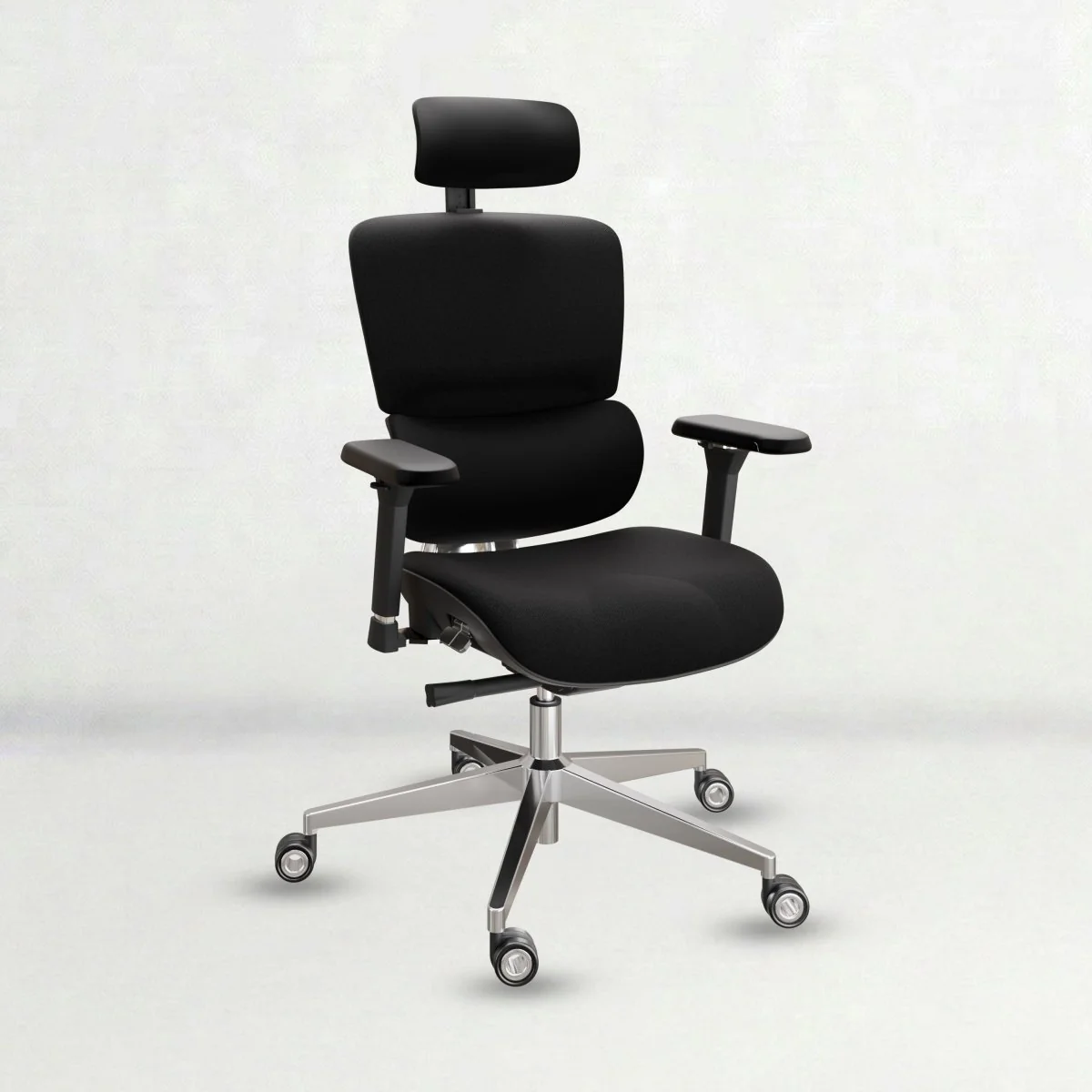
Adjusting an Office Chair Properly
Adjusting an Office Chair Properly
 Transact Shopping
BUSINESS · GLOBAL
Adjusting an Office Chair Properly
The order to set it in, the adjustments that matter, and what a chair cannot fix
Most people use an expensive chair at its factory settings, which is why it does not help.
Set the height first
Feet flat on the floor with knees at roughly ninety degrees and thighs parallel to the ground. If the desk is then too high, raise the chair further and use a footrest rather than sitting low with raised shoulders.
Elbows should sit at about ninety degrees at the keyboard with shoulders relaxed.
Then the seat depth
Two to three fingers of gap between the back of the knee and the front edge of the seat. A seat that is too deep pulls you away from the backrest, which is why people end up perching.
Then the back support
The lumbar support should sit in the curve of your lower back, not below or above it. Most chairs adjust for height as well as depth.
Set the recline tension to your body weight so you can lean back with light effort, and use the recline rather than locking it upright — movement matters more than one perfect posture.
Armrests
They should support the forearms without lifting the shoulders, and should not stop the chair reaching the desk. If they do either, lower them or remove them.
What a chair cannot fix
A screen at the wrong height, a laptop used on its own, or eight hours without moving. Getting up every half hour does more than any adjustment.
Desks and screens
Desk height matters as much as the chair. If it cannot be adjusted, set the chair correctly and use a footrest, and raise the screen so the top is at or just below eye level.
A laptop needs a stand and a separate keyboard to achieve any of that.
Buying a chair
Check the adjustments it actually has rather than the description, try it if you can, and check the returns policy and the warranty on the gas lift and the mechanism.
Moving through the day
No chair fixes eight hours in one position. Stand for calls, get up every half hour, and vary posture — leaning back, sitting forward and standing are all fine as long as you change.
Short frequent breaks do more for back and neck discomfort than any single adjustment.
Standing desks
Alternating sitting and standing suits most people better than either alone. Start with short standing periods and build up, and use an anti-fatigue mat.
Set the chair again after anyone else has used it.
Check the gas lift and castors annually, since both wear and are replaceable.
Persistent pain
Worth a physiotherapist rather than another chair.
WHERE TO BUY
Ready to shop CLOUVOU DE? Use the link below to visit the official store.
→ Shop CLOUVOU DE — official site
Visit this site