
other · Articles
Thinning Hair: What Helps and What Does Not
Thinning Hair: What Helps and What Does Not
 Transact Shopping
HEALTH · GLOBAL
Thinning Hair: What Helps and What Does Not
The common causes, treatments with evidence, shampoos and when to see a doctor
Hair thinning has several distinct causes with different treatments, which is why products bought without a diagnosis so often do nothing.
The common causes
Pattern hair loss, which is genetic and gradual, affecting the crown and temples in men and the parting in women. Telogen effluvium, a diffuse shedding a few months after illness, surgery, childbirth or major stress.
Also iron deficiency, thyroid disease, some medications, and autoimmune conditions such as alopecia areata. Traction from tight styles and extensions causes loss at the hairline.
Get tested rather than guessing
A blood test can identify iron, thyroid and other treatable causes. Do not self-prescribe iron, since excess is harmful and the symptoms overlap with many things.
Telogen effluvium usually resolves within six to twelve months once the trigger has passed, which is worth knowing before spending anything.
Treatments with evidence
For pattern hair loss, topical minoxidil has good evidence in both men and women, and oral finasteride in men. Both take months and only work while continued.
A doctor or dermatologist can advise, and treatment works better when started early.
Shampoos and supplements
Thickening shampoos coat the strand and make hair look fuller, which is a cosmetic effect that washes out. That is honest and useful and is not growth.
Supplements help where a deficiency exists and generally not otherwise. High-dose biotin also interferes with several common blood tests.
Protecting what you have
Loose styles rather than tight ones, less heat and bleach, gentle detangling from the ends, and a satin pillowcase.
Styling to disguise thinning
Shorter layered cuts add apparent volume, and a lighter shade at the parting reduces contrast with the scalp. Root powders and fibres genuinely work for photographs and social occasions.
A good hairdresser who cuts for density is worth more than most products.
Scalp health
The scalp is skin. Persistent flaking that returns is usually seborrhoeic dermatitis rather than dryness, and it responds to medicated shampoos used as directed and left on for the stated time.
Scaling, pain, redness or scarring needs a doctor, since scarring alopecia is permanent if untreated.
Timescales
Hair grows around a centimetre a month, so any treatment takes months before anything is visible. Photograph the same area in the same light monthly rather than checking daily.
Products that help appearance
Volumising shampoos and mousses coat the hair shaft and make it stand away from the head, which genuinely looks fuller. Heavy conditioners and oils on the roots do the opposite.
Dry shampoo adds texture and should not be used as a substitute for washing, since build-up irritates the scalp.
When to see a doctor
Sudden or patchy loss, scalp pain, scaling or scarring, all of which need prompt attention.
WHERE TO BUY
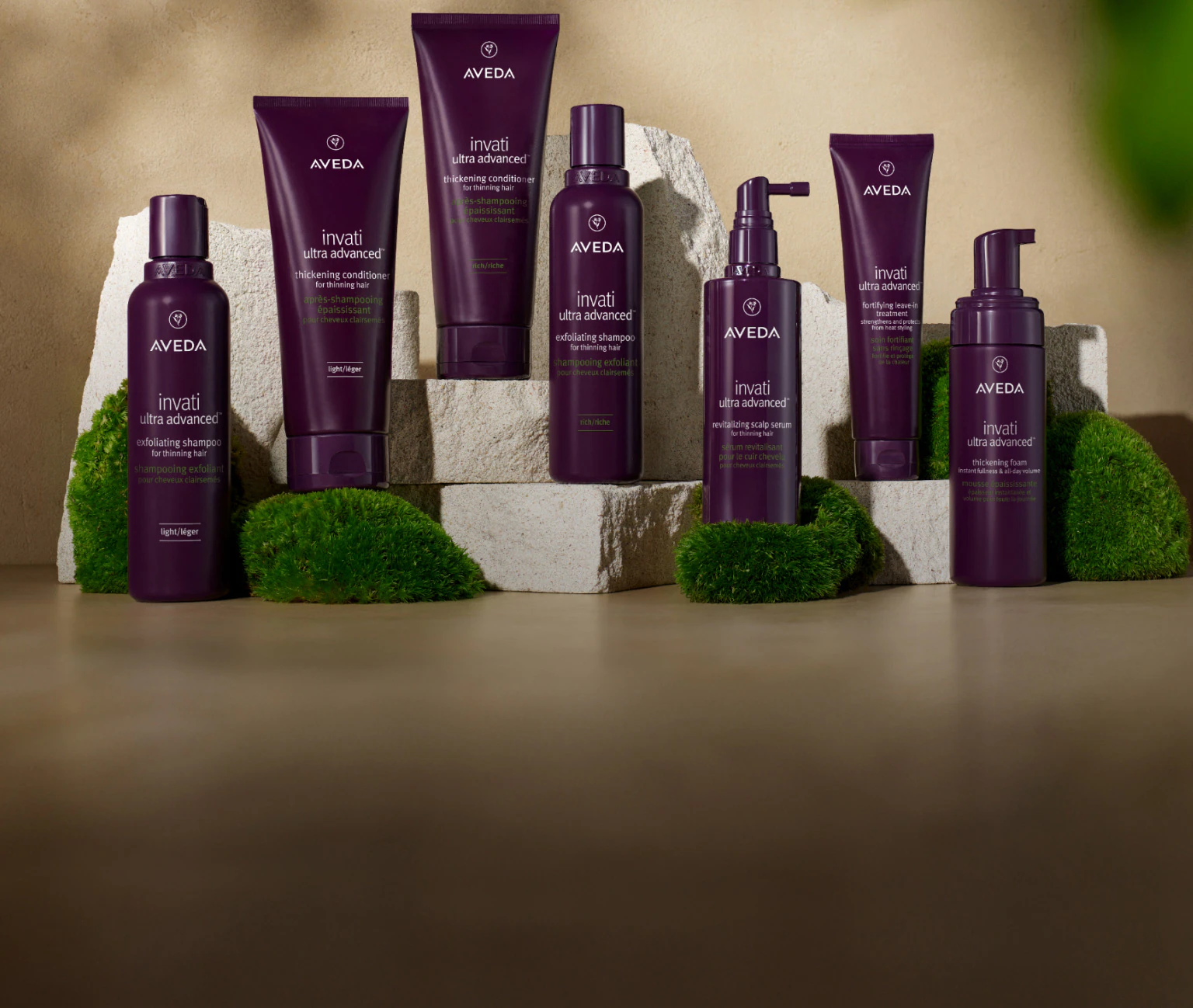
Ready to shop Aveda DE? Use the link below to visit the official store.
→ Shop Aveda DE — official site
Visit this site