
other · Articles
Using a Sewing Pattern Properly
Using a Sewing Pattern Properly
 Transact Shopping
CRAFTS · GLOBAL
Using a Sewing Pattern Properly
Reading the envelope, measuring, ease, toiles and adjusting the fit
A pattern is a set of instructions for a body that is not yours, and the sewing is the easy part. Almost everything that makes a finished garment good happens before cutting.
Measure yourself, ignore the size
Pattern sizing bears no relation to ready-to-wear sizing and is generally several sizes larger. Measure bust, waist and hip and choose from the chart, not from what you buy in a shop.
For tops and dresses, choose by the high bust measurement rather than the full bust, then adjust the cup, which produces far better shoulder fit.
Understand ease
Patterns include wearing ease so you can move, and design ease for the intended silhouette. A pattern with twenty centimetres of ease is meant to be loose, and sizing down to remove it will ruin the shape.
Check the finished garment measurements printed on the pattern, which tell you what you will actually get.
Make a toile
A test version in cheap fabric of similar weight. It feels like a waste of an evening and it saves whole projects, particularly for trousers and fitted bodices.
The common adjustments
Full or small bust adjustment, shortening or lengthening at the marked lines, and narrow shoulder adjustment. Lengthen and shorten at the lines drawn on the pattern rather than at the hem.
Change one thing at a time and write down what you did, since the same adjustments will apply to the next pattern from that company.
Before cutting
Pre-wash the fabric as you intend to wash the garment, find the grain line and follow it, since cutting off grain makes a garment twist on the body permanently.
PDF and paper patterns
PDF patterns are instant, cheap and need printing and taping together, or printing at a copy shop on large format. Check the test square measures correctly before assembling, since a printer scaling the page ruins everything.
Paper patterns arrive ready to use and take up more space. Trace the size you need rather than cutting the original if you may want other sizes later.
Choosing a first project
Something loose with few fitted seams — a simple top, an elasticated skirt, pyjama trousers. Fitted trousers and tailored jackets are where beginners give up.
Tools
Sharp fabric shears kept only for fabric, good pins, a seam ripper, tailor's chalk and a decent iron. Blunt scissors cause more poor cutting than any lack of skill does.
Reading the instructions
Read the whole thing through before starting. Press every seam as you go, since that is what separates a homemade look from a handmade one.
WHERE TO BUY
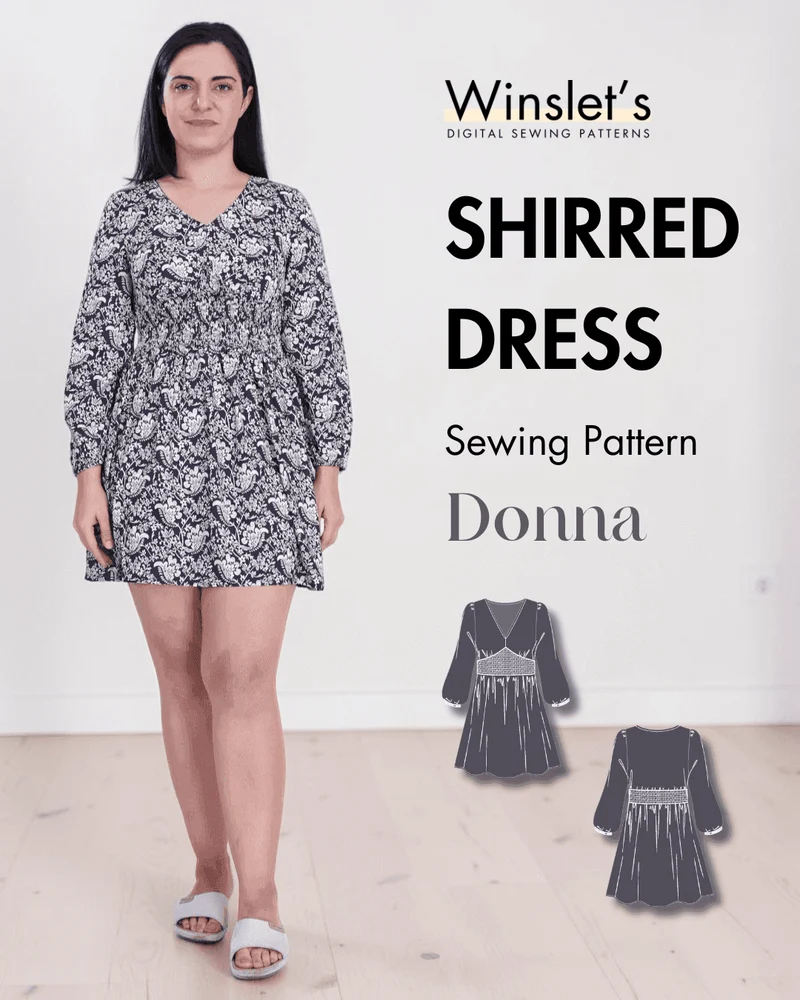
Ready to shop Winslet's Sewing Patterns? Use the link below to visit the official store.
→ Shop Winslet's Sewing Patterns — official site
Visit this site