Next Day Camera Shop · Articles
Which Canon Mirrorless Actually Fits How You Shoot
Which Canon Mirrorless Actually Fits How You Shoot
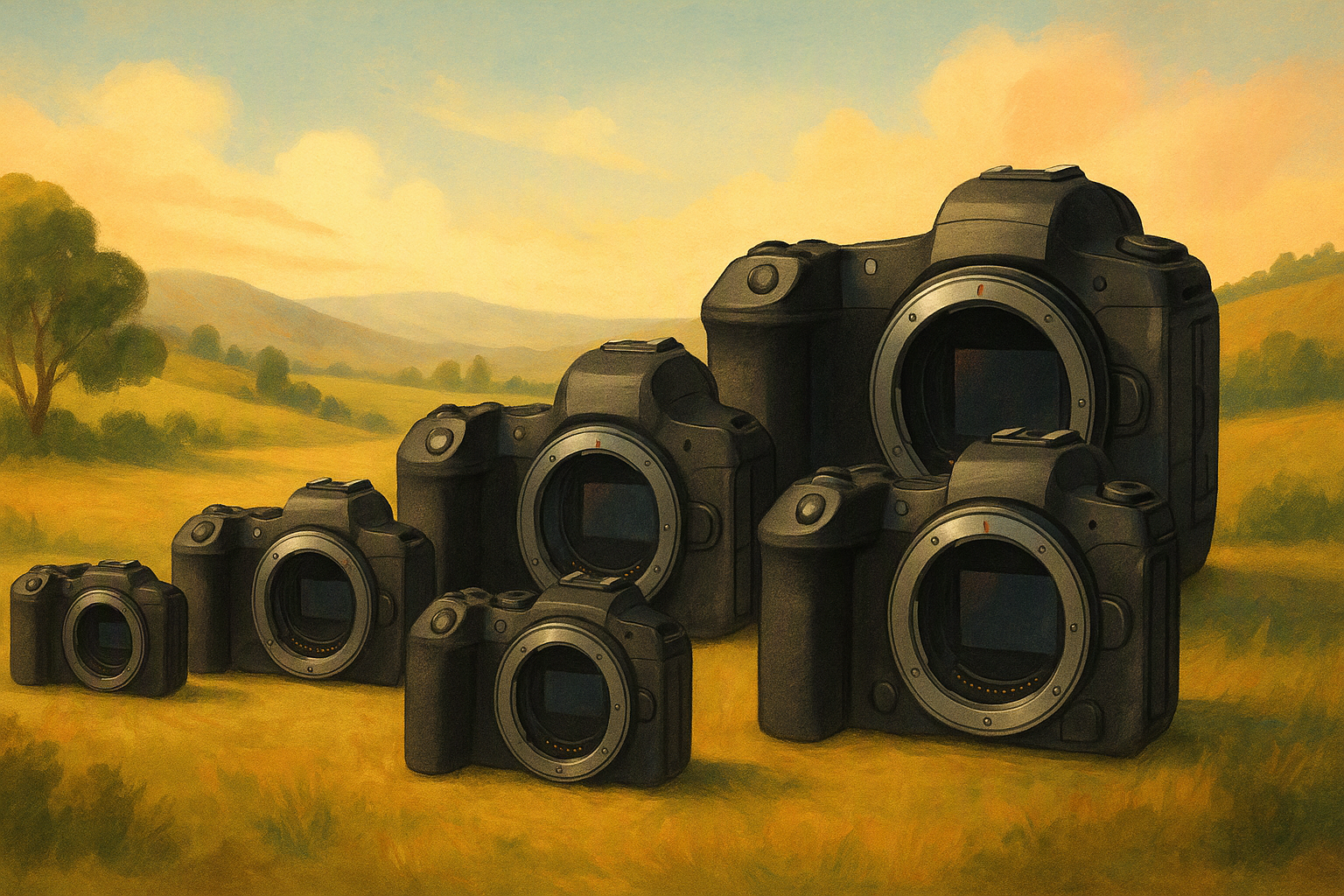
Canon's EOS R lineup has grown large enough that "which Canon mirrorless should I buy" is no longer a simple question. Between full-frame flagships, APS-C all-rounders, and video-first hybrids, the range now spans a genuinely wide spread of photographers rather than a single obvious starting point.
The full-frame ladder, from entry point to flagship
At the top sits the EOS R1, Canon's professional sports and wildlife flagship, built around speed and rugged reliability for working photographers who can't afford a missed shot. Just below it, the EOS R5 Mark II and EOS R6 Mark III cover high-resolution stills and hybrid video work respectively, while the EOS R8 offers a genuinely accessible entry point into full-frame shooting, inheriting much of the R6 Mark II's imaging system in a lighter, more affordable body.
APS-C: where most people should actually start
Canon's APS-C range — the R7, R10, R50, and R100 — trades full-frame sensor size for a smaller, lighter, and considerably cheaper package, without sacrificing the core RF-mount lens ecosystem. The R7 in particular has built a reputation as a high-end semi-professional option with fast burst shooting, making it a genuine option for wildlife and action photography on a tighter budget than the full-frame flagships demand.
A video-first model for content creators
The newly added EOS R6 V reflects a genuine shift in Canon's lineup: rather than treating video as a secondary feature on a stills-first camera, this model is built primarily around video workflows for content creators and advanced videographers — a signal of how much the "hybrid shooter" audience has grown.
The RF lens mount ties it all together
Every camera in the current EOS R lineup shares the same RF lens mount, meaning a lens bought for an entry-level R50 remains usable if you later upgrade to an R6 Mark III or beyond. Older EF and EF-S lenses can also be used via an adapter, which matters a lot for anyone transitioning from Canon's earlier DSLR systems rather than starting completely from scratch.
Bundles make the entry point even easier
For newcomers, kit bundles pairing a body like the R50 or R10 with a versatile everyday zoom (such as an 18-45mm or 18-150mm lens) remove the extra step of researching lens compatibility, letting a first-time mirrorless buyer start shooting immediately.
At a glance
Range: ** Canon EOS R mirrorless system
Full-frame flagships: ** EOS R1, EOS R5 Mark II, EOS R6 Mark III
Full-frame entry: ** EOS R8
APS-C range: ** EOS R7, R10, R50, R100
Video-first model: ** EOS R6 V
Lens mount: ** RF (shared across the entire current lineup)
Who it suits
This range suits photographers at every level, from complete beginners looking for an R50 or R100 kit bundle, through enthusiasts wanting the R7's speed on an APS-C budget, up to working professionals who need the R1 or R5 Mark II's full-frame performance. The right starting point really comes down to sensor size priorities and budget — APS-C for portability and price, full-frame for image quality and low-light performance. Shop Canon Mirrorless Cameras — **
Visit store