other · Articles
Wooden Jigsaw Puzzles
Wooden Jigsaw Puzzles
 Transact Shopping
HOBBIES · UNITED STATES
Wooden Jigsaw Puzzles
Why wooden puzzles differ, whimsies, difficulty and doing them well
Wooden jigsaw puzzles are a different object from cardboard ones, and the differences explain both the price and why people become attached to them.
How they are made
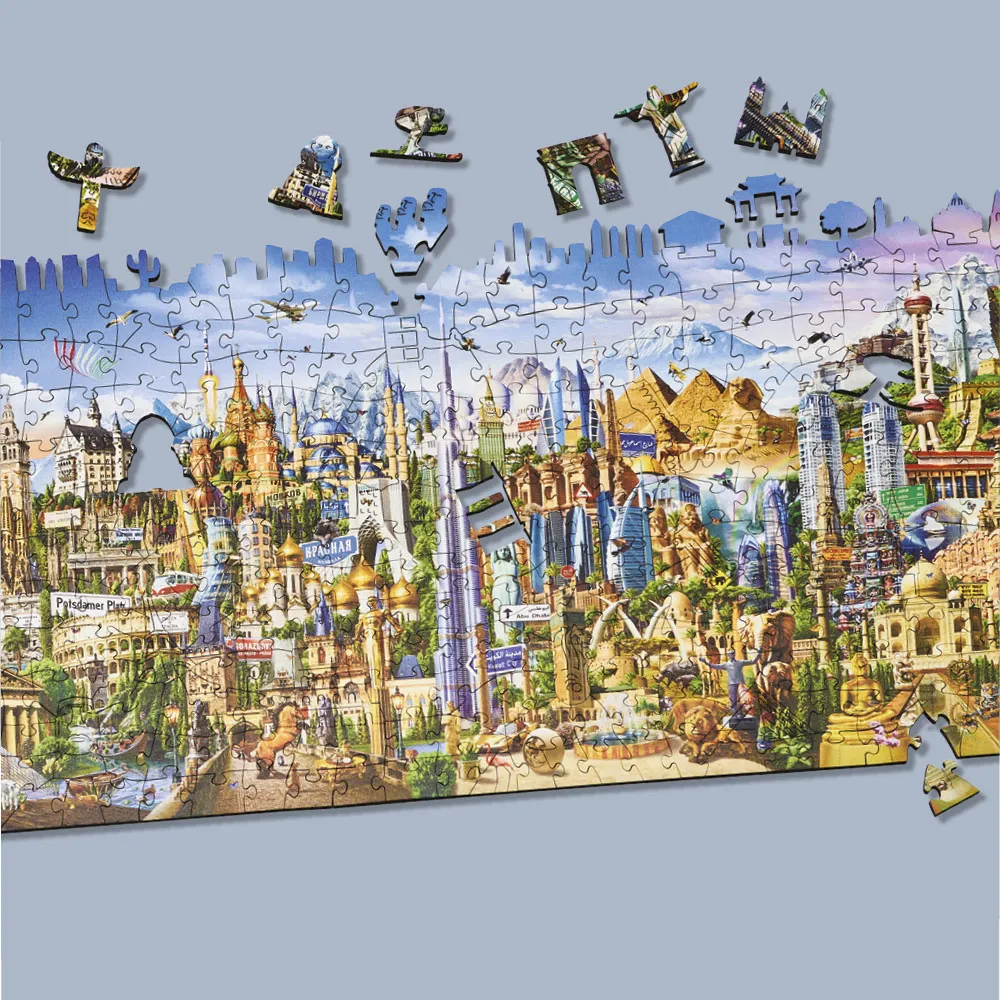
Cut individually from plywood rather than stamped from a single die, which means every piece is unique and no two puzzles cut identically. The pieces are thicker and interlock with a satisfying grip.
That also means the cut lines follow the image rather than a grid, so pieces can be any shape at all.
Whimsies
Pieces cut into recognisable shapes — animals, objects, figures — scattered through the puzzle. Traditionally they related to the image, and finding them is part of the pleasure.
A puzzle described as having whimsies usually says how many, which is worth checking since it varies enormously.
Difficulty
Piece count matters less than the image. Large areas of uniform colour, repeating patterns and irregular edges are what make a puzzle hard, and some wooden puzzles have no straight edge at all.
Double-sided puzzles and puzzles with no reference picture are the hardest category.
Working on one
Good light from the side rather than overhead, which shows the cut lines. Sort by shape as well as colour, since wooden pieces have distinctive silhouettes.
A board or a mat lets you move an unfinished puzzle off the table.
Looking after them
Keep them out of damp and direct sunlight, since plywood warps and images fade. Count the pieces back into the box, since a wooden puzzle missing one cannot be replaced.
As a gift
Choose an image the recipient will want to look at for hours rather than one that is merely attractive. Anything with personal meaning — a place they know, a subject they love — lands better.
Check the piece count against how much table space and patience they have.
Framing a finished puzzle
Puzzle glue and a backing board let a finished puzzle be framed, though it can then never be done again. Photograph it first either way.
Puzzles and wellbeing
Jigsaws occupy attention without a screen, which is much of their appeal, and they suit being done alongside someone else in companionable quiet.
They also work well for people with dementia when the piece count and image are chosen thoughtfully, and specific ranges exist for that.
Sharing them
Puzzle libraries, charity shops and swap groups keep good puzzles circulating, which matters given how few times most are completed.
Buying
These hold their value and are frequently resold or passed between families. Puzzle libraries and swap groups exist for exactly that reason.
WHERE TO BUY
Ready to shop Wentworth Puzzles? Use the link below to visit the official store.
→ Shop Wentworth Puzzles — official site
Visit this site