
electronics · Articles
Thermal Cameras: What They Can and Cannot See
Thermal Cameras: What They Can and Cannot See
 Transact Shopping
TOOLS · GLOBAL
Thermal Cameras: What They Can and Cannot See
Resolution and sensitivity, emissivity, finding heat loss and damp
A thermal camera shows surface temperature rather than heat inside a wall, and understanding that distinction is what separates a useful survey from a misleading one.
Resolution and sensitivity
Sensor resolution determines how much detail you see. Entry-level sensors are very low resolution by ordinary camera standards, and some devices upscale the image, which looks better without adding information.
Thermal sensitivity, quoted in millikelvin, determines how small a temperature difference the camera can distinguish. For building work that matters more than resolution.
Emissivity changes everything
Different surfaces emit infrared differently, so a shiny metal pipe and a painted wall at the same temperature will read differently. Bare and polished metal is the classic failure case, reading far colder than it is.
Set the emissivity for the material or put a piece of matt tape on shiny surfaces and read that.
Finding heat loss
Survey when there is a good temperature difference between inside and outside, ideally at least ten degrees, and early in the morning before the sun has warmed surfaces.
Solar gain on a wall during the day makes readings useless, which is why professional surveys are done in winter at night.
Damp
A camera does not see moisture. It sees the cooling caused by evaporation, which shows as a cool patch. Confirm with a moisture meter rather than diagnosing damp from an image alone.
Electrical and mechanical use
Loose connections and overloaded circuits show as hot spots, which is genuinely useful. Do not open live panels unless you are qualified to.
Phone-attached and standalone
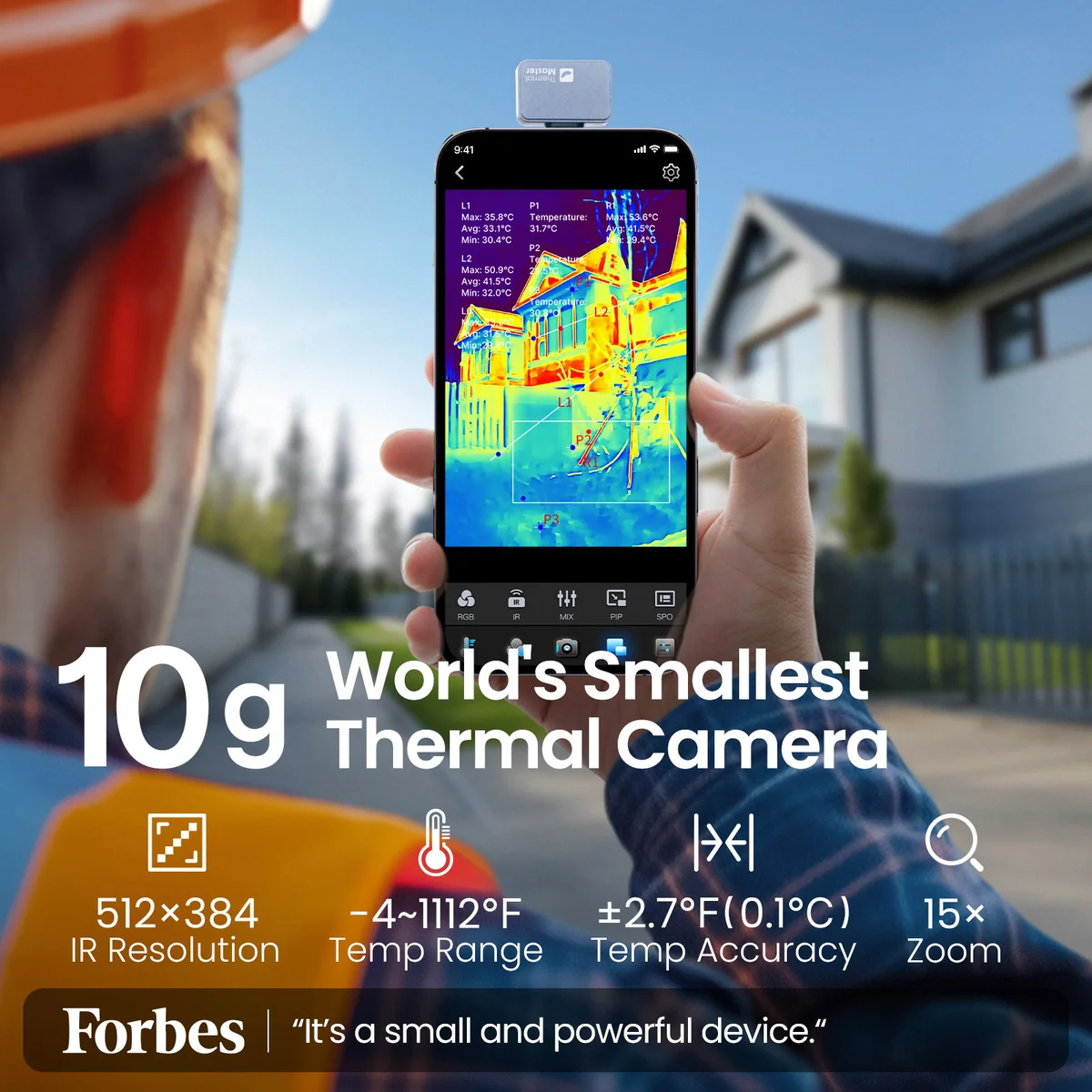
Cameras that plug into a phone are cheaper and use the phone's screen and storage. Standalone units are more robust and usable with gloves, which matters on site.
Check the connector matches your phone and that the app is still supported, since abandoned apps make a working camera useless.
Reading images
Set the temperature scale manually rather than leaving it automatic, since auto-ranging rescales between shots and makes comparison impossible.
What surveys are worth paying for
A professional thermal survey for insulation, damp or electrical inspection includes interpretation and a report, which is the valuable part. A camera gives you images and not a diagnosis.
For a one-off question, hiring a camera or commissioning a single survey is considerably cheaper than buying one.
Limitations
Thermal cameras cannot see through walls, glass or water, all of which either reflect or block infrared entirely.
Practical
Let the camera acclimatise to the room temperature before use, and photograph a normal image alongside each thermal one, since thermal images are hard to interpret later without context.
WHERE TO BUY
Ready to shop Thermal Master? Use the link below to visit the official store.
→ Shop Thermal Master — official site
Visit this site