ShipStation · Articles
The Backend That Turns "Order Placed" Into "Package Shipped"
The Backend That Turns "Order Placed" Into "Package Shipped"
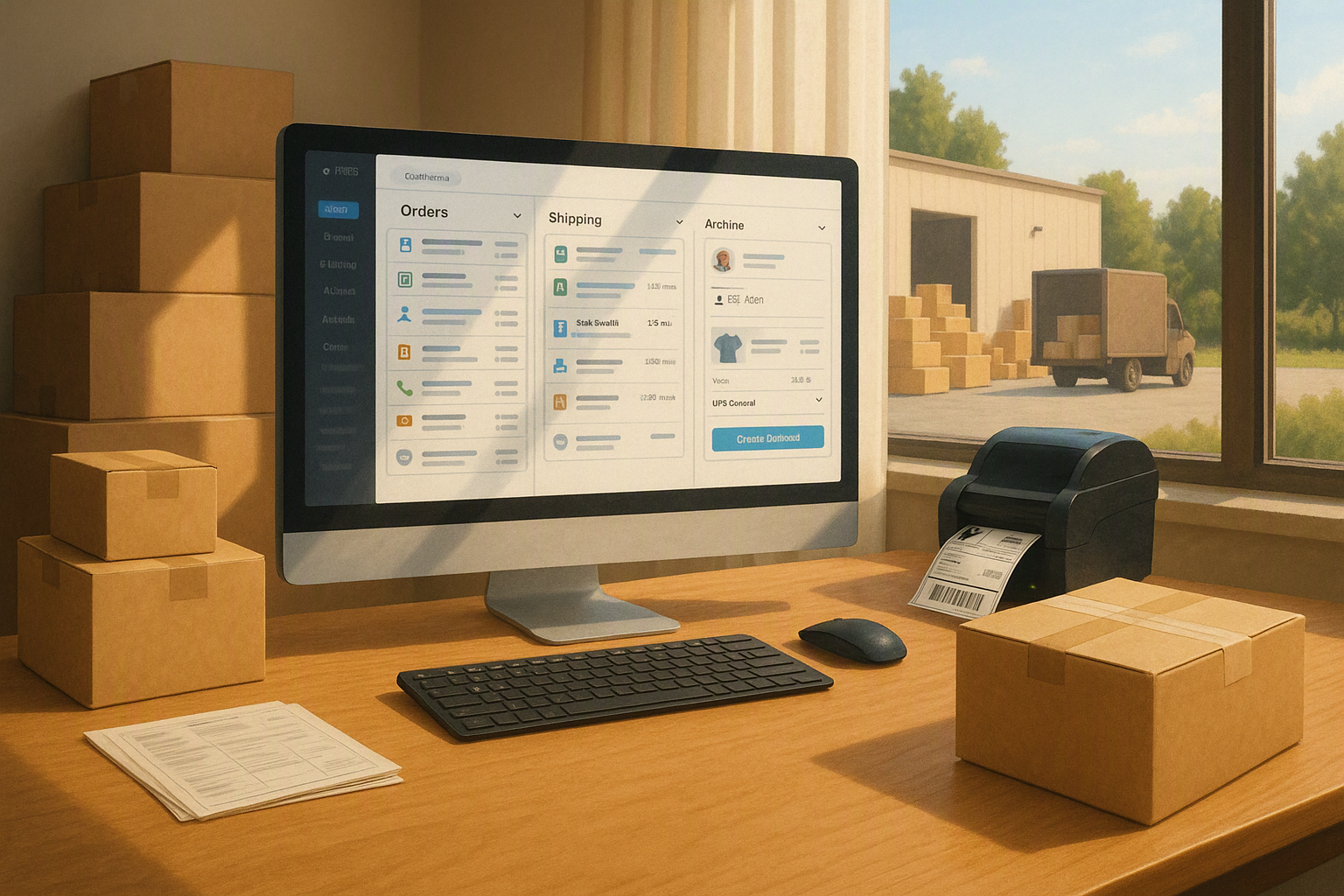
Every online seller eventually hits the same wall: the moment order volume grows past a handful a day, manually copying addresses into carrier websites and printing labels one at a time stops being sustainable. ShipStation exists specifically for the point where shipping needs to become a process, not a series of individual chores.
One dashboard instead of a dozen browser tabs
ShipStation syncs orders from more than 150-180 selling platforms and marketplaces — everything from Shopify and WooCommerce to Amazon and eBay — pulling every order into a single centralized dashboard. Rather than logging into each sales channel separately to check for new orders, sellers see everything in one place, with customer details, shipping addresses, and purchased items already populated.
Automation rules that replace repeated manual decisions
The real time-saving power sits in ShipStation's automation rules: predefined logic based on package weight, destination, or shipping preference that automatically selects the right carrier, service level, and packaging — no manual decision needed for orders that follow a predictable pattern. For a seller processing dozens or hundreds of orders daily, this is the difference between shipping being a bottleneck and shipping running quietly in the background.
Rate comparison across more than 30 carriers
Rather than committing to a single carrier's rates, ShipStation compares pricing across more than 30 options — USPS, UPS, FedEx, DHL Express, Royal Mail, Canada Post, Australia Post, and more — automatically selecting the cheapest, fastest, or best-value option based on the seller's own criteria. Sellers also gain access to discounted shipping rates through ShipStation's carrier partnerships, rates that individual small businesses typically couldn't negotiate on their own.
Inventory that updates itself
As orders process through the system, inventory adjusts automatically — closing the gap where a seller might otherwise oversell an item that's actually out of stock across multiple sales channels, a genuinely costly and reputation-damaging mistake for any growing e-commerce business.
Multi-warehouse routing without the spreadsheet juggling
For sellers operating more than one warehouse or fulfillment location, ShipStation routes each order to whichever location gets it to the customer fastest and most cheaply — a level of logistics optimization that would otherwise require manual routing decisions on every single order.
Branded tracking that keeps the customer experience consistent
Beyond the backend logistics, ShipStation generates branded tracking pages and automatic shipping notifications, so customers get a polished, on-brand post-purchase experience rather than a generic carrier tracking page that looks nothing like the store they bought from.
At a glance
Product: ** ShipStation (cloud-based shipping software)
Integrations: ** 150-180+ selling channels and marketplaces
Carriers: ** 30+ including USPS, UPS, FedEx, DHL, Royal Mail, Canada Post, Australia Post
Core features: ** Automation rules, rate comparison, inventory sync, multi-warehouse routing
Extras: ** Branded tracking pages, batch label printing, mobile app, API access
Access: ** Web-based, no installation required
Who it suits
ShipStation is built for online sellers whose order volume has outgrown manual label printing and carrier-by-carrier rate checking — particularly those selling across multiple platforms or operating more than one warehouse. Businesses shipping only a handful of orders a day may find the automation and batch-processing features more infrastructure than they currently need, though the discounted carrier rates alone can still make it worthwhile even at lower volumes. Shop ShipStation — **
Visit store