
health · Articles
Skin Tags: What They Are and Getting Them Checked First
Skin Tags: What They Are and Getting Them Checked First
 Transact Shopping
HEALTH · UNITED KINGDOM
Skin Tags: What They Are and Getting Them Checked First
Why diagnosis matters most, how ligation works, and what to never treat at home
Skin tags are common, harmless and frequently annoying, and there are home removal devices designed for them. The single most important step comes before any of that, and it is not optional.
Get it identified before treating it
Several things look like a skin tag and are not — moles, warts, seborrhoeic keratoses and, rarely, skin cancers including basal cell carcinoma and melanoma.
Removing or damaging a lesion at home destroys the evidence a doctor would need and can delay diagnosis of something serious. A pharmacist, GP or dermatologist can identify it quickly.
Never treat these at home
Anything pigmented, anything that has changed in size, shape or colour, anything that bleeds, itches, crusts or will not heal, and anything with an irregular border or more than one colour.
The same applies to lesions on the face, around the eyes, on the genitals, or on anyone with diabetes, poor circulation or a bleeding disorder. Those need a clinician.
How ligation devices work
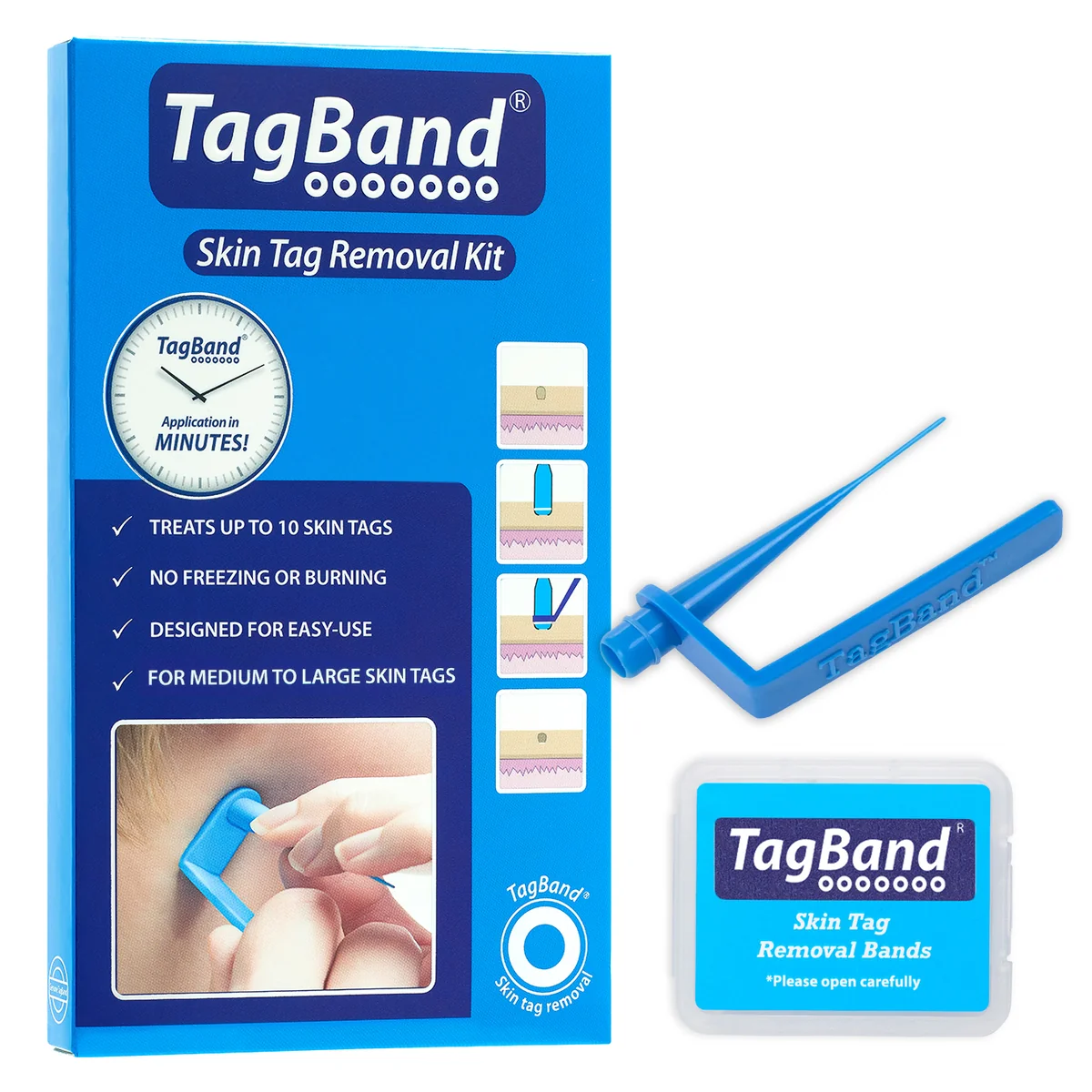
A band is placed around the base of the tag, cutting off its blood supply. The tag darkens and falls off over days to a couple of weeks.
It works on tags with a narrow stalk. Broad-based growths are not suitable and should not be forced.
Using one safely
Clean the area first, follow the instructions exactly, and do not attempt to cut, tie with thread or burn anything off yourself. Home cutting risks bleeding, scarring and infection.
Leave the band in place and let it fall naturally rather than pulling.
Signs of infection
Spreading redness, swelling, heat, pain or discharge means stopping and seeing a doctor. Some bleeding as it separates is normal; persistent bleeding is not.
Aftercare
Keep the area clean and dry while it separates, and leave any scab to come away naturally. A small mark may remain for a few weeks and usually fades.
Do not use these devices on children without medical advice, since lesions in children need identifying properly.
Prevention
Friction is the main factor, so reducing rubbing from collars, straps and jewellery helps. Keeping skin folds dry reduces irritation.
Skin tags frequently recur in the same areas, which is normal rather than a sign anything went wrong.
Other common lesions
Warts and verrucas are viral and treated differently, and seborrhoeic keratoses are harmless age-related growths that look alarming. None of these should be self-diagnosed.
Why they appear
Friction is the main factor, which is why they occur in skin folds, on the neck and under arms. They are more common with age, in pregnancy and with higher body weight, and they are not contagious.
WHERE TO BUY
Ready to shop TagBand? Use the link below to visit the official store.
→ Shop TagBand — official site
Visit this site