
shoes · Articles
First Walking Shoes
First Walking Shoes
 Transact Shopping
FAMILY · GLOBAL
First Walking Shoes
When a child needs shoes, what a first shoe should do, measuring and barefoot time
First shoes are bought earlier than they are needed and are frequently too rigid. A baby's foot is mostly cartilage, and how it develops depends on being allowed to move.
Barefoot indoors is best
Before walking, a baby needs no shoes at all. Soft booties keep feet warm, and anything with a structured sole restricts the movement that builds the muscles and arches.
Once walking, barefoot or in grip socks indoors remains the best thing for developing feet. Shoes are for protection outdoors.
When to buy the first pair
When the child is walking confidently outdoors, not when they take their first steps. Buying too early is common and does no good.
What a first shoe should do
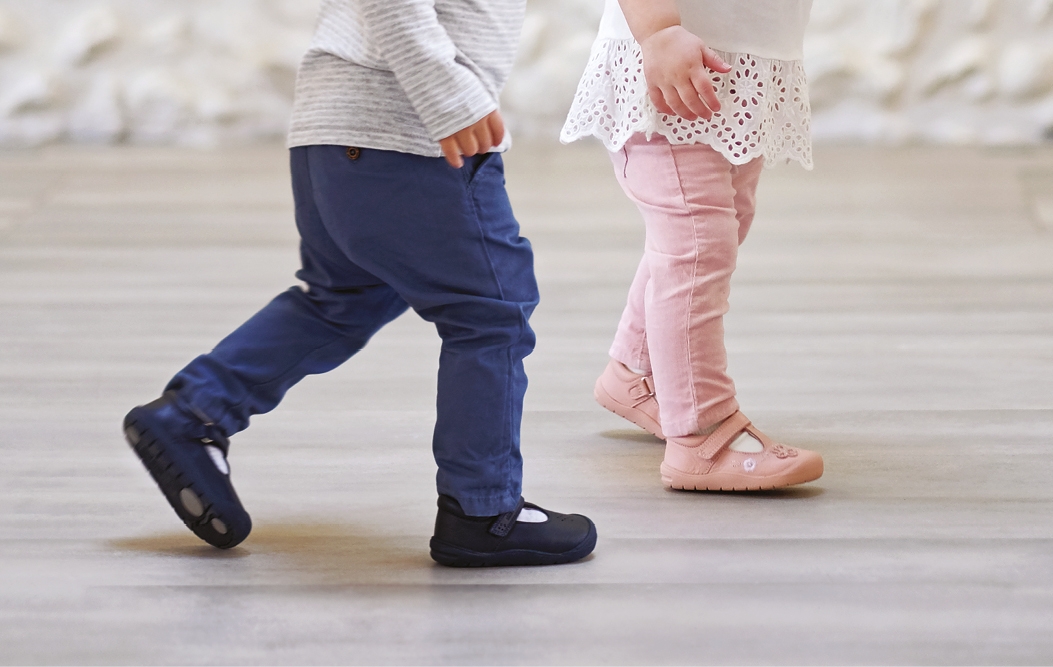
Be light and flexible, bending at the ball of the foot rather than in the middle. Have a fastening — Velcro, a buckle or laces — that holds the foot back in the shoe.
Have a thin, grippy, flexible sole. A thick cushioned sole reduces the sensory feedback a new walker uses to balance.
Measuring
Both feet, standing, with weight on them, since feet spread under load and are frequently different sizes. Measure length and width, and fit to the larger foot.
Allow roughly a thumb's width of growing room and no more. Buying two sizes up so they last causes tripping and uneven wear.
How often
Every six to eight weeks at this age, since growth comes in sudden bursts. Children rarely say a shoe is too small, so check rather than ask.
Socks matter too
Socks that are too small cramp toes as effectively as shoes that are too small, and they are rarely checked. Measure those against foot length as well.
Seamless socks suit children who regularly complain about their feet, which is frequently a seam or a label rather than the shoe itself.
Signs the fit is wrong
Red marks on the foot after removal, the child pulling shoes off constantly, worn patches at the toe of socks, curled toes or a change in how they walk.
Growing feet generally
Children's feet grow in sudden bursts rather than steadily, and a foot can change size within a fortnight. Measuring takes a couple of minutes and is free at most shoe shops.
Let children go barefoot indoors as much as is practical, which does more for foot development than any shoe ever will.
What to avoid
Hand-me-down shoes, which have moulded to another child's foot. Wellingtons and slip-on shoes worn all day, neither of which hold the foot.
Check inside the shoe for anything a child would not mention, and look for red marks after removal.
WHERE TO BUY
Ready to shop Start-Rite? Use the link below to visit the official store.
→ Shop Start-Rite — official site
Visit this site