
accessories · Articles
Understanding Silk Before You Buy It
Understanding Silk Before You Buy It
 Transact Shopping
FASHION · SWEDEN
Understanding Silk Before You Buy It
Momme weight, the difference between silks, and how to keep it alive
Silk is one of the few fabrics where the price difference is immediately visible in how the material moves. It is also one of the least understood, because the useful specifications are rarely printed anywhere a shopper would look. Two scarves described identically can be very different products.
Momme is the number to know
Momme measures the weight and density of silk, roughly comparable to thread count in cotton. Lightweight silk for scarves sits around twelve to sixteen. Good quality for garments and pillowcases sits between nineteen and twenty-two.
Below about twelve, silk becomes thin enough to be sheer and fragile. Above twenty-five it becomes heavy and structured, which suits some garments and not others. Nineteen to twenty-two is the range most people should want for anything they intend to keep.
Mulberry silk and the rest
Mulberry silk comes from silkworms fed exclusively on mulberry leaves, producing longer, more uniform fibres and a smoother, stronger fabric. Wild silks such as tussah have shorter, irregular fibres, which gives a more textured finish and a duller lustre.
Neither is inherently superior, but they suit different things. If a listing does not specify the type or the momme weight, that absence is itself informative.
How to check silk is real
Genuine silk warms quickly in your hand and feels cool on first contact. It shows a subtle colour shift as it catches light from different angles, which polyester imitations approximate but do not replicate. The weave will show small irregularities; synthetic is perfectly uniform.
Care determines lifespan
Hand wash in cool water with a pH-neutral detergent, or use a specialist silk wash. Never use biological detergent — the enzymes that break down protein stains also break down silk, which is itself a protein fibre.
Do not wring it. Roll in a towel to absorb water and dry flat away from direct sunlight, which fades silk faster than almost any other fabric. Iron on the lowest setting on the reverse, while slightly damp.
Tying and wearing
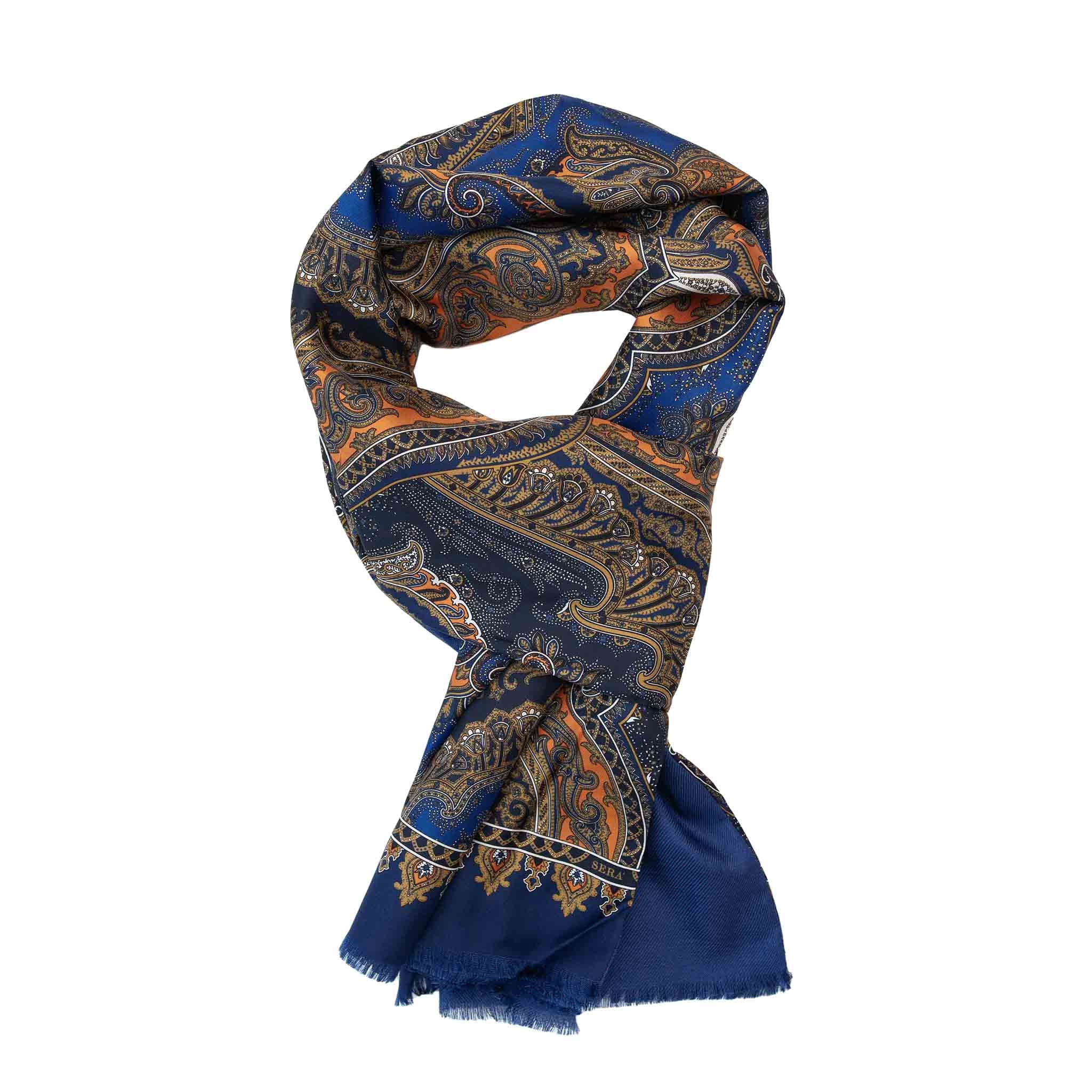
A silk scarf holds a knot without slipping because of the fabric's weight rather than any technique, which is why lighter silks feel harder to work with. A heavier momme scarf drapes and stays put with almost no effort.
Keep silk away from rough jewellery and velcro, which snag threads easily. A pulled thread on silk can usually be worked back through the weave with a blunt needle rather than cut, which is worth knowing before you panic.
Where it is worth the money
Scarves, which get worn constantly and last decades. Pillowcases, whose smooth feel some people prefer to cotton. And any garment where drape is the point, since silk falls in a way no synthetic manages convincingly.
Store it folded rather than hung, away from light, and it will outlast most of your wardrobe.
WHERE TO BUY
Ready to shop Serà Fine Silk? Use the link below to visit the official store.
→ Shop Serà Fine Silk — official site
Visit this site