health · Articles
Pelvic Floor and Core Exercise
Pelvic Floor and Core Exercise
 Transact Shopping
HEALTH · GLOBAL
Pelvic Floor and Core Exercise
What the pelvic floor does, why technique matters, and when to see a professional
Pelvic floor problems are extremely common and rarely discussed, and they respond well to the right exercise. The difficulty is that doing the exercises wrongly is common and can make things worse.
What the pelvic floor does
A sling of muscles supporting the bladder, bowel and, in women, the uterus, and controlling continence. It weakens with pregnancy and birth, surgery, ageing, chronic coughing, constipation and heavy lifting with poor technique.
Symptoms worth acting on
Leaking when coughing, sneezing, laughing or exercising. Urgency or frequency. A feeling of heaviness or bulging. Pain during sex. Difficulty controlling wind or bowels.
None of these is a normal consequence of childbirth or ageing that simply has to be accepted, and all of them are treatable.
Technique is the whole thing
The contraction is a lift and squeeze inwards and upwards, not a push down and not a clench of the buttocks or thighs. Breathing should continue normally throughout.
Studies consistently find that a large proportion of people taught only verbally are doing it incorrectly, sometimes pushing down instead. That is why assessment matters.
Not everyone needs strengthening
Some pelvic floor problems come from muscles that are too tight rather than too weak, and squeezing exercises make those worse. Pelvic pain in particular frequently falls into this group.
This is the single strongest reason to be assessed rather than following a general programme.
See a pelvic health physiotherapist
They can assess what is actually happening and prescribe accordingly. Referral is available through health services in many countries, and self-referral is frequently possible too.
During and after pregnancy
Pelvic floor exercises during pregnancy have good evidence for reducing incontinence afterwards. Postnatal assessment is routine in some countries and has to be requested in others.
Do not judge recovery by how you look. Ask for a physiotherapy referral if symptoms persist beyond a few months.
Men too
Pelvic floor problems affect men, particularly after prostate surgery, and respond to the same supervised approach. It is both under-discussed and under-treated, and worth raising with a doctor.
Everyday habits
Do not routinely empty your bladder just in case, which gradually trains it to signal at smaller volumes. Sit properly on the toilet with feet supported rather than hovering, and never strain.
Treat constipation promptly, since repeated straining is one of the main causes of lasting pelvic floor damage.
The rest of it
Avoid constipation and straining, manage a chronic cough, and learn to brace properly before lifting. Weighted and electrical devices exist and should follow assessment rather than replace it.
Prolapse, blood in the urine or any new pain needs a doctor promptly rather than an exercise programme.
WHERE TO BUY
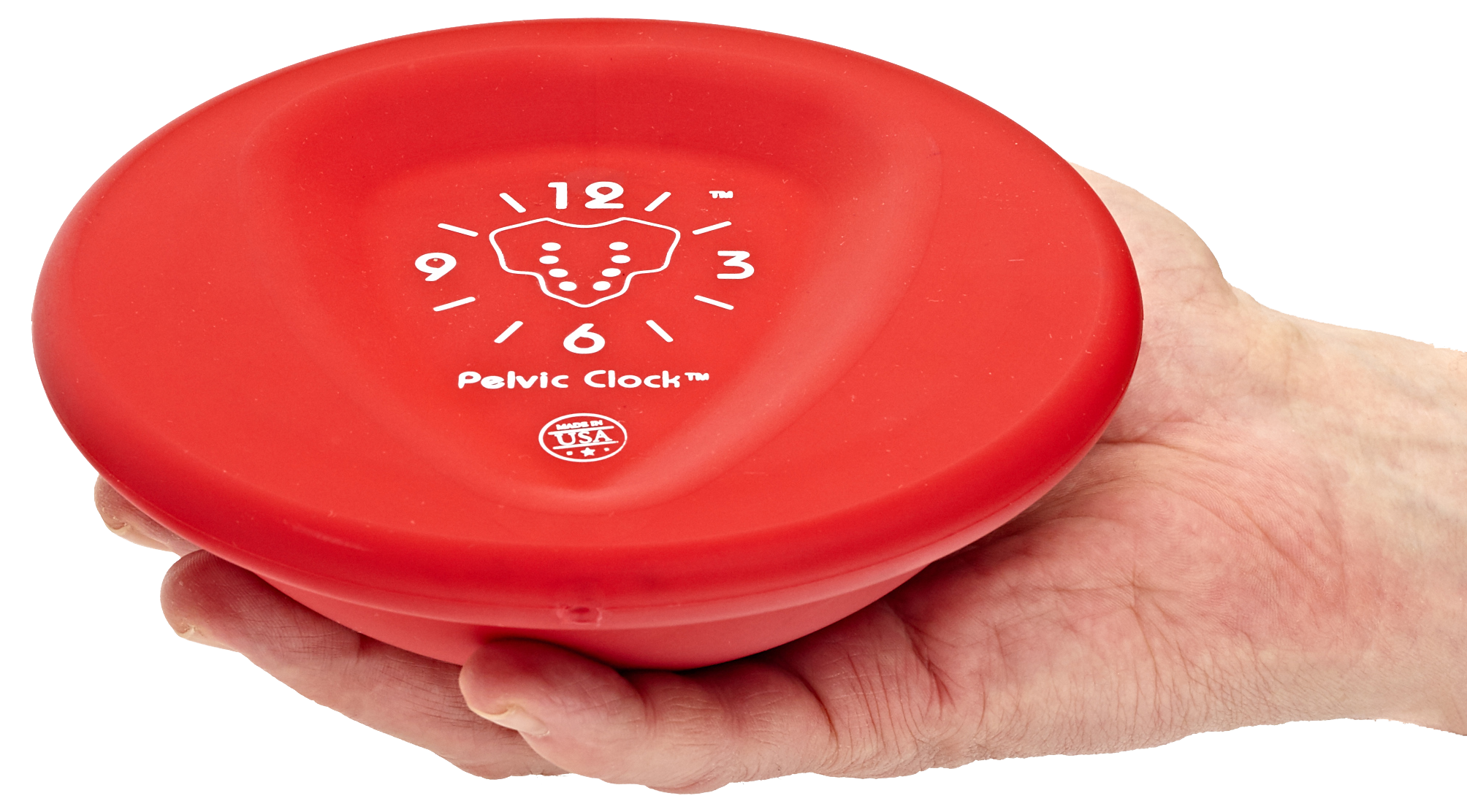
Ready to shop Pelvic Clock? Use the link below to visit the official store.
→ Shop Pelvic Clock — official site
Visit this site