
clothing · Articles
Dressing for Changeable Weather
Dressing for Changeable Weather
 Transact Shopping
FASHION · GLOBAL
Dressing for Changeable Weather
Layering, fabrics that work damp, packable shells and practical choices
Dressing for a climate that changes through the day is a layering problem, and the fabrics that fail are the ones most people default to.
Three layers
A base layer that moves moisture away from the skin, a mid layer that traps warmth, and an outer layer that blocks wind and rain. Each can be removed or added independently.
Remove a layer before you get warm rather than after, since trapped sweat is what makes you cold when you stop moving.
Cotton is the problem
Cotton absorbs moisture, holds it and stops insulating once damp, which is why a cotton t-shirt under a coat feels cold all afternoon. It is fine in dry warm conditions and poor everywhere else.
Merino wool regulates temperature, resists odour and keeps working when damp. Synthetics dry fastest and hold smell more.
The outer layer
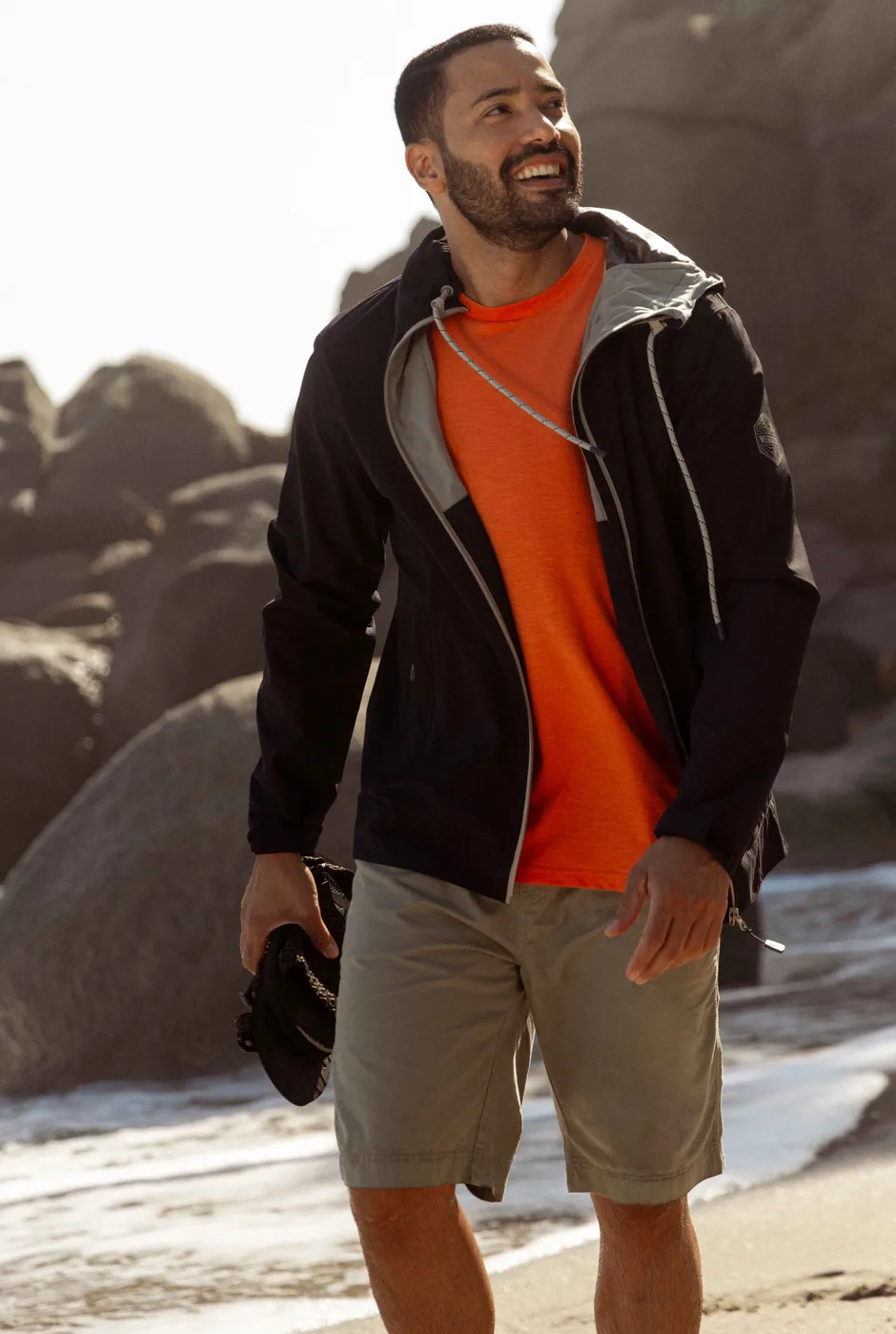
Look for a stated hydrostatic head and taped seams if you want it to handle sustained rain rather than drizzle. A packable shell that lives permanently in a bag is worn far more often than a bulky coat that stays at home.
Breathability matters as much as waterproofing, and pit zips dump heat regardless of the fabric rating.
Extremities
A hat, gloves and decent socks change comfort more than another torso layer. Wet feet end days out faster than anything else.
Why jackets stop working
The water-repellent finish wears off, so the face fabric wets out and the jacket feels like it is leaking. Wash with a technical cleaner, skip fabric softener and reproof when water stops beading.
Caring for what you own
Wash cool, inside out, with a technical detergent for anything waterproof or wicking, and skip fabric softener entirely, which coats the fibres and destroys both properties.
Air dry rather than tumble drying, which degrades elastane and eventually delaminates waterproof membranes.
Buying sensibly
Outerwear is cheapest in late winter and spring and most expensive in autumn, and nothing whatever about the garment changes in between.
Fit over layers
Try outerwear over what you will actually wear underneath rather than over a t-shirt in a warm shop, and raise your arms to check the hem still covers you.
Check sleeve length with arms extended, since a sleeve that rides up lets rain in at the wrist.
What to keep in a bag
A packable shell, a thin warm layer, a hat and a spare pair of socks between them cover almost every change a British day can produce.
Practical
Check the fit over what you will actually wear underneath, and that the hem still covers you when you bend forward.
WHERE TO BUY
Ready to shop Weird Fish? Use the link below to visit the official store.
→ Shop Weird Fish — official site
Visit this site