
electronics · Articles
Lithium Iron Phosphate Batteries
Lithium Iron Phosphate Batteries
 Transact Shopping
HOME · GLOBAL
Lithium Iron Phosphate Batteries
Why LiFePO4 differs, sizing a system, charging and safety
Lithium iron phosphate has largely replaced lead acid for leisure batteries, and the differences change how a system should be specified.
Why it differs
LiFePO4 can be discharged deeply — commonly to 80 or 90 percent of capacity — where lead acid should not go below about half. A 100Ah lithium battery therefore replaces roughly two 100Ah lead acid ones.
It also holds voltage steadily as it discharges, weighs around a third as much and lasts thousands of cycles rather than hundreds.
It is chemically far more stable than other lithium chemistries, which is why it is used in homes, boats and caravans.
The battery management system
Every pack has one, protecting against overcharge, over-discharge, high current and temperature extremes. Buy from a supplier that states its specification, since the BMS is what makes the battery safe.
Charging
Chargers and solar controllers must be set to a lithium profile. A lead acid charger will not charge it correctly and may damage it.
Most LiFePO4 batteries must not be charged below freezing, which matters in a van or a boat in winter. Some include low-temperature cut-off or self-heating.
Sizing a system
Add up daily consumption in amp hours, allow for days without sun, and size the battery and the charging to that rather than to a number that sounds generous.
Installation
Correct cable sizing, a fuse close to the battery, secure mounting and proper terminals. Undersized cable is the most common fault and a genuine fire risk.
Monitoring a system
A battery monitor showing amp hours in and out tells you far more than a voltage reading, since LiFePO4 holds voltage steady until it is nearly empty. That flat curve is why a voltmeter alone is almost useless here.
Fit one when the system goes in rather than adding it later.
Replacing lead acid
Check the charger profile, the alternator arrangement in a vehicle, and the physical dimensions and terminals before assuming a drop-in fit.
Where these suit
Campervans, boats, off-grid cabins and solar storage, where weight, usable capacity and cycle life all matter. For a car starter battery, conventional lead acid remains the correct product.
Work out the cost per usable kilowatt hour over the expected cycles rather than comparing purchase prices.
Fitting and inspection
Have a system installed or checked by a competent installer, particularly in a vehicle or a boat where movement, vibration and damp all matter. Secure mounting and correctly sized fusing are the two things people get wrong.
Check connections periodically, since a loose terminal generates heat under load.
Storage and disposal
Store at around half charge somewhere cool and dry. Never bin a lithium battery — take it to a proper recycling point.
WHERE TO BUY
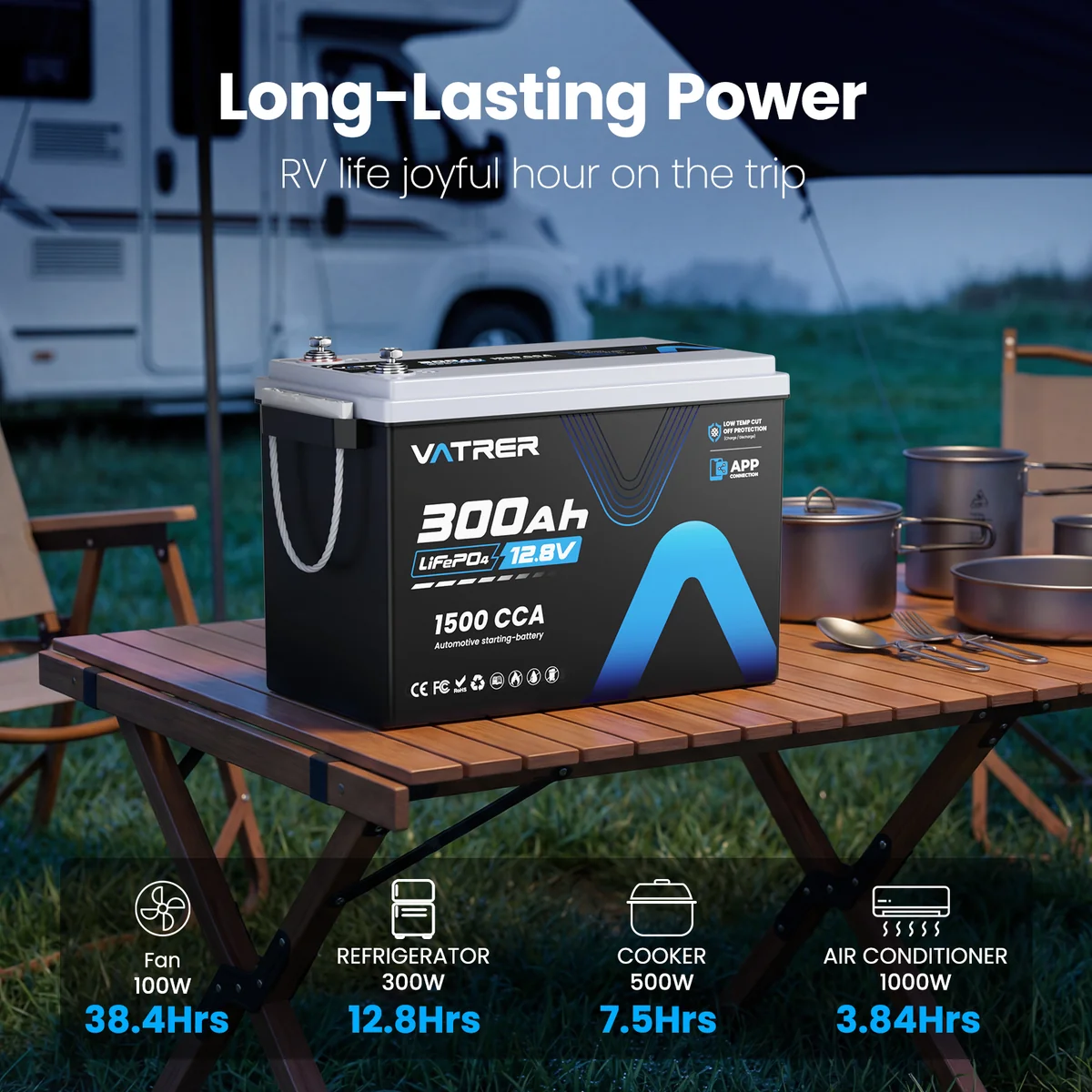
Ready to shop Vatrer? Use the link below to visit the official store.
→ Shop Vatrer — official site
Visit this site