
other · Articles
Dehumidifiers and Dealing With Damp
Dehumidifiers and Dealing With Damp
 Transact Shopping
HOME · UNITED KINGDOM
Dehumidifiers and Dealing With Damp
Finding the cause first, compressor and desiccant, sizing and mould
A dehumidifier removes moisture from the air and does not remove the reason it is there. Which type helps depends on what kind of damp you actually have.
Identify the cause first
Condensation forms where warm moist air meets cold surfaces, and shows as water on windows, black mould in corners and behind furniture. Penetrating damp comes through a wall from outside — a leak, failed pointing, a blocked gutter.
Rising damp shows as a tide mark low on a wall and is far rarer than it is diagnosed. A dehumidifier helps condensation and does nothing for a leak.
Ventilation and moisture sources
A household produces a surprising amount of moisture — cooking, showering, drying clothes indoors, even breathing. Extract at the source, cover pans, dry clothes outdoors or in a vented space, and ventilate daily.
Drying washing on radiators is one of the largest single sources of indoor moisture.
Compressor and desiccant
Compressor models are efficient in warm rooms and lose effectiveness below about fifteen degrees. Desiccant models work well in cold spaces such as garages and unheated rooms, use more electricity and give out some warmth.
Sizing
Rated in litres extracted per day under test conditions, which are warmer and wetter than a real house. Size generously for the property rather than one room, and check the tank size or use continuous drainage.
Mould
Mould affects respiratory health, particularly for children and anyone with asthma. Clean small areas with a proper mould cleaner wearing gloves and a mask, and address the moisture source.
Extensive or recurring mould in a rented home should be reported to the landlord in writing.
Condensation in specific rooms
Bedrooms and bathrooms produce the most moisture. Run an extract fan during and after showering, keep bathroom and kitchen doors closed while in use, and leave trickle vents open.
Furniture pushed hard against an external wall stops air circulating, which is why mould appears behind wardrobes.
Insulation and heating
Cold surfaces are where condensation forms, so insulation and keeping a low background heat throughout the house do more than dehumidifying a single room.
Renting and reporting
Landlords in England have obligations to keep property free from serious hazards including damp and mould. Report problems in writing, keep photographs and dates, and contact the council's housing team if nothing happens.
Condensation caused by a fabric problem — failed insulation, a cold bridge, a broken extract fan — is a repair issue rather than a lifestyle one.
Running cost
Check the power draw and run it with doors closed in the affected area.
WHERE TO BUY
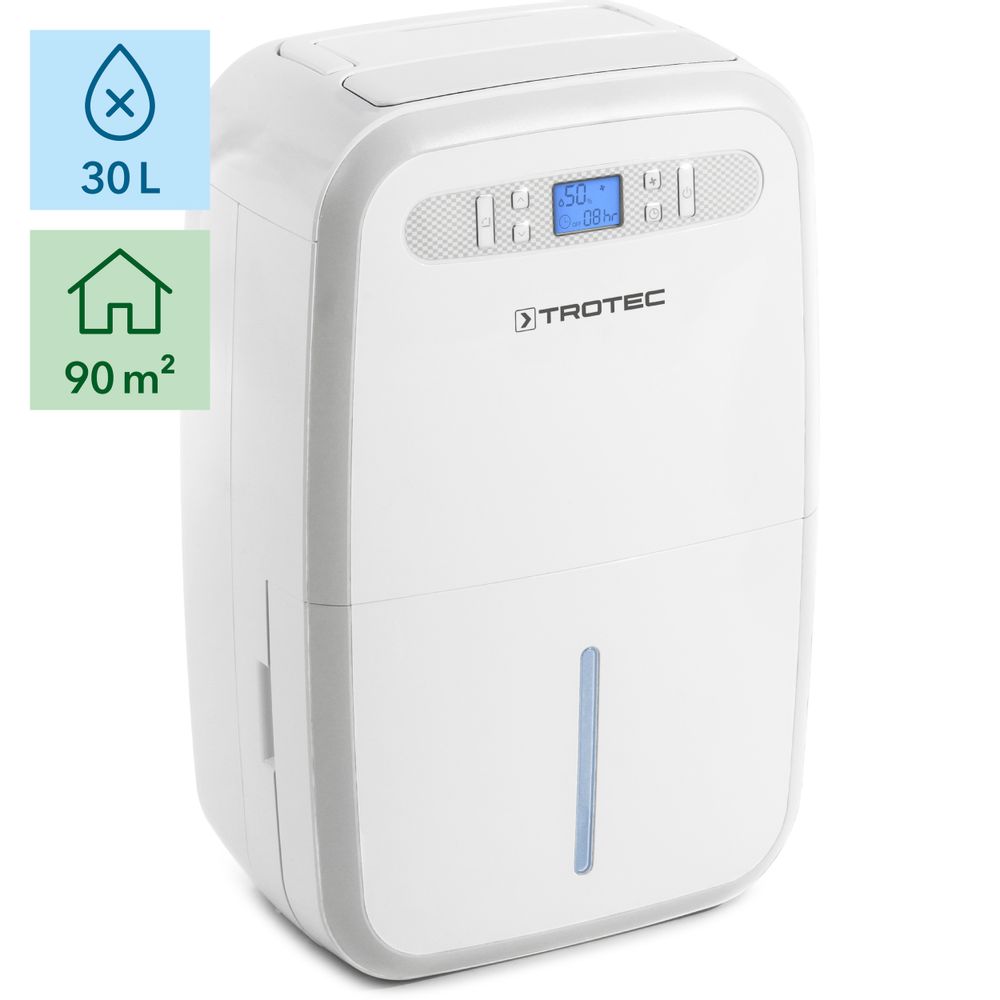
Ready to shop Trotec? Use the link below to visit the official store.
→ Shop Trotec — official site
Visit this site