
other · Articles
A Basic Toolkit and Buying Tools as Gifts
A Basic Toolkit and Buying Tools as Gifts
 Transact Shopping
HOME · GERMANY
A Basic Toolkit and Buying Tools as Gifts
What a household actually needs, quality where it matters, gifts and safety
Most household jobs are done with a small number of tools, and the ones worth spending on are easy to identify.
What a household actually needs
A claw hammer, a set of screwdrivers or a driver with bits, an adjustable spanner, pliers, a tape measure, a spirit level, a utility knife, a hand saw and a cordless drill.
Add a cable and pipe detector, which prevents the single most expensive mistake in DIY, and a set of allen keys, which builds all flat-pack furniture.
Where quality matters
Screwdrivers and bits, since cheap steel rounds off and then chews the screw head. Measuring tools, since an inaccurate level or square makes every job wrong. Cutting tools, since blunt blades slip.
Hammers, spanners and storage can be inexpensive without much consequence.
Cordless tools
Choose a battery platform and stay with it, since batteries are most of the cost. An 18 volt combi drill covers drilling and driving in almost every household job.
Check the battery capacity in amp hours and whether spares are still sold for that range.
As a gift
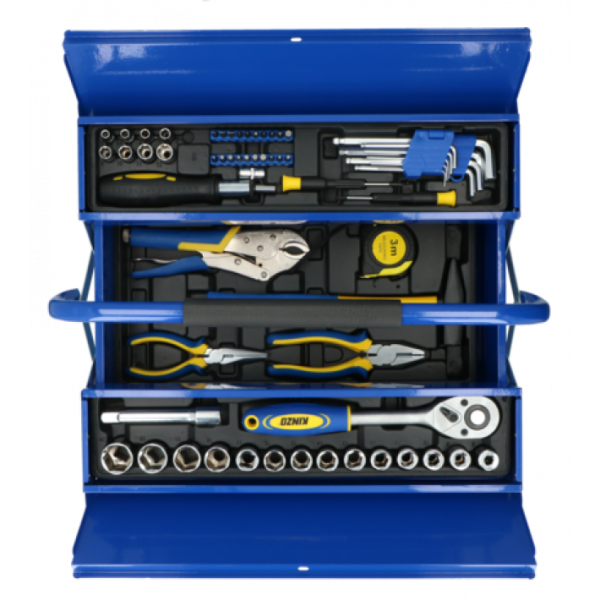
A good gift for someone starting out is a complete basic set rather than one impressive tool. For someone who already has tools, a consumable — good drill bits, blades, a torch — is more useful than a duplicate.
Safety
Eye protection for anything that cuts, grinds or hammers, and a mask rated for the dust. Silica dust from masonry, tile and concrete is a serious respiratory hazard that a paper mask does not stop.
Use an RCD on any mains tool, and check leads for damage before use.
Learning to use them
Most DIY mistakes come from technique rather than tools. Free guides, local courses and tool libraries all exist, and a tool library lets you try something expensive before buying it.
Know your limits — gas work must be done by a registered engineer by law, and most fixed electrical work is notifiable.
Maintenance
Keep cutting edges sharp and metal dry and lightly oiled. A blunt tool requires force, and force is how injuries happen.
Buying second-hand
Hand tools do not wear out, and older ones are frequently better made. Check for bends, cracks and rust, and note that a good chisel or plane can be restored for very little.
Avoid used electrical tools with damaged leads or missing guards.
Storage and organisation
A single portable box for common tools and a fixed home for larger ones. Tools that are hard to find are tools that are replaced unnecessarily.
Storage
One box kept where you can reach it beats a workshop you never visit.
WHERE TO BUY
Ready to shop Toolchest? Use the link below to visit the official store.
→ Shop Toolchest — official site
Visit this site