
home · Articles
Fitting Skirting Board
Fitting Skirting Board
 Transact Shopping
HOME · GLOBAL
Fitting Skirting Board
Profiles and heights, measuring and cutting, fixing to different walls and finishing
Skirting is a straightforward job where the finish depends almost entirely on the cutting, and two techniques separate a neat result from an obvious one.
Profile and height
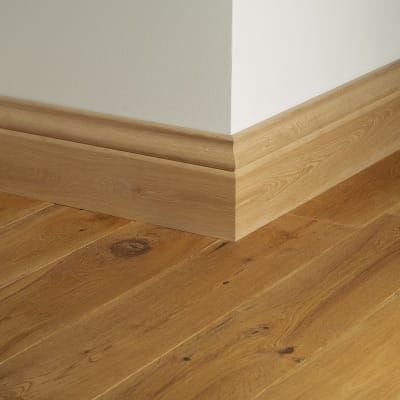
Match the profile to the period of the house where you can, and keep it consistent through connected rooms. Taller skirting suits higher ceilings, and a common range is 120mm to 220mm.
Check the architrave and skirting work together at door openings, since the skirting should not be thicker than the architrave.
Internal corners are scribed, not mitred
Mitred internal corners open up as the timber moves and as walls prove not to be square. Scribing — cutting one piece to the profile of the other — stays tight.
Cut a 45 degree mitre first, then follow the exposed profile line with a coping saw. It takes practice and it is what makes the job look professional.
External corners
These are mitred, and walls are rarely exactly 90 degrees. Measure the actual angle and halve it rather than assuming 45.
Fixing
Into masonry, use plugs and screws or a grab adhesive on a flat wall. Into stud walls, find the studs and fix into them rather than relying on adhesive alone.
Check for cables and pipes before fixing anything, particularly below sockets where cables run vertically.
Uneven walls and floors
Scribe the bottom edge to follow an uneven floor rather than leaving a gap. Fill small gaps behind with flexible decorator's caulk.
Removing the old boards
Score the paint line along the top with a knife first, which stops plaster tearing away with the board. Work a bolster in gradually rather than levering hard in one place.
Expect some plaster damage and allow time for filling before the new boards go on.
Ordering
Measure each wall and add around ten percent for cuts and mistakes. Order the matching architrave at the same time so the profiles and the batch match.
Cables and heating
Skirting frequently hides cable runs and pipework. Use a detector before fixing, and take particular care below sockets and switches, where cables run vertically.
Leave an expansion gap where skirting meets a laminate or engineered floor, since floating floors need room to move.
Painting
Prime all faces including the back before fixing, which stops moisture entering the board from the wall. Use a hard-wearing satin or eggshell rather than emulsion.
Finishing
Prime bare timber including the back and the cut ends, fill nail holes, caulk the top edge where it meets the wall, and sand between coats.
MDF gives a smoother painted finish; softwood suits stained or oiled work.
WHERE TO BUY
Ready to shop The Skirting Board Shop? Use the link below to visit the official store.
→ Shop The Skirting Board Shop — official site
Visit this site