
auto · Articles
Dash Cams: Choosing One and the Legal Side
Dash Cams: Choosing One and the Legal Side
 Transact Shopping
AUTOMOTIVE · GLOBAL
Dash Cams: Choosing One and the Legal Side
Resolution and night performance, parking mode and power, storage and data protection
A dash cam is bought for the moment something goes wrong, which means the specifications that matter are the ones affecting whether the footage is usable as evidence.
Resolution is for reading number plates
1080p is the practical minimum and 1440p or 4K gives a better chance of reading a plate at distance or at speed. Frame rate matters too, since higher rates freeze motion better.
Field of view around 140 degrees captures adjacent lanes without excessive distortion at the edges.
Night performance
Most incidents worth recording happen in poor light. Sensor quality and wide aperture matter more than headline resolution after dark, and reviews with night footage tell you more than a specification sheet.
Parking mode and power
Recording while parked needs continuous power, usually through a hardwiring kit with voltage cut-off protection so it cannot flatten the battery. A cigarette socket that dies with the ignition will not do it.
Hardwiring should be done properly, avoiding airbag paths and fuses that matter.
Storage
Use a high-endurance memory card designed for continuous rewriting, since ordinary cards fail quickly and frequently fail silently. Check the footage occasionally.
Save important clips off the card immediately, since loop recording overwrites.
The legal side
Dash cams are legal in the UK and in many countries and restricted or effectively prohibited in some. Check before driving abroad, since rules vary considerably across Europe.
Footage of identifiable people brings data protection obligations if shared publicly. Passing it to police or an insurer is straightforward; posting it online is a different matter.
Insurance and evidence
Some insurers offer a discount for a fitted dash cam and many will accept footage. Check with yours, since the discount is not universal.
Footage can be used against you as well as for you, which is worth knowing before submitting a clip.
Speed camera alerts
Devices warning of fixed camera locations are legal in the UK and illegal in several European countries, where the feature must be disabled before driving. Check each country you pass through.
Front and rear
A rear camera covers the most common type of collision, where you are hit from behind, and is frequently the more useful of the two. Dual systems run one cable through the car, which is the fiddly part of fitting.
Interior-facing cameras matter for anyone carrying passengers commercially and raise privacy obligations.
Using the footage
Save the clip immediately, note the date and time, and keep the original file rather than a re-encoded copy from a phone app.
Placement
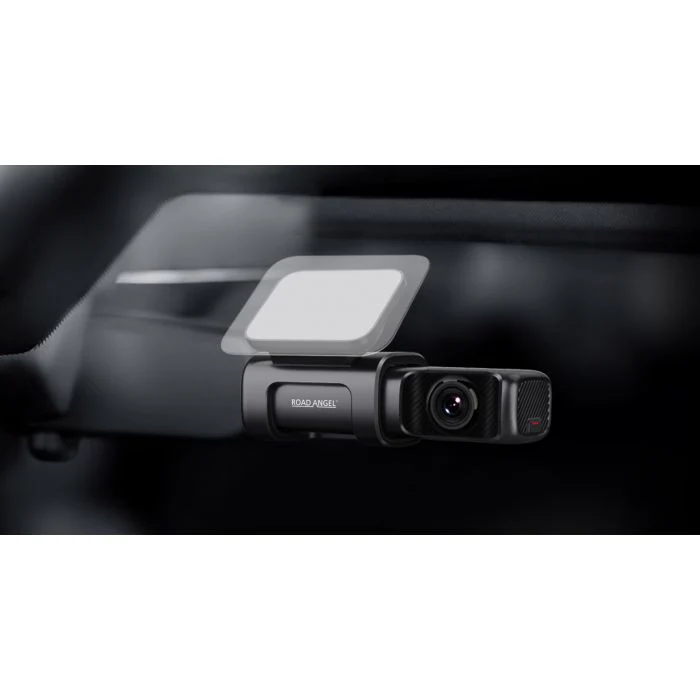
Behind the mirror so it does not obstruct your view, which is a legal requirement in most places.
WHERE TO BUY
Ready to shop Road Angel? Use the link below to visit the official store.
→ Shop Road Angel — official site
Visit this site