
home · Articles
Food Storage Containers
Food Storage Containers
 Transact Shopping
HOME · GLOBAL
Food Storage Containers
Materials compared, sealing and stacking, what goes in the freezer and hygiene
Food storage is bought as a set and used as a mismatched collection of lids that fit nothing, which a little planning avoids.
Materials
Glass does not stain or hold smells, goes from fridge to oven in many cases, and is heavy and breakable. Plastic is light, cheap and stains with tomato and turmeric.
Stainless steel is durable and not microwaveable. Check for a microwave, dishwasher, freezer and oven marking on the base rather than assuming.
Buy one system
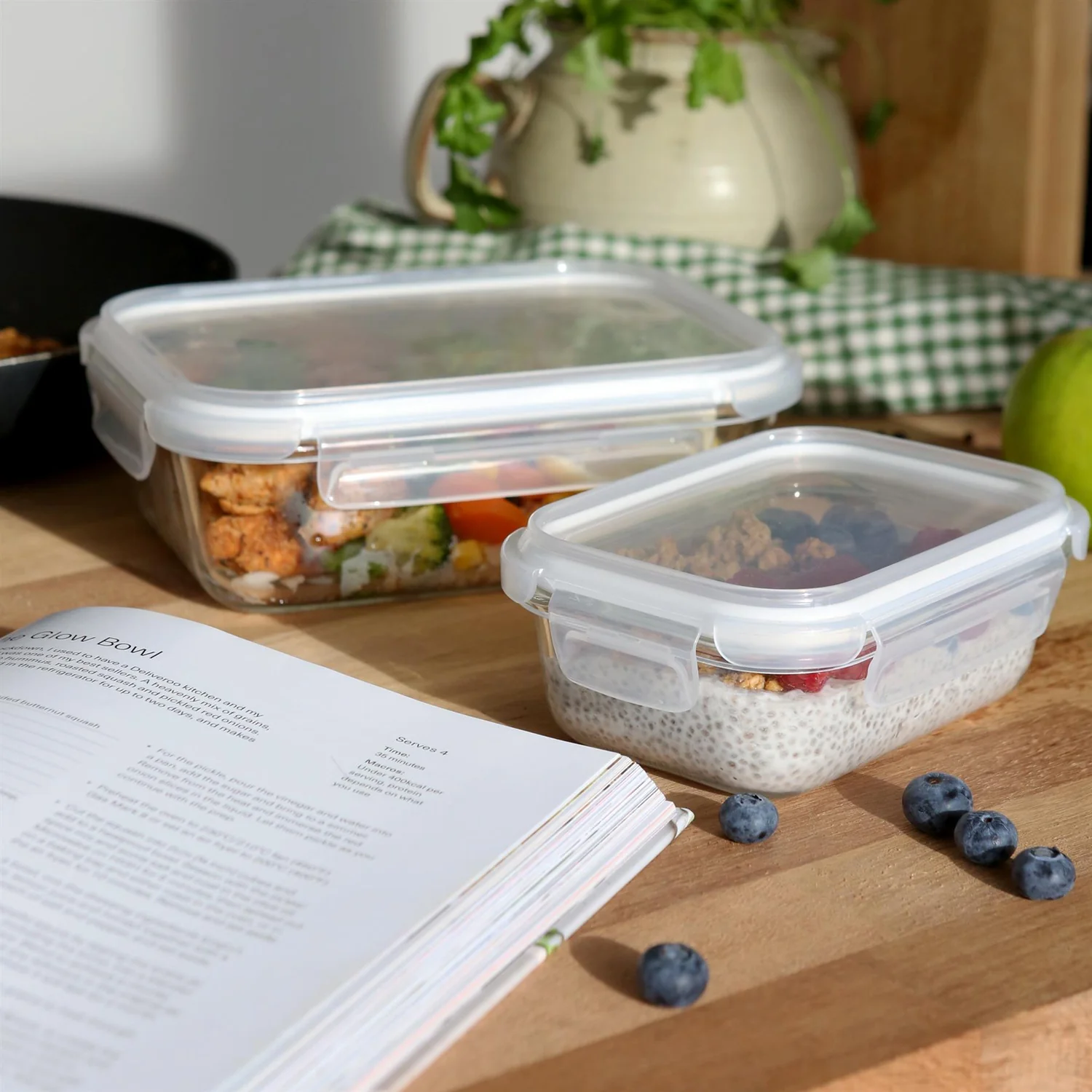
Containers that stack and share lid sizes take up far less space and mean you can always find a lid. A drawer of mismatched pots is the usual result of buying sets over years.
Rectangular containers use fridge and freezer space far better than round ones.
Seals
Clip lids with a silicone gasket seal properly and are what makes a container leakproof for a lunch bag. Remove the gasket to wash it, since that is where mould grows unseen.
Freezing
Leave headspace, since liquids expand. Cool food before freezing, freeze in portions you will actually use, and label with the contents and the date, since nothing is identifiable once frozen.
Freeze flat in bags for soups and sauces, which saves an enormous amount of space.
Plastics and heat
Only microwave containers marked for it, and do not reuse single-use takeaway tubs for heating. Replace plastic containers that are scratched, cloudy or warped.
Labelling and rotation
Date everything that goes in the freezer and keep older items at the front, since the usual freezer problem is not space but forgetting what is in there.
A list on the door takes two minutes a week and saves a great deal of waste.
Reducing food waste
Store food where it lasts — most fruit and vegetables in the fridge, bananas, potatoes and onions out of it and apart. Herbs keep for weeks stood in water with a bag over them.
Cook once and portion, since a freezer full of labelled single meals is what stops takeaways on a bad evening.
Buying containers
Check the actual capacity in litres against what you cook rather than judging from a photograph, and buy fewer sizes in greater numbers.
Glass and plastic together
Glass for anything reheated, oily or strongly coloured, plastic for lunches and the freezer where weight matters. Most households end up with both rather than choosing.
Replace plastic that is scratched, cloudy or warped rather than continuing to heat food in it.
Hygiene
Cool leftovers within two hours, refrigerate promptly and use within two days for most cooked food. Reheat until piping hot throughout and only once.
Keep raw meat on the bottom shelf in a sealed container.
WHERE TO BUY
Ready to shop Rinkit? Use the link below to visit the official store.
→ Shop Rinkit — official site
Visit this site