
other · Articles
Dust Extraction in a Workshop
Dust Extraction in a Workshop
 Transact Shopping
HOME · GLOBAL
Dust Extraction in a Workshop
Why fine dust matters, extractor classes, capture at source and respiratory protection
Workshop dust is the hazard people take least seriously, and the damage is slow, cumulative and irreversible.
Why fine dust matters
The visible dust settles; the fine fraction stays airborne for hours and reaches deep into the lungs. Silica from concrete, brick, stone and tile causes silicosis and is a recognised cause of lung cancer.
Hardwood dust is classed as a carcinogen and is linked to nasal cancer. MDF dust carries both fine wood particles and resin.
Extractor classes
Vacuum classes describe filtration and how much dust may pass. L class suits low-hazard dust. M class is required for most wood and building dust and has a warning for blocked filters. H class is for hazardous dust including some hardwoods and asbestos work.
An ordinary household vacuum blows fine dust straight through and out of the exhaust, which makes the problem worse rather than better.
Capture at source
Extraction connected to the tool captures far more than any amount of cleaning afterwards. On-tool extraction plus water suppression for masonry cutting is the approach that actually works.
An air cleaner in the room deals with what escapes and is not a substitute.
Respiratory protection
A properly fitted FFP3 mask for fine and hazardous dust rather than a loose paper one. Facial hair prevents a seal, which matters more than people expect, and masks need face-fit testing at work.
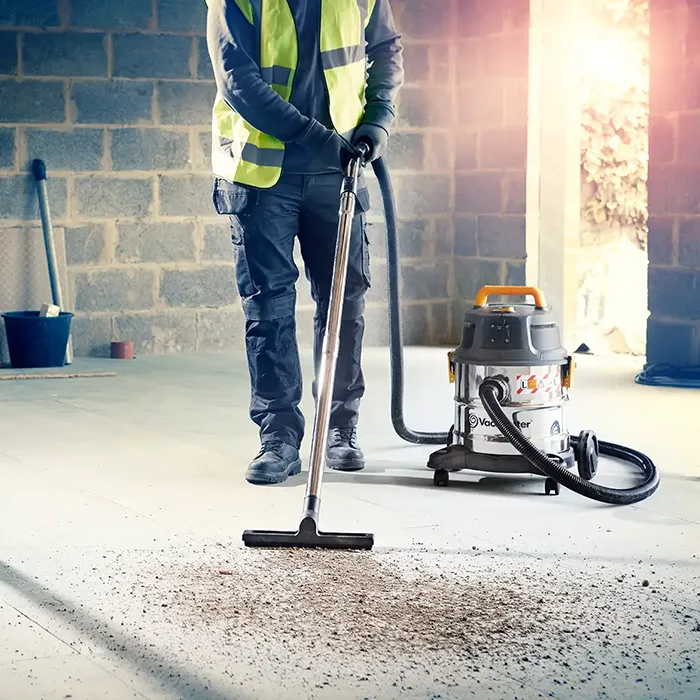
Wet and dry vacuums
Remove the paper filter before picking up liquid, since a soaked filter blocks instantly and can damage the motor. Empty and dry the drum afterwards with the lid off.
Never pick up flammable liquids, solvents or hot ash.
Buying
Compare the airflow rather than the wattage, check the hose diameter and whether it connects to your tools, and look for a filter rated for the dust you actually produce.
Noise and hearing
Extractors and power tools together are loud enough to damage hearing over time, and the damage is cumulative and permanent. Wear protection even for short jobs.
Eye protection for anything that cuts or grinds, and gloves for handling sharp material rather than near rotating machinery.
Filters and maintenance
Clean or shake filters regularly, since a blocked filter destroys suction and makes an extractor useless. Replace them on the schedule rather than when performance has already gone.
Keeping dust out of the house
Work outside or in a separate space where you can, change clothes rather than carrying dust indoors, and never shake overalls out in a kitchen. Wash work clothes separately.
Wet clean the workshop floor rather than sweeping, which puts fine dust straight back into the air.
Cleaning up
Vacuum rather than sweeping, and never use compressed air, which puts everything back into the air.
Ventilate and keep the workshop separate from living space.
WHERE TO BUY
Ready to shop PRM Cleva? Use the link below to visit the official store.
→ Shop PRM Cleva — official site
Visit this site