
home · Articles
Non-Stick Pans: Getting the Most From Them
Non-Stick Pans: Getting the Most From Them
 Transact Shopping
HOME · GLOBAL
Non-Stick Pans: Getting the Most From Them
How the coating works, heat limits, utensils and when to replace
Non-stick pans are convenient and have a finite life, and almost everything that shortens that life is about heat.
Do not overheat them
PTFE coatings are stable in normal cooking and begin to break down at high temperatures, around 260 degrees and above, releasing fumes. An empty pan on a high burner reaches that within minutes.
Those fumes can cause temporary flu-like symptoms in people and are fatal to pet birds, which are extremely sensitive to them. Keep birds out of the kitchen entirely.
Never preheat a non-stick pan empty, never use it for searing at high heat, and do not put it under a grill.
Use the right pan for the job
Non-stick suits eggs, pancakes, fish and anything delicate at moderate heat. Stainless steel and cast iron suit searing, browning and anything that needs a hot pan.
Utensils and cleaning
Wood, silicone or nylon rather than metal. Hand wash with a soft sponge, since dishwasher detergent is abrasive and degrades the coating even where the pan is labelled dishwasher safe.
Let pans cool before washing, since thermal shock warps the base and a warped pan heats unevenly on an induction or ceramic hob.
When to replace
When the coating is scratched, flaking or no longer releasing food. Flaking PTFE is largely inert if swallowed and a pan in that condition has stopped doing its job.
Most non-stick pans last three to five years with normal use, which is worth building into the cost.
Alternatives
Ceramic coatings are PTFE-free and generally lose their release properties faster. Well-seasoned cast iron and carbon steel last indefinitely and need maintaining.
Hobs and pan bases
Induction needs a magnetic base, and a pan that rocks on a flat hob heats unevenly and wastes energy. Check the base diameter against the ring, since a small pan on a large ring wastes heat.
Flat-bottomed pans matter more on induction and ceramic than on gas.
Building a set
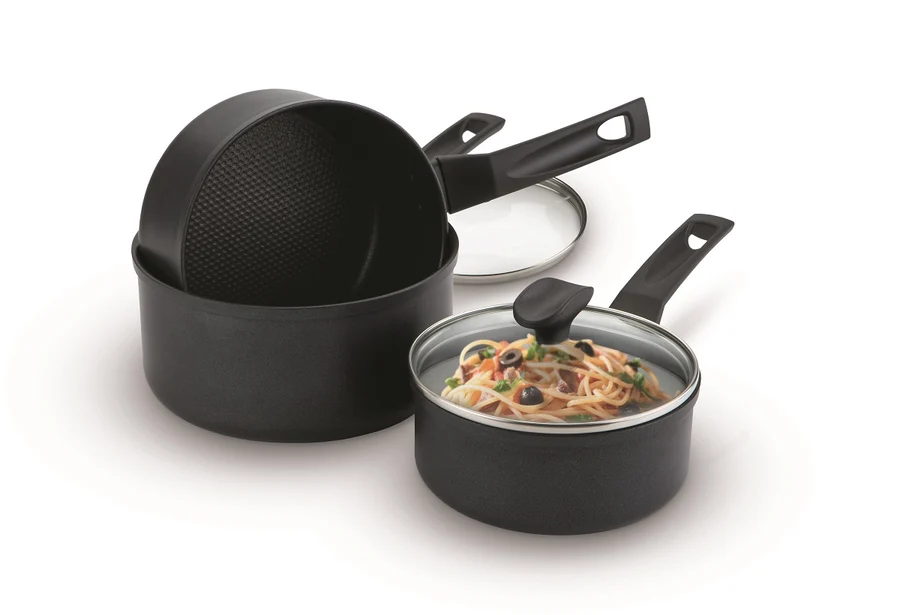
One good non-stick frying pan, a stainless or cast iron pan for searing, and two or three saucepans with lids covers almost everything. Sets frequently include two or three sizes that nobody ever uses.
Using less oil
Non-stick lets you cook with very little fat, which is much of the point. Heat the pan gently first, then add the oil, which also reduces how hot the coating itself gets.
Oil sprays containing propellants can leave a sticky residue on non-stick coatings that is difficult to remove.
Storage
Stack with a cloth or a pan protector between each one, since stacking bare metal onto a coating scratches it.
WHERE TO BUY
Ready to shop Prestige? Use the link below to visit the official store.
→ Shop Prestige — official site
Visit this site