
health · Articles
Cold Water Immersion: Evidence and Safety
Cold Water Immersion: Evidence and Safety
 Transact Shopping
FITNESS · GLOBAL
Cold Water Immersion: Evidence and Safety
What it does, cold shock, who should not, and doing it sensibly
Cold water immersion has become popular well ahead of the evidence, and the safety points are not optional.
Cold shock is the immediate danger
Sudden immersion causes an involuntary gasp, uncontrollable rapid breathing and a sharp rise in heart rate and blood pressure. That response is what drowns people in open water, and it is strongest in the first minute.
Enter slowly, keep your head above water, control your breathing and never enter alone. Never jump or dive in.
Who should not do it
Anyone with a heart condition, high blood pressure, an arrhythmia, asthma, Raynaud's, a seizure disorder, or who is pregnant should speak to a doctor first. Cold immersion has triggered cardiac events.
Never combine it with alcohol, and never after heavy exertion when you are already fatigued.
What the evidence shows
Reasonable evidence for reduced muscle soreness after exercise. Much weaker evidence for the broader claims about immunity, metabolism and mood, which are mostly small studies and self-reported outcomes.
There is also consistent evidence that cold immersion straight after resistance training blunts muscle and strength adaptations, so it suits recovery between competitions rather than a training block.
Doing it sensibly
Start with cool rather than freezing and short durations. A few minutes is enough, and longer is not better — hypothermia develops faster than people expect.
Warm up gradually afterwards with dry clothes and a warm drink rather than a hot shower, which can cause a dangerous drop in blood pressure.
Afterdrop
Core temperature continues falling after you get out, so the shivering phase comes later. Have everything ready before you get in.
Alternatives
For muscle soreness, gentle movement, sleep and adequate protein have better evidence than anything else. Contrast showers and cool baths give some of the same effect with far less risk.
Nothing recovers you from training you were not ready for.
Getting out safely
Have someone with you, have dry clothes and a warm drink ready, and get dressed immediately starting with the core. Do not drive until you have stopped shivering and feel normal.
Hot showers and saunas straight afterwards can cause a dangerous drop in blood pressure and fainting.
If it is not for you
There is no obligation. The general health benefits claimed for cold exposure are not well established, and the discomfort is real.
Saunas and heat
Heat exposure has its own body of evidence, largely observational, associating regular sauna use with cardiovascular measures. The same cautions apply — hydrate, do not use alcohol, and leave if you feel unwell.
Anyone pregnant or with a heart condition should take medical advice first.
Buying equipment
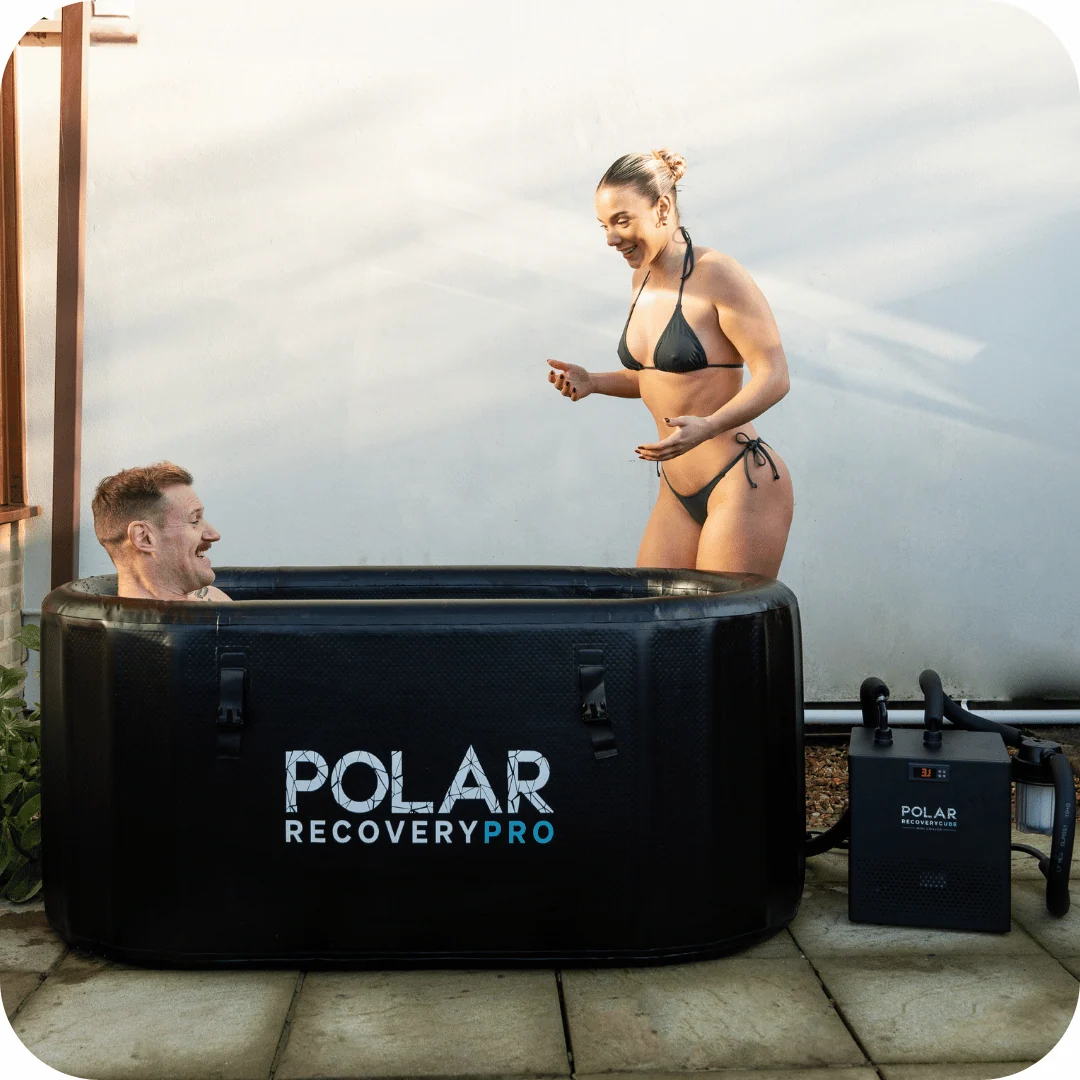
Check the insulation, whether a chiller is included and what the running cost is, since a chilled tub runs continuously. A cold shower or a wheelie bin costs nothing to test whether you will keep it up.
In open water
Wear a bright cap, use a tow float, swim with others and check conditions.
WHERE TO BUY
Ready to shop Polar Recovery? Use the link below to visit the official store.
→ Shop Polar Recovery — official site
Visit this site