
other · Articles
Emergency Call Bracelets and Personal Alarms for Older People
Emergency Call Bracelets and Personal Alarms for Older People
 Transact Shopping
HEALTH · GLOBAL
Emergency Call Bracelets and Personal Alarms for Older People
What they do, fall detection, choosing a system and the wider picture
A personal alarm lets someone living alone get help quickly, and choosing one is mostly about what happens after the button is pressed.
The two types
Monitored systems connect to a call centre staffed around the clock, which assesses the situation and contacts family or emergency services. Unmonitored devices dial a list of family numbers instead.
Monitored costs a monthly fee and works when relatives are asleep, at work or abroad, which is precisely when falls happen.
Fall detection
Sensors that raise an alarm automatically if a fall is detected, which matters because the most serious falls leave someone unable to press anything.
It is not perfect — it misses some falls and produces false alarms — and it is still worth having for anyone at risk.
Coverage
Home systems work within range of a base unit. Mobile devices use a phone network and GPS and work outside the home, which suits anyone still going out.
Check the battery life, how charging is handled, and whether the wearer will actually wear it, since an alarm in a drawer protects nobody.
Choosing a provider
Ask about response times, whether the centre is accredited, what happens if nobody answers, how key access is arranged, and the full cost including installation.
Local authorities and charities provide schemes in many areas, sometimes free or subsidised.
Preventing falls in the first place
Strength and balance exercise has strong evidence. Remove loose rugs and trailing cables, improve lighting, wear proper slippers with backs, and have an annual medication and eyesight review.
Setting it up properly
Test it on installation and then monthly, check the contact list is current, and make sure the person knows how it works rather than assuming. Agree with family who will be called and in what order.
Arrange key access — a key safe with a code shared with the monitoring centre — so responders can get in without breaking a door.
Beyond the alarm
Regular contact matters more than any device. A daily call, a neighbour who looks out, and a routine that would be noticed if broken.
Cost
Compare the monthly monitoring fee, any installation charge and the minimum contract. Some schemes are funded by local authorities or charities, and VAT relief applies to some equipment for disabled people.
Ask what happens if the person moves or goes into hospital.
Other assistive technology
Key safes, medication reminders, motion-activated night lights and a doorbell camera all help someone live independently for longer. None replaces someone checking in.
Occupational therapists assess homes and recommend adaptations, frequently through the local authority.
Talking about it
Frame it as independence rather than decline, which is usually the actual objection.
WHERE TO BUY
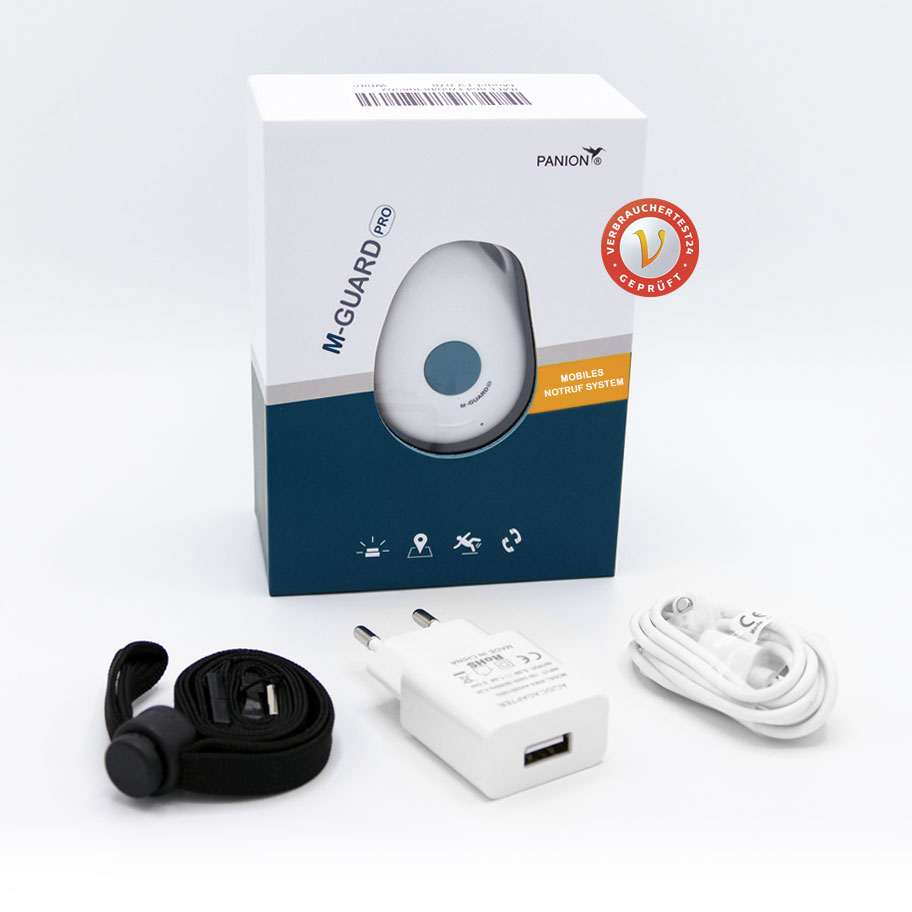
Ready to shop Panion? Use the link below to visit the official store.
→ Shop Panion — official site
Visit this site