
other · Articles
Leads, Collars and Harnesses
Leads, Collars and Harnesses
 Transact Shopping
PETS · GLOBAL
Leads, Collars and Harnesses
Choosing equipment, why aversive tools are avoided, fit and walking training
Walking equipment shapes how a dog learns to walk, and the modern evidence is fairly clear about which approaches work and which cause problems.
Harness or collar
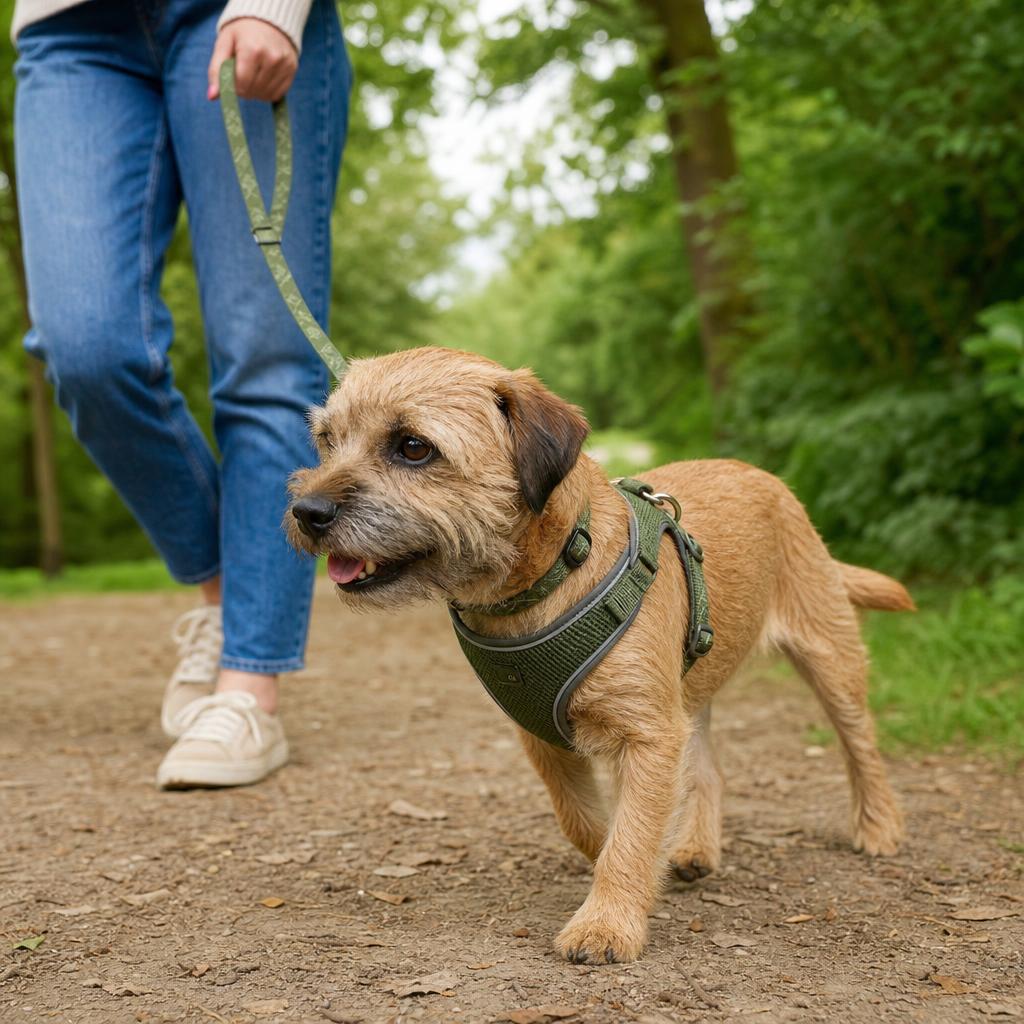
A well-fitted harness spreads pressure across the chest rather than the throat. For dogs that pull, that matters — pressure on the neck is associated with damage to the trachea, thyroid and eyes.
Collars are fine for identification and for dogs that walk on a loose lead, and by law in the UK a dog in a public place must wear a collar with the owner's name and address.
Avoid aversive equipment
Choke chains, prong collars and electronic shock collars work by causing discomfort or pain. Electronic collars are banned in Wales and Scotland, with legislation elsewhere, and veterinary and behaviour bodies advise against all of them.
Beyond welfare, they are associated with increased anxiety and aggression, and they suppress behaviour without teaching an alternative.
Fitting a harness
Two fingers under every strap, no rubbing in the armpits, and the chest piece sitting across the sternum rather than pressing on the shoulder joint. Check the fit regularly, particularly on a growing dog.
A front-clip attachment redirects a pulling dog without discomfort.
Leads
A fixed lead of around one and a half to two metres gives control and room. Extending leads teach pulling, tangle, and cause serious friction injuries to hands and legs.
Teaching loose lead walking
Reward the dog for being beside you rather than correcting them for pulling. Stop when the lead tightens, move when it loosens. It is slow and it works.
Identification and legal points
Microchipping is compulsory for dogs and cats in the UK, and the registered details must be kept current, which is the part people forget after moving house.
A dog in a public place must wear a collar with the owner's name and address, even if microchipped.
Checking equipment
Inspect stitching, clips and D-rings regularly, since these fail under load at the worst moment. Replace anything frayed rather than waiting.
Walking safely
Reflective or lit collars and leads matter on dark roads, since a dog on a long lead can be a metre into the carriageway. A harness with a handle gives control near traffic.
Check the law on where dogs must be on a lead, which includes many public paths, and always on roads.
Puppies and older dogs
Harnesses on a growing puppy need checking every few weeks, since a harness that fitted last month can rub within days. Older dogs with arthritis frequently prefer a harness that avoids lifting the head.
Introduce any new equipment gradually with food rather than simply putting it on.
Identification
Microchipping is a legal requirement for dogs and cats in the UK, and details must be kept current.
WHERE TO BUY
Ready to shop Oscar & Hooch? Use the link below to visit the official store.
→ Shop Oscar & Hooch — official site
Visit this site