
home · Articles
Storage, Decluttering and Living With Less
Storage, Decluttering and Living With Less
 Transact Shopping
HOME · UNITED KINGDOM
Storage, Decluttering and Living With Less
Why storage alone does not work, sorting properly, systems that last and buying
Buying storage is the usual first response to clutter and the usual reason it returns, because containers organise a problem rather than reducing it.
Reduce before you store
Sort first and buy containers afterwards, measured to what is left. Buying boxes first means filling them, which is how a loft ends up full of things nobody has looked at in a decade.
Sorting properly
Take everything of one category out at once rather than tidying room by room, since you cannot judge how many of something you own when it is spread across four cupboards.
Decide by whether you use it rather than whether it might be useful. Almost everything ordinary can be replaced or borrowed, which makes keeping it insurance against a problem you will not have.
The things people find hardest
Gifts, inherited items and things bought expensively and never used. Keeping something out of guilt does not honour it, and photographing an object before passing it on works for many people.
Paperwork is usually the largest volume and the easiest to reduce, since most of it is available online.
Systems that last
A place for everything, and that place being where you use the thing rather than where it looks tidy. Open shelving for what you use daily, closed storage for the rest.
One in, one out for categories that accumulate — clothes, mugs, cables, toys.
Buying storage
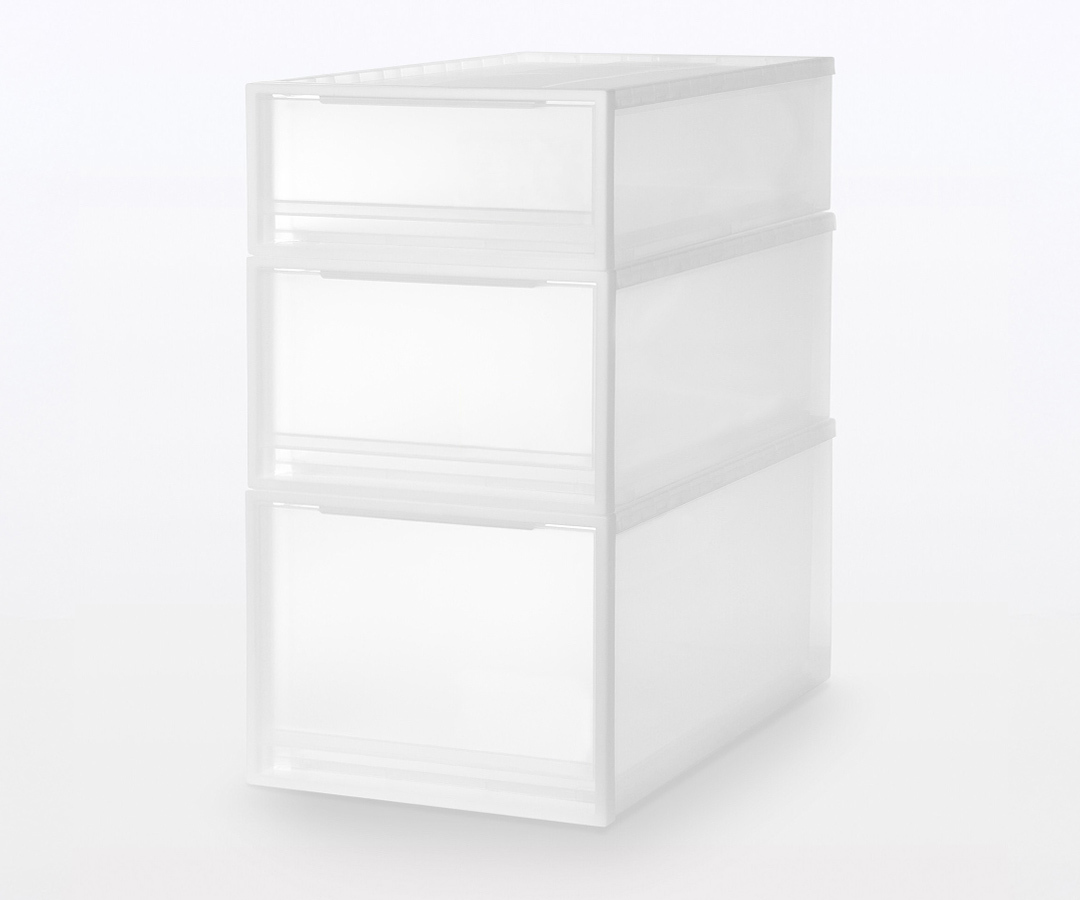
Measure the space and the contents. Modular systems that stack and share dimensions work far better than a collection of boxes bought over years.
Label anything opaque, since an unlabelled box is a box you will open eleven times.
Small spaces
Vertical space is almost always underused. Wall hooks, over-door storage and raising things off the floor make a small room work considerably better than more furniture does.
Anchor anything tall to the wall, particularly with children in the house.
Paper and admin
Paperwork is usually the largest volume in a house and the easiest to reduce, since most statements, manuals and bills are available online. Keep what has legal or tax significance and scan the rest.
One tray for incoming paper, dealt with weekly, prevents the pile that becomes a drawer.
Children and toys
Fewer toys available at once, rotated, produces deeper play than a full room. Store the rest out of sight and bring them back, which makes old toys feel new.
Where things go
Charity shops for anything clean and complete, resale platforms for things with value, community groups for large items, and textile banks for worn clothing. Electricals go to electrical recycling.
Book a collection for furniture rather than leaving it outside a closed shop, where it is ruined by rain.
Where things go
Charity shops, resale, community groups and textile banks. Electricals go to electrical recycling.
WHERE TO BUY
Ready to shop MUJI? Use the link below to visit the official store.
→ Shop MUJI — official site
Visit this site