
other · Articles
Dirndl and Tracht: Fit and Care
Dirndl and Tracht: Fit and Care
 Transact Shopping
FASHION · GLOBAL
Dirndl and Tracht: Fit and Care
How a dirndl should fit, the apron bow, fabrics and looking after it
Traditional Alpine dress has a specific structure, and getting the fit right is what separates a dirndl from a costume.
How it should fit
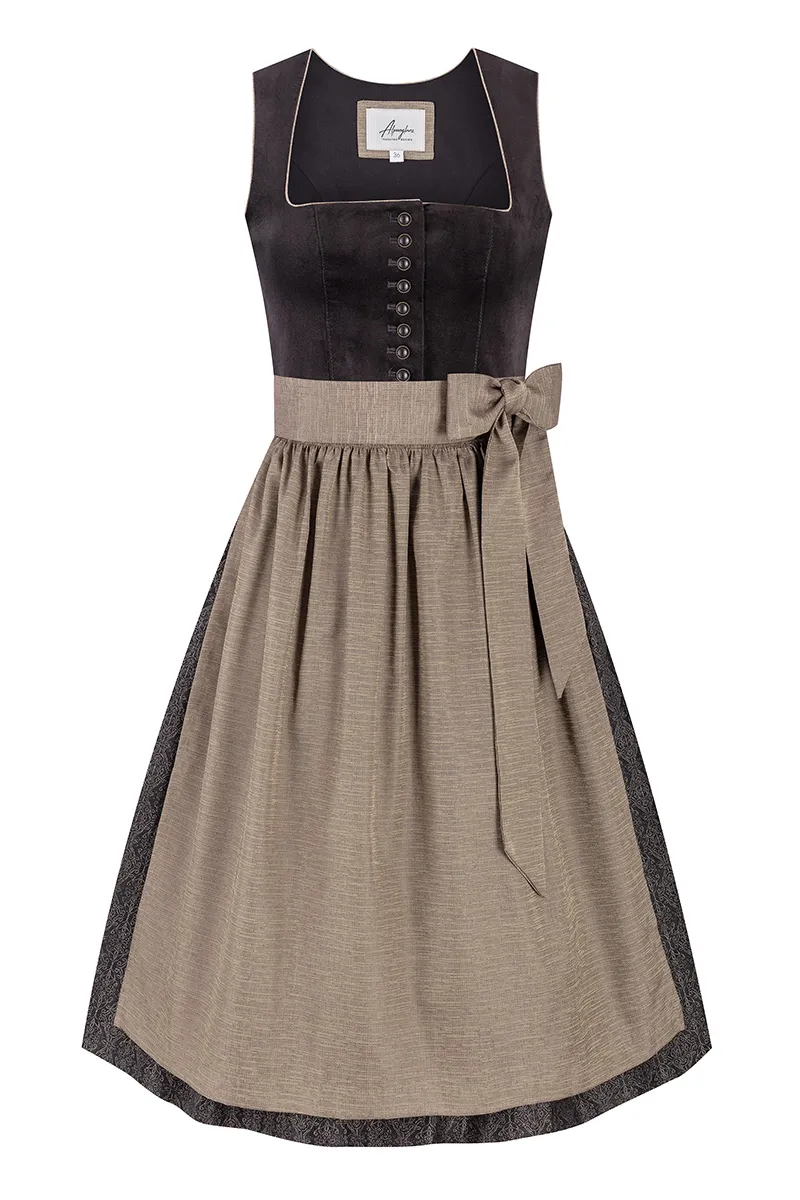
The bodice should be firm and supportive, fastening without gaping, and it is meant to be snug rather than comfortable in a loose sense. The waist sits at the natural waist rather than on the hips.
Length is a choice rather than a rule — mini, midi and long all exist, with midi around knee length being the most versatile and the most traditional for everyday wear.
The blouse
Worn under the bodice and short, ending at the ribcage so it does not bunch. Necklines vary from a high collar to a deep square, and the choice sets the formality of the whole outfit.
The apron bow
Traditionally the bow's position carries meaning — on the wearer's right indicating taken or married, on the left available, at the front centre worn by children, and at the back historically by widows or waitresses.
It is widely known and worth being aware of at a festival, and interpretations vary by region.
Fabrics
Cotton for everyday and summer, linen for heat, and silk or brocade for formal occasions. Check whether the fabric is a traditional weave or a printed imitation, since the difference shows immediately.
Care
Check the label — many dirndls are dry clean only, particularly anything with silk or structured boning. Wash aprons and blouses separately and more often than the dress.
Hang the dress rather than folding it, and store it in a breathable cover away from damp and moths.
For men
Lederhosen are meant to fit closely and to soften with wear, and genuine leather darkens and develops a patina over years rather than being cleaned. Check whether the leather is deerskin, goat or cowhide, since they wear differently.
Wipe rather than washing, air after wearing, and do not dry clean unless a specialist advises it.
Buying
Quality varies enormously between genuine Tracht and costume versions sold for festivals. Check the fabric, the stitching and whether the garment can be altered.
Wearing it well
Simple shoes, minimal jewellery and a plain bag let the dress carry the outfit. Traditional dress is worn with some respect for its origins rather than as a novelty, which matters at a genuine local festival.
Comfort matters over a long day — a bodice that is too tight is unwearable by the evening.
Store the dress hung in a breathable cover, away from damp and moths.
Buying
A good dirndl lasts decades and can be altered as sizes change.
WHERE TO BUY
Ready to shop MOSER Trachten? Use the link below to visit the official store.
→ Shop MOSER Trachten — official site
Visit this site