
home · Articles
Bathroom Mirrors and Lighting
Bathroom Mirrors and Lighting
 Transact Shopping
HOME · GLOBAL
Bathroom Mirrors and Lighting
Sizing and placement, demisting, light around a mirror and fitting safely
A bathroom mirror is used at close range in poor light, which makes the lighting around it matter as much as the mirror.
Sizing and placement
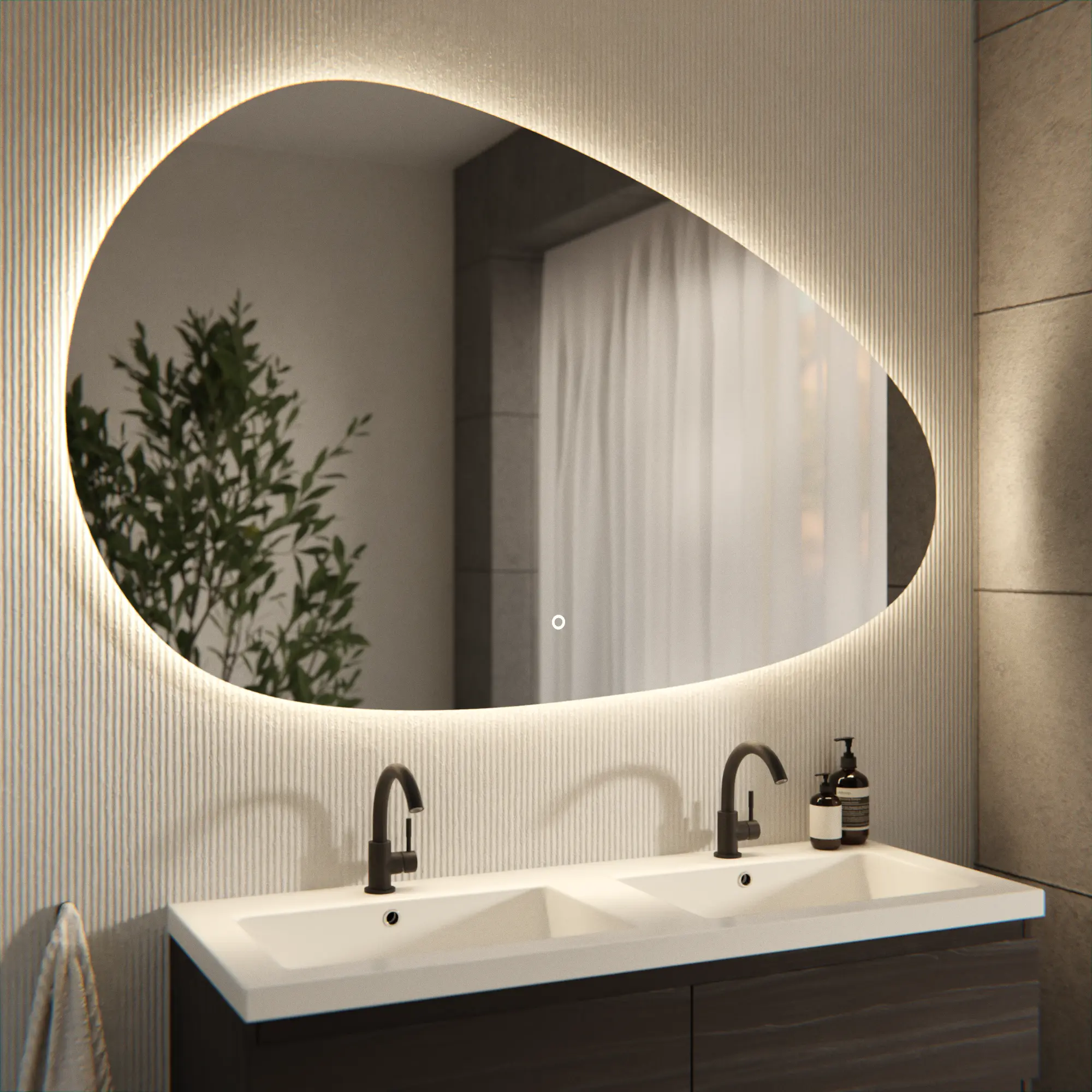
A mirror roughly the width of the basin or vanity below it looks balanced, and taller is usually better than wider. Centre it on the basin rather than on the wall, since those are rarely the same point.
Hang it so the middle sits at the eye level of the people using it, which is a compromise in a shared bathroom.
Demisting
A heated demister pad behind the glass keeps a patch clear and needs a fixed electrical supply. It is a convenience rather than a fix for a steamy bathroom.
The actual fix is ventilation — an extract fan sized for the room, ducted outside, run during and after showering.
Lighting
Light from above alone casts shadows down the face. Lights either side at around eye level give even light for shaving and makeup, which is why theatre-style surrounds work.
Around 3000K to 4000K and a colour rendering index above 90 shows skin accurately. Anything warmer flatters and misleads.
Fitting safely
Bathroom zones govern what may be fitted where and to what IP rating, and most fixed electrical work in a bathroom is notifiable. Use a qualified electrician for anything wired.
Fix a heavy mirror into structure rather than plasterboard alone, and drill tiles slowly with a tile bit and masking tape.
Mirrors elsewhere
A mirror opposite or adjacent to a window bounces daylight further into a room and makes a small space feel larger. Opposite a cluttered wall it simply doubles the clutter.
Check what it will reflect from where people sit before hanging it.
Fitting heavy mirrors
Use fixings rated well above the weight, into structure where possible, and two hooks rather than one so it stays level. Never hang a heavy mirror above a bed or a cot.
Safety glass
Look for safety backing or toughened glass in a bathroom or anywhere children use, which holds the pieces together if it breaks.
Cleaning and condition
Spray the cloth rather than the mirror, since liquid running into the edges lifts the silvering and causes the black spots that cannot be repaired.
Avoid ammonia-based cleaners on framed or bevelled mirrors.
Buying
Check the thickness of the glass, the frame material in a wet room, and whether fixings are included. Aluminium and treated timber cope with bathroom humidity where untreated wood warps.
Measure the wall space and the position of tiles and sockets before ordering.
Cleaning
Spray the cloth rather than the mirror, since liquid running into the edges destroys the silvering.
WHERE TO BUY
Ready to shop Mirlux? Use the link below to visit the official store.
→ Shop Mirlux — official site
Visit this site