
home · Articles
Kitchen Knives and Keeping Them Sharp
Kitchen Knives and Keeping Them Sharp
 Transact Shopping
FOOD · UNITED KINGDOM
Kitchen Knives and Keeping Them Sharp
The knives you actually need, steel and construction, sharpening and safety
Knife sets are sold with eight pieces and most cooks use three, and the difference between a good kitchen and a frustrating one is sharpness rather than quantity.
Three knives cover almost everything
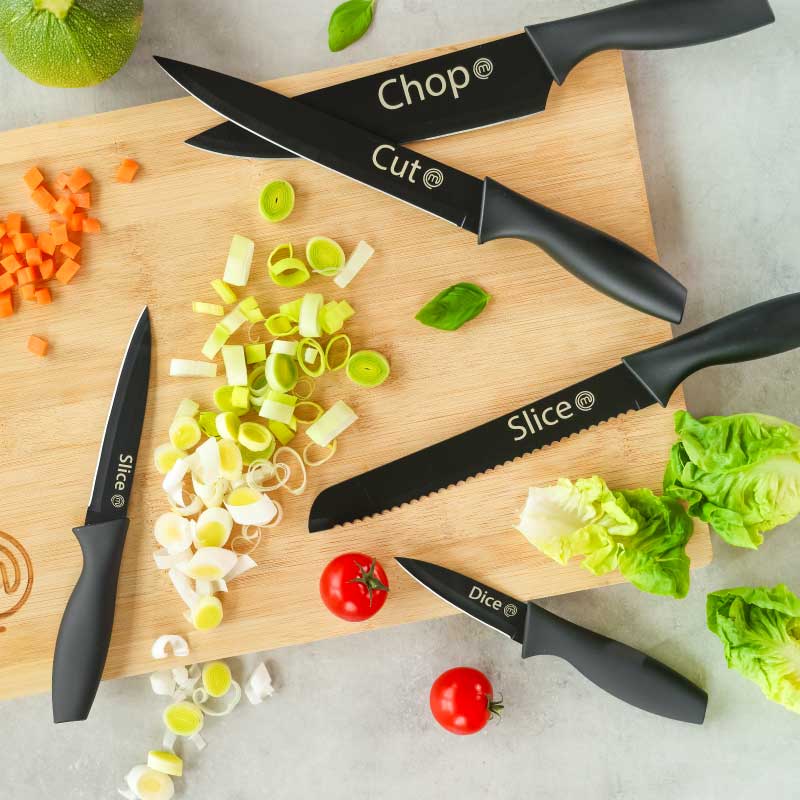
A chef's knife of around 20 centimetres for most work, a small paring knife for detail, and a serrated bread knife. A boning or filleting knife if you butcher or fillet regularly.
Buy those three well rather than a block of ten, most of which will sit unused.
Steel and construction
Harder steels hold an edge longer and chip more readily. Softer stainless is more forgiving and needs sharpening more often. Carbon steel takes the keenest edge and rusts if not dried immediately.
Full tang construction, where the steel runs through the handle, balances better and lasts longer. Pick up several and choose the one that feels right, since balance is personal.
Sharp knives are safer
A blunt knife requires force and slips, which is how most kitchen cuts happen. This is the most counterintuitive and most important point about knives.
Honing and sharpening
A honing steel realigns the edge and should be used regularly — it does not sharpen. Actual sharpening removes metal and is done on a whetstone or by a professional, a few times a year for most households.
Pull-through sharpeners are convenient and remove a lot of metal, which shortens a knife's life considerably.
What ruins an edge
Dishwashers, which batter blades and damage handles. Glass, stone and ceramic boards. Leaving knives loose in a drawer.
Hand wash, dry immediately, and store on a magnetic strip, in a block or in a guard.
Cutting technique
Curl the fingertips of the guiding hand under, with the knuckles against the blade, and keep the tip of the knife on the board, rocking rather than lifting. Slow and correct beats fast and unsafe.
Put a damp cloth under the board so it cannot slide, which is a common cause of cuts.
Storing and carrying
Never leave a knife in a sink full of water. Use a blade guard when transporting one, and hand a knife over handle first or set it down rather than passing it.
Sharpening options
A whetstone gives the best edge and takes practice. A guided system is more forgiving. Many towns have a knife sharpening service, and a few pounds a year keeps a good knife working properly.
Learn on an inexpensive knife before putting a good one on a stone.
Boards
Wood or good plastic, with separate boards for raw meat. Wood is kinder to edges than plastic and needs oiling occasionally.
WHERE TO BUY
Ready to shop Masterchef? Use the link below to visit the official store.
→ Shop Masterchef — official site
Visit this site