
kids · Articles
Nursery Furniture and Cot Safety
Nursery Furniture and Cot Safety
 Transact Shopping
FAMILY · GLOBAL
Nursery Furniture and Cot Safety
Cot standards and spacing, mattresses, what not to put in, and room layout
Nursery furniture is bought for how it looks and should be chosen on a small number of safety specifics, most of which relate to the cot.
The cot itself
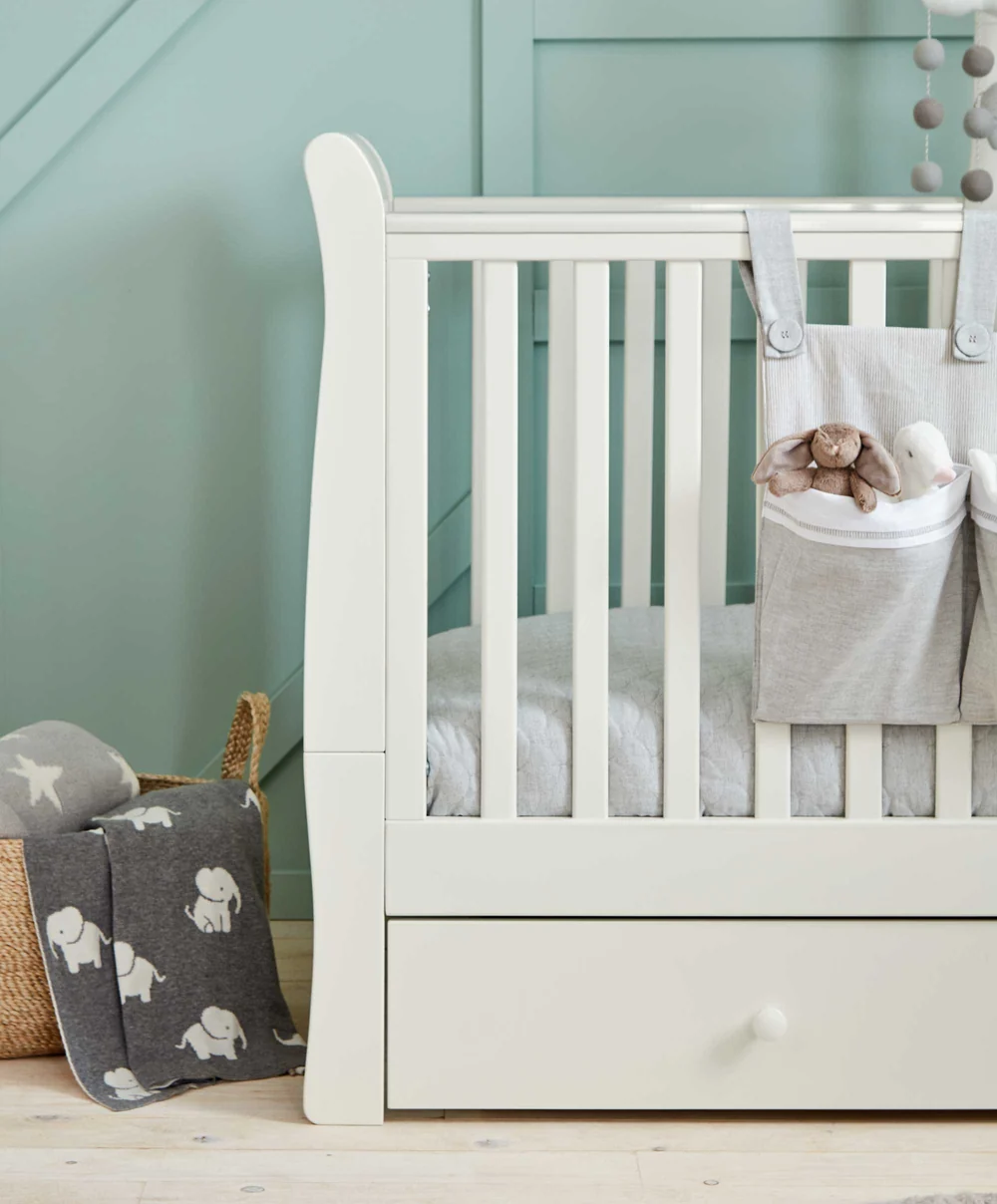
Buy one meeting the current safety standard. Bar spacing must be between 4.5 and 6.5 centimetres so a head cannot pass through and a limb cannot trap, and there should be no cut-outs or decorative gaps.
Drop-side cots are no longer sold in many countries because of entrapment risks. Lower the base as soon as the baby can sit up, and again when they can stand.
The mattress
Firm, flat, waterproof-backed and correctly sized, with no more than a two to three centimetre gap at any edge. A soft or ill-fitting mattress is a suffocation risk.
Buy a new mattress where you can, and if reusing one, ensure it is firm, clean, dry and undamaged with no tears.
Nothing else in the cot
No pillows, duvets, bumpers, pods, nests, positioners or soft toys in the first year. Safe sleep guidance is consistent on this across health services.
Use a correctly sized sleeping bag or firmly tucked thin blankets instead, with feet to the foot of the cot.
Where it goes
In the parents' room for the first six months, day and night. Away from windows, radiators, curtains and anything with a cord, since blind cords are a strangulation risk.
Other furniture
Anchor wardrobes, drawers and changing units to the wall, since toppling furniture causes serious injuries. Never leave a baby unattended on a raised changing surface.
Changing units and storage
A changing surface with raised sides and everything within arm's reach, so you never have to turn away. Most falls happen in the second somebody reaches for a wipe.
Keep nappy sacks, plastic bags and any small items well out of reach, since these are a genuine suffocation and choking risk.
Buying ahead
Nursery furniture has long lead times, frequently several months for made-to-order pieces. Order early and confirm the delivery dates rather than assuming they will arrive in time.
Room temperature and monitors
Around sixteen to twenty degrees suits most nurseries, and a simple room thermometer is considerably more useful than guessing at it. Check the baby's temperature at the chest or the back of the neck rather than hands and feet.
Video monitors are for convenience rather than for safety, and no monitor is a substitute for the sleep environment itself being right.
Buying ahead
Cot beds that convert extend the usable life considerably. Check that spare parts and replacement mattress sizes are available before choosing one.
WHERE TO BUY
Ready to shop Mamas & Papas? Use the link below to visit the official store.
→ Shop Mamas & Papas — official site
Visit this site