
sports · Articles
Resistance Bands and Home Training
Resistance Bands and Home Training
 Transact Shopping
FITNESS · GLOBAL
Resistance Bands and Home Training
What bands do well, choosing resistance, safety and building a routine
Resistance bands provide genuinely effective training for very little money and space, and they have a specific failure mode worth knowing about.
What they do well
Research comparing elastic resistance with weights generally finds similar strength gains when effort is matched. They suit travel, small spaces, rehabilitation and adding resistance to bodyweight movements.
The resistance increases as the band stretches, which is the opposite of a dumbbell and suits some movements particularly well.
Bands snap
Latex degrades with ultraviolet light, heat, oil and age, and a band that fails under tension recoils into whatever is in the way — frequently a face.
Inspect for nicks, thinning and cloudiness before every session, never stretch beyond roughly two and a half times the resting length, and do not anchor to anything that could break or come loose.
Wear eye protection for any movement where a failure would hit the face, and replace bands on a schedule rather than when they look bad.
Anchoring
Use a proper door anchor on a door that opens away from you, closed and preferably locked. Never anchor to furniture, radiators or door handles.
Choosing resistance
Bands are colour coded differently between manufacturers, so buy a set rather than a single band and keep to one brand for consistency.
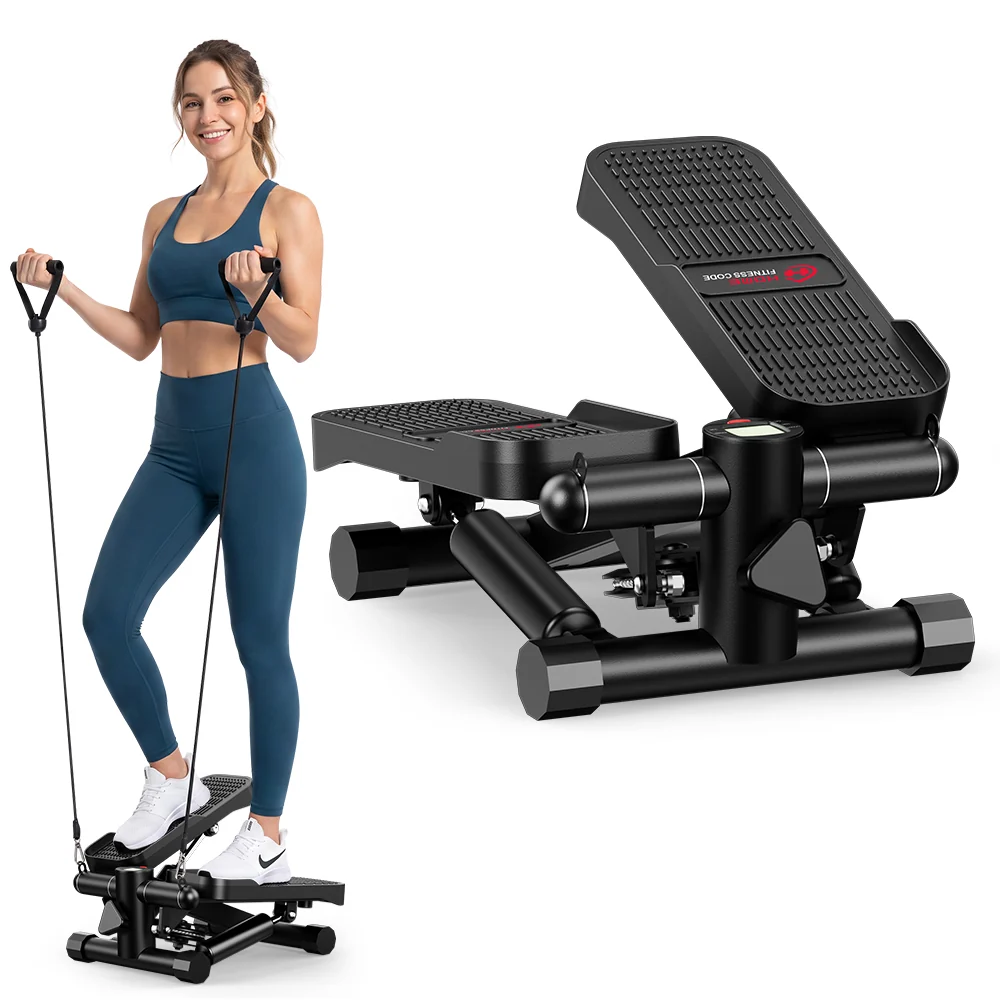
Loop bands suit lower body and glute work; tube bands with handles suit upper body pressing and rowing.
Building a routine
Two or three sessions a week covering push, pull, legs and core. Progress by using a heavier band, more repetitions or a slower tempo.
Storage
Keep bands out of sunlight and away from heat, in a bag or a drawer rather than hanging in a window or a conservatory. Ultraviolet is what degrades latex fastest.
Dust them with talc if they become tacky, which is a sign the material is ageing.
Technique with bands
Control the return as well as the pull, since letting a band snap back wastes the most useful part of the movement and is how bands and fingers get hurt.
Anchor at the right height for the exercise and keep the band in line with the movement, rather than letting it pull your joint sideways.
Other small equipment
A mat, a suspension trainer and a pair of adjustable dumbbells cover an enormous range in very little space. Buy what suits the training you will actually do.
Warming up
Five to ten minutes of easy movement before resistance work, and building load gradually within a session. Most home training injuries come from doing too much on the first enthusiastic day.
Speak to a doctor first if you have a heart condition, joint problems or have been inactive for a long period.
Latex allergy
Non-latex bands are available and matter for anyone with a latex allergy.
WHERE TO BUY
Ready to shop Home Fitness Code? Use the link below to visit the official store.
→ Shop Home Fitness Code — official site
Visit this site