
other · Articles
Feeding Garden Birds Responsibly
Feeding Garden Birds Responsibly
 Transact Shopping
GARDEN · GLOBAL
Feeding Garden Birds Responsibly
Hygiene and disease, what to feed, siting feeders and seasonal advice
Feeding birds brings genuine pleasure and carries a responsibility, because a feeder concentrates birds in one place and can spread disease.
Hygiene is the most important part
Clean feeders weekly with hot soapy water and a weak disinfectant, rinse thoroughly and dry before refilling. Move feeders around the garden periodically so droppings do not build up in one spot.
Trichomonosis has caused severe declines in greenfinches and chaffinches and spreads at feeders and bird baths. If you see birds looking fluffed up, lethargic or with difficulty swallowing, stop feeding entirely for a few weeks and clean everything.
Wear gloves and wash hands after handling feeders.
What to feed
Sunflower hearts, nyjer for finches, peanuts in a mesh feeder rather than whole in spring, suet and mealworms. Avoid cheap mixes bulked with wheat and split peas, which most garden birds will not eat.
Never give bread in quantity, salted or roasted nuts, cooked fats, milk or desiccated coconut.
Water
As important as food, particularly in frost and drought. Clean the bath as often as the feeders and refill with fresh water rather than topping up.
Siting feeders
Within a couple of metres of cover so birds can escape, and not directly under a branch cats can use. Keep feeders away from windows or very close to them, since collisions happen at intermediate distances.
Seasons
Year-round feeding is now generally advised. In the breeding season avoid whole peanuts and hard foods that adults might feed to chicks.
Gardens for birds
Native shrubs, seed heads left standing over winter, a pond and no pesticides do more for birds over a year than any feeder. Nest boxes should face between north and east, away from the midday sun.
Do not disturb an active nest, which is an offence in the UK.
Feeder types
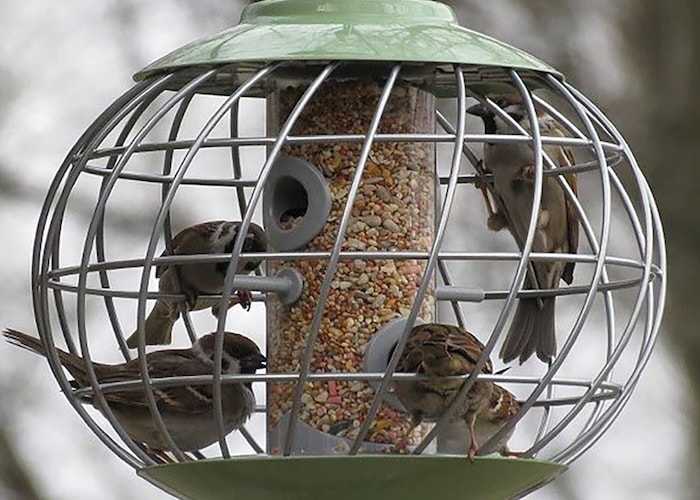
Tube feeders suit small seed, mesh feeders suit peanuts, and ground trays suit blackbirds and robins that will not use a hanging feeder. A mix brings a wider range of species.
Choose feeders that come apart fully for cleaning, since a feeder that cannot be cleaned properly should not be used.
Storage
Keep seed dry and sealed, since damp seed grows mould that is harmful to birds. Buy quantities you will use within a few months.
Cats and windows
Window collisions kill large numbers of birds. Feeders very close to glass or well away from it are both safer than intermediate distances, and stickers or blinds break up reflections.
Keeping cats in at dawn and dusk and fitting a bell reduces predation considerably.
Hedgehogs and other visitors
Spilled seed attracts rodents, so use a tray and sweep underneath. Never put out milk for hedgehogs, which cannot digest it — water and meat-based pet food are correct.
Cats and squirrels
A bell and keeping cats in at dawn and dusk helps. Guardian cages and pole baffles deter squirrels.
WHERE TO BUY
Ready to shop Happy Beaks? Use the link below to visit the official store.
→ Shop Happy Beaks — official site
Visit this site