
beauty · Articles
Natural and Clean Beauty Claims
Natural and Clean Beauty Claims
 Transact Shopping
BEAUTY · UNITED KINGDOM
Natural and Clean Beauty Claims
What the terms mean, natural and safe are different, greenwashing and what to look for
Clean beauty is a marketing category rather than a regulated one, and separating the genuine parts from the claims makes it considerably more useful.
Clean and natural have no legal definition
In the UK, EU and US there is no agreed standard behind either word. Each brand defines its own free-from list, which is why the same ingredient is excluded by one and used by another.
Organic certification is different — schemes such as COSMOS and Soil Association set auditable standards, and that mark means something checkable.
Natural does not mean safe
Essential oils, citrus extracts and botanical ingredients are among the leading causes of contact allergy in cosmetics. Poison ivy is natural; petrolatum is synthetic and one of the gentlest occlusives known.
Dose and formulation determine safety, not origin.
Free-from claims
Many target ingredients that were never a real risk at cosmetic concentrations, and some regulators discourage free-from claims that imply a competitor's product is unsafe.
Preservatives in particular are essential in anything containing water, and a poorly preserved product grows bacteria and mould.
Where the movement has a point
Fragrance-free formulations, shorter ingredient lists, refillable packaging and transparency about sourcing are all genuine improvements, and many are available at any price.
What to look for instead
Stated concentrations of any active ingredient, protective packaging, a full ingredient list and a certification you can check. Those tell you more than any adjective on the front.
Preservatives
Anything containing water needs a preservative system, and an inadequately preserved product grows bacteria and mould within weeks. That is a genuine safety matter rather than a compromise.
Waterless products such as oils and balms need less preservation, which is one reason they appear in natural ranges.
Packaging
Airless pumps and opaque bottles protect actives from light and air far better than jars, whatever the formulation. Refillable packaging reduces waste where the refills are actually available near you.
What has the strongest evidence
Daily broad-spectrum sunscreen, retinoids, and for specific conditions, prescription treatment. Those change outcomes regardless of whether a range describes itself as natural.
A gentle cleanser, one active, a moisturiser and sunscreen is a complete routine at any price.
Sustainability claims
Look for specifics — a refill system that is actually available near you, a stated recycled content, a certification you can check. Vague language about being kind to the planet is not measurable.
Regulators in the UK and EU have tightened rules on unsubstantiated environmental claims, which is why careful brands now state figures.
Patch testing
Apply anything new to the inner forearm daily for five to seven days, since reactions to botanical ingredients are frequently delayed.
Patch testing
Apply anything new to the inner forearm daily for several days, since reactions to botanical ingredients are frequently delayed.
WHERE TO BUY
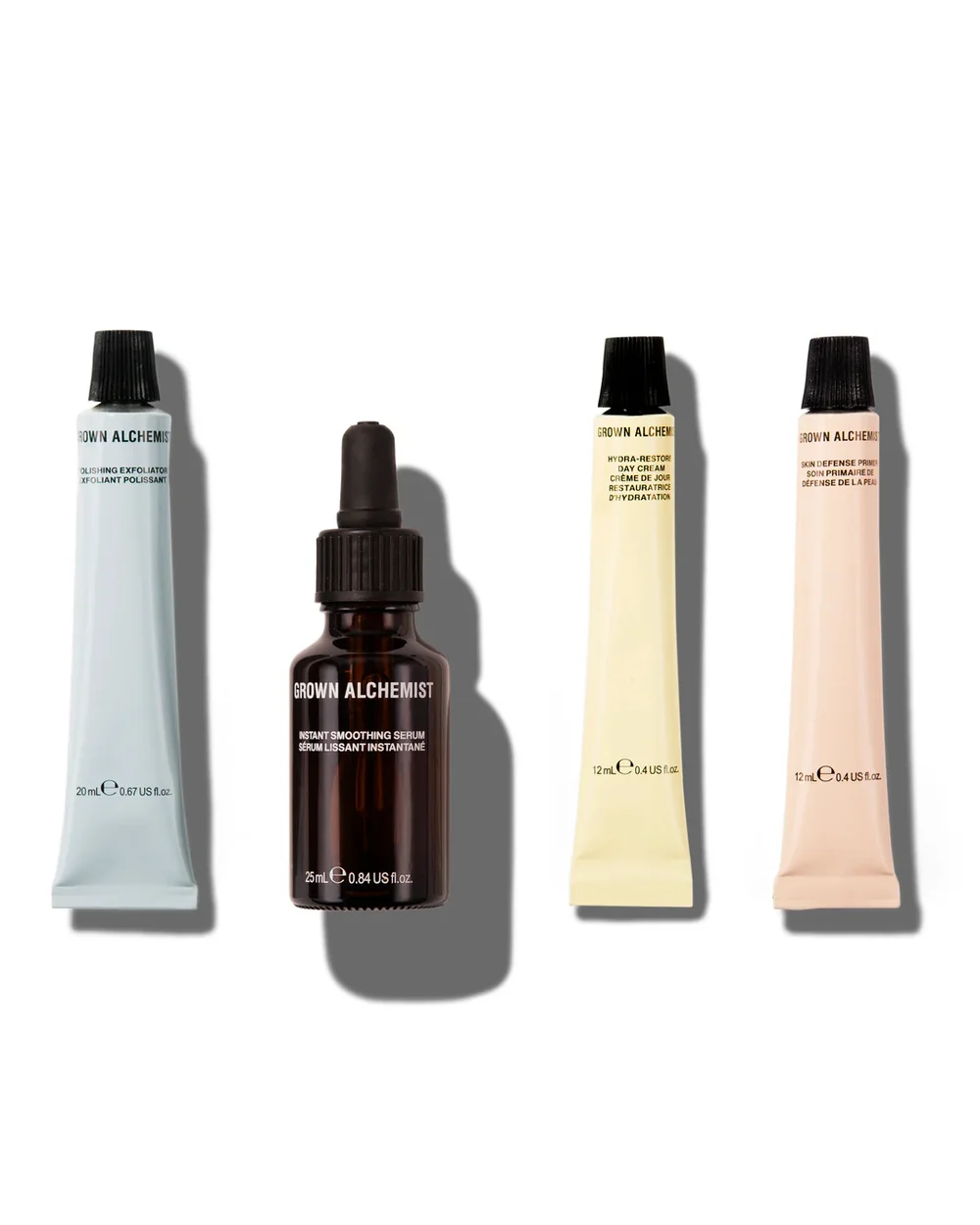
Ready to shop Grown Alchemist? Use the link below to visit the official store.
→ Shop Grown Alchemist — official site
Visit this site