
other · Articles
Stocks, Soups and Reading the Salt
Stocks, Soups and Reading the Salt
 Transact Shopping
FOOD · GLOBAL
Stocks, Soups and Reading the Salt
What is in a stock cube, salt intake, low-salt cooking and making your own
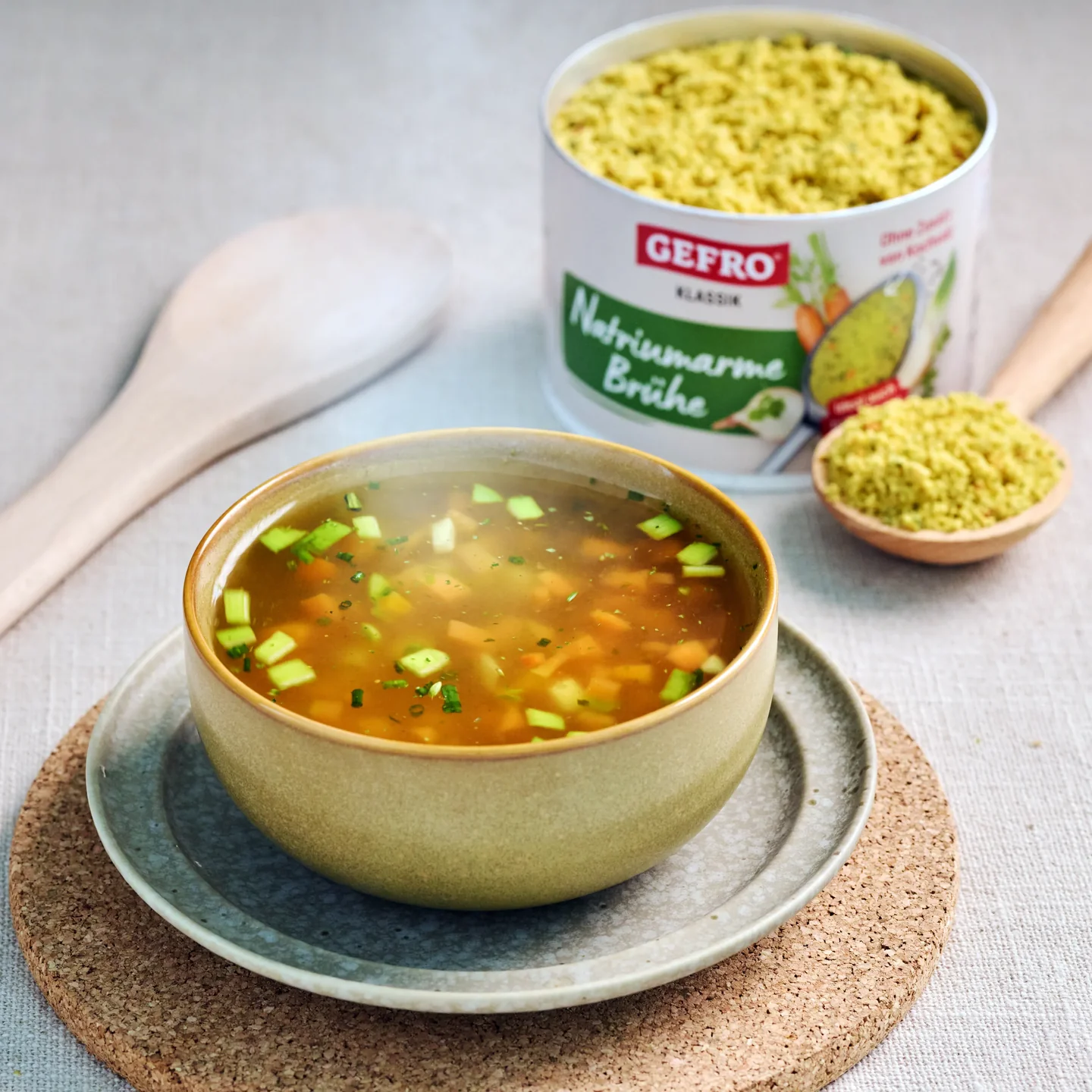
Stock and soup are where a surprising share of household salt comes in, and the label tells you exactly how much.
Check the salt per 100ml as prepared
Stock cubes and powders look alarming per 100 grams because nobody eats them undiluted. The useful figure is salt per 100ml of made-up stock, or per portion of soup.
Most adults eat more salt than recommended, and the majority comes from processed food rather than the salt cellar.
What is in a cube
Usually salt, flavour enhancers, dried vegetable extracts, fat and a small amount of actual meat or vegetable content. That is a legitimate seasoning product rather than a stock in the culinary sense.
Yeast extract and glutamate provide savoury depth. Both are safe and widely misunderstood, and both are effectively sources of umami.
Reducing salt without losing flavour
Acid — lemon, vinegar — lifts a dish that tastes flat, as do herbs, pepper, garlic, smoked paprika and browning ingredients properly. People frequently reach for salt when the dish needs acid.
Reduce gradually, since taste adapts over a few weeks.
Making your own stock
Bones, vegetable trimmings and time. Freeze in portions, label them, and leave it unsalted so you control seasoning in the final dish.
A bag of trimmings in the freezer costs nothing and becomes stock.
Ready soups
Compare salt, sugar and fibre per portion, since vegetable soups vary enormously. A soup with beans or lentils is considerably more filling.
Convenience and cooking
There is nothing wrong with using stock cubes, frozen vegetables and tinned pulses. They make cooking from scratch achievable on a weeknight, which matters far more than whether every component was made at home.
Frozen vegetables are frequently higher in vitamins than fresh ones that have travelled and sat for days.
Reading labels
Compare salt, sugar and fibre per portion rather than per 100 grams where portions differ. Fibre is where most ready meals and soups are weakest.
Batch cooking
Making a large pot of soup and freezing it in portions is cheaper, lower in salt and faster on a weeknight than any shop-bought version. Label and date everything, since nothing is identifiable once frozen.
Leave headspace in containers, since liquids expand.
Storage
Cool food within two hours, refrigerate promptly and use cooked food within a couple of days. Reheat until piping hot throughout, and only once.
Check the ingredient list length, since a shorter one usually means a simpler product.
Taste as you cook and season at the end, since stock and cubes already carry salt.
Medical advice
Anyone with high blood pressure, heart or kidney disease should follow their clinician's guidance on salt.
WHERE TO BUY
Ready to shop GEFRO? Use the link below to visit the official store.
→ Shop GEFRO — official site
Visit this site