other · Articles
Decorating Shelves and Surfaces
Decorating Shelves and Surfaces
 Transact Shopping
HOME · GLOBAL
Decorating Shelves and Surfaces
Why arrangements look wrong, grouping and scale, and avoiding clutter
Shelves and surfaces are where a room either looks considered or looks like things have accumulated, and the difference comes down to a few rules that are easy to apply.
Odd numbers and triangles
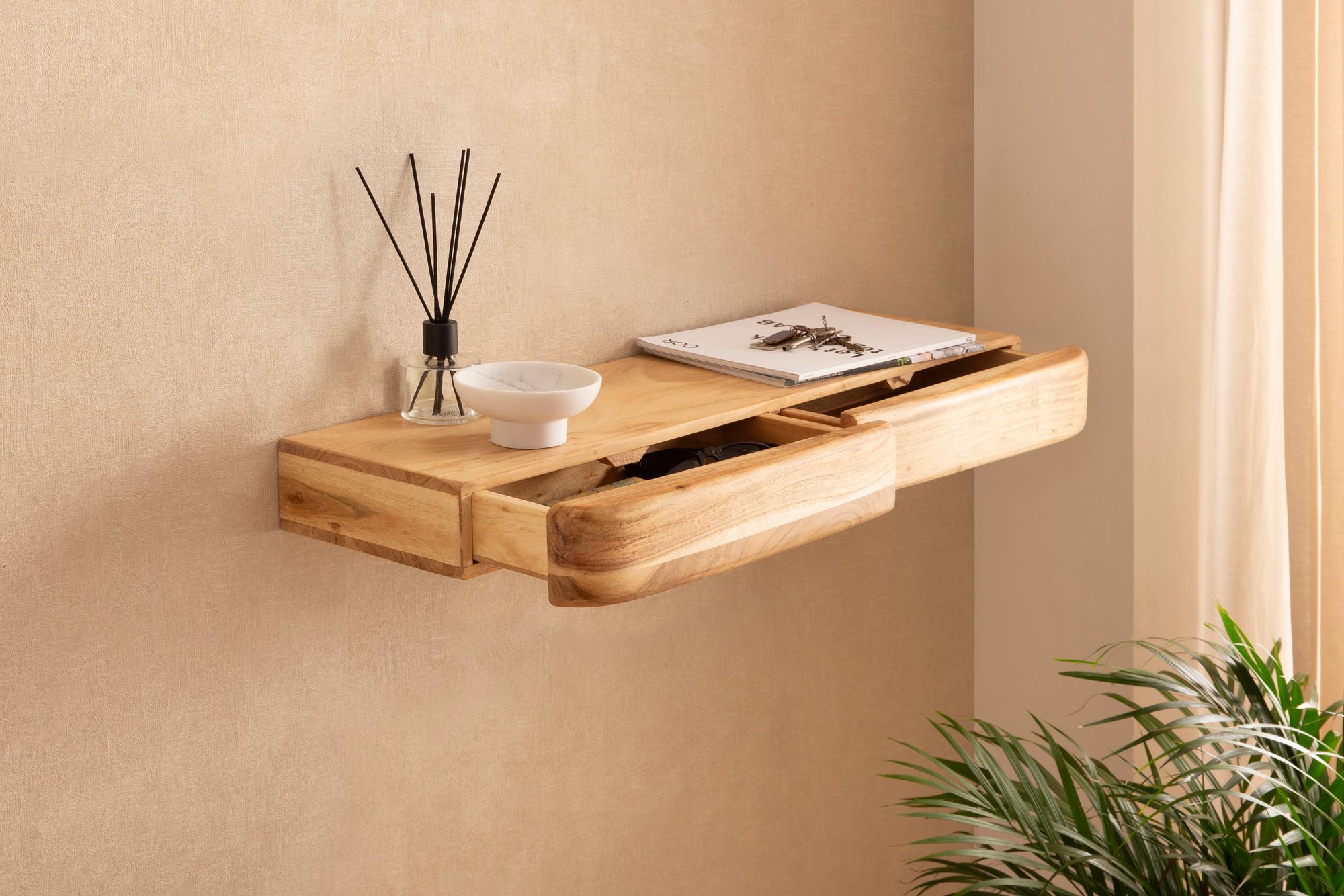
Groups of three or five read as deliberate; pairs read as symmetrical and formal. Arrange objects so their tops form a triangle rather than a line, which is what stops a shelf looking like a row.
Vary height, keep material
Mix heights and shapes and keep the materials or the palette limited. A shelf of objects in three tones looks curated; the same objects in eight looks like a jumble sail.
Stack books horizontally to make a platform, which adds a height without adding another object.
Scale is what people get wrong
Small objects scattered across a large surface look like clutter. One or two larger pieces do more work and are easier to dust, and a big surface can take a genuinely big object.
Leave space
Negative space is what makes the objects read. Filling every centimetre is the commonest mistake, and removing a third of what is on a shelf usually improves it immediately.
Give it a reason
Things with a connection to you — a piece brought back from somewhere, a photograph, something inherited — hold interest in a way that decorative objects bought to fill a gap do not.
Practical surfaces
A hall table needs somewhere to put keys and post, and a bedside table needs room for a glass and a book. Decoration that removes the function is why surfaces end up buried anyway.
Buying decorative objects
Buy for a specific place rather than because something is appealing in a shop, since unplaced objects become clutter. Take a photograph of the room with you.
One considered piece usually does more than three smaller ones and costs the same.
Scale and proportion in a room
Rugs are the most common sizing mistake — a rug should sit under the front legs of the seating at least, and a small rug floating in the middle makes a room look smaller.
Hang art so its centre is around eye level, and give a group of frames consistent gaps so it reads as one shape.
Lighting the display
Objects on a shelf need light on them to be seen. A lamp nearby or strip lighting under a shelf does more for a display than another object does.
Changing it
Rotate seasonally rather than adding. A box of stored pieces swapped twice a year keeps a room interesting without accumulating more.
Anchor tall shelving to the wall, particularly with children in the house.
WHERE TO BUY
Ready to shop FineBuy? Use the link below to visit the official store.
→ Shop FineBuy — official site
Visit this site