
pets · Articles
Natural Chews for Dogs
Natural Chews for Dogs
 Transact Shopping
PETS · UNITED KINGDOM
Natural Chews for Dogs
What the common chews are, dental claims, choking risks and hygiene
Natural chews satisfy a real behavioural need and vary enormously in hardness, calories and risk, which is what should drive the choice.
Why dogs chew
Chewing is normal behaviour that relieves stress and occupies a dog, and providing an appropriate outlet reduces destructive chewing elsewhere. That is the strongest argument for them.
Hardness is the main risk
Antlers, hooves, nylon bones and very hard chews are associated with fractured teeth, particularly the large upper premolars. Dental fractures are painful and expensive.
A practical test is whether you could dent it with a thumbnail or would mind being hit on the knee with it. If not, it is too hard.
Choking and obstruction
Supervise every chew and take it away once it is small enough to swallow. Pieces that break off whole are the ones that cause obstructions.
Rawhide in particular can swell and has been linked to obstructions.
Calories
Dried natural chews are dense. Many contain more calories than a meal, which is how a carefully portioned dog gains weight. Count them within about ten percent of daily calories.
Hygiene
Dried animal products can carry bacteria including salmonella. Wash hands after handling, give them on a washable surface, and take particular care in households with young children or anyone immunocompromised.
Dental effect
Some chews have evidence for reducing plaque, and none replaces brushing. Daily brushing with a dog toothpaste is what prevents dental disease, which is extremely common and painful.
Alternatives to chews
Food puzzles, snuffle mats, frozen stuffed toys and scatter feeding all occupy a dog without the calories or the dental risk. Part of the daily food ration can go into them at no extra cost.
Sniffing is genuinely tiring for dogs, which is why these work.
Choosing by dog
Match the chew to the dog's size, chewing style and age. Powerful chewers get through soft chews in minutes and are exactly the dogs most at risk from hard ones, which is the difficult combination.
Puppies need softer chews suited to developing teeth, and older dogs frequently have dental disease that makes hard treats painful.
Storage
Keep dried chews sealed and dry, since many are high in fat and go rancid. Buy quantities you will use within a few months.
Dental care that works
Daily brushing with a dog toothpaste is the only thing with strong evidence for preventing dental disease. Introduce it gradually with rewards rather than forcing it.
Bad breath, dropping food or chewing on one side needs a vet, since dental disease is painful and extremely common.
Allergies
Chews count in an elimination diet, and a single flavoured one invalidates a food trial.
Speak to a vet about the right chews for a puppy or an older dog.
WHERE TO BUY
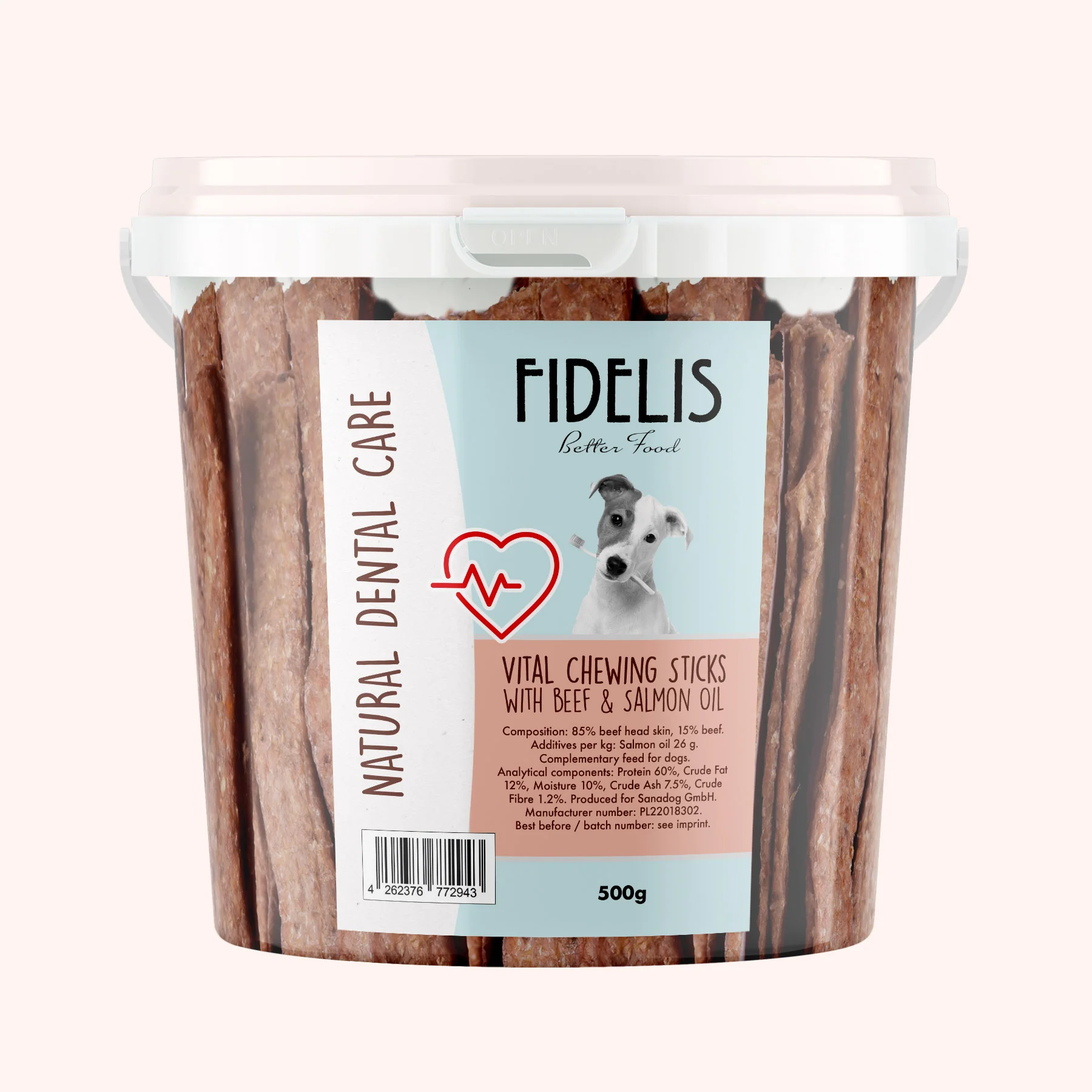
Ready to shop Fidelis? Use the link below to visit the official store.
→ Shop Fidelis — official site
Visit this site