
auto · Articles
Charging an Electric Car at Home
Charging an Electric Car at Home
 Transact Shopping
AUTOMOTIVE · GLOBAL
Charging an Electric Car at Home
Why a proper charger matters, installation, cables and charging habits
Home charging is where most electric car charging happens, and the arrangements around it are a safety and electrical matter rather than a convenience one.
Do not use an extension lead
Charging draws high current continuously for hours. Extension leads, reels and multi-way adapters overheat and have caused fires, and the granny cable supplied with a car is intended for occasional use into a dedicated socket.
Never run a cable through a window onto a public pavement, which is a trip hazard and generally not permitted.
A wall charger is the proper answer
A dedicated unit on its own circuit with the correct protection, installed by a qualified electrician competent in EV installation. The installation must be notified, and the supply needs assessing for capacity.
Load management is required in many installations so the charger reduces its draw when the house demand is high.
Speeds
A standard domestic charger delivers around 7kW, which adds roughly 30 kilometres of range an hour and charges most cars overnight. Three-phase supplies allow more and are uncommon in UK homes.
The car's onboard charger sets the limit, so a faster unit does not help if the car cannot take it.
Tariffs
Time-of-use electricity tariffs make overnight charging dramatically cheaper. Scheduling through the car or the charger is where most of the saving comes from.
Battery habits
Charging to around eighty percent for daily use and avoiding sitting at very high or very low states of charge extends battery life. Rapid charging frequently generates more heat.
Public charging
Carry your own Type 2 cable for untethered chargers, and check the network apps before relying on a particular site. Prices vary enormously between rapid and slow public charging.
Rapid charging repeatedly generates heat, so use it when needed rather than as the default.
Renting and flats
Charging without off-street parking is the hard case. Check for on-street charging schemes, workplace charging and local authority cable gully programmes, which are expanding in many areas.
Get the landlord's written permission before any installation, and check whether a lease permits it.
Grants
Support for home chargers exists for some households, particularly renters and flat owners. Check current eligibility before paying, since schemes change.
Cables and connectors
Type 2 is the standard connector in Europe for AC charging, and CCS for rapid DC. Check the cable rating in amps matches what your car and charger can use, since a lower-rated cable limits the speed.
Inspect cables for damage before use, keep connectors out of standing water and never repair a damaged charging cable.
Running costs
Work out the pence per kilowatt hour and the car's consumption to get a cost per mile, which is the figure worth comparing against fuel.
Cables
Type 2 is the standard connector in Europe. Keep cables out of standing water, coil them off the ground and check for damage before use.
WHERE TO BUY
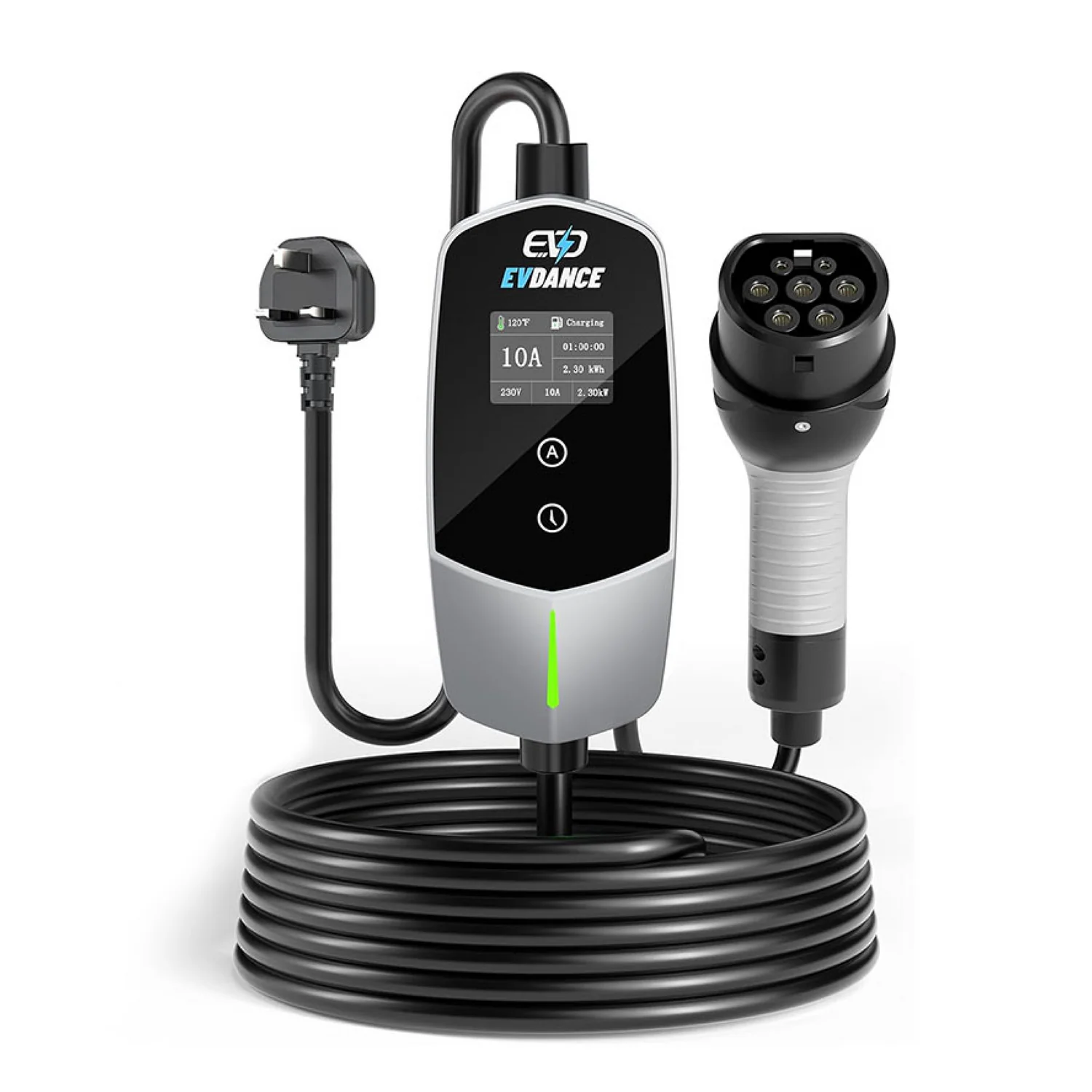
Ready to shop EVDANCE? Use the link below to visit the official store.
→ Shop EVDANCE — official site
Visit this site