Eskute DE · Articles
Commuting by Electric Bike
Commuting by Electric Bike
CYCLING · GLOBAL
Commuting by Electric Bike
Range and route planning, storage and charging, insurance and riding in traffic
An electric bike turns a commute that felt too far or too hilly into something routine, and the practical problems are about where it lives rather than how it rides.
Range in practice
Quoted figures assume a light rider on flat ground in the lowest assistance level. Hills, cold weather, luggage and higher assistance can halve it, so plan on considerably less than the number on the box.
Battery capacity in watt hours is the comparable figure, and a second battery or charging at the other end removes the anxiety entirely.
Storage and charging
Ask your employer about secure parking and whether charging is permitted, since some buildings prohibit charging e-bike batteries indoors after fires elsewhere.
At home, charge on a hard surface while you are awake and present, never in a hallway or blocking an escape route, and take the battery inside rather than leaving it in a cold shed.
Security
Electric bikes are heavily targeted. A rated lock through the frame and a fixed object, the battery removed, the frame number registered, and a tracker if it lives outside.
Check your home insurance covers it away from the property, since many policies cap it low.
Riding in traffic
You will arrive at junctions faster than drivers expect. Position yourself where you can be seen, use lights year-round and assume you have not been noticed.
Maintenance
Electric bikes are heavy and fast, so brakes, tyres and chains wear faster. Check pad thickness and tyre pressure weekly, and keep the drivetrain clean and lubricated.
Have a shop service it annually and check the motor and battery connections.
Battery life
Store at around half charge if unused for weeks, avoid leaving it at zero or at full for long periods, and keep it out of freezing temperatures. Expect gradual capacity loss over years.
Clothing
You arrive less sweaty than on an ordinary bike, which is much of the appeal, so ordinary clothes and a windproof layer usually suffice.
Choosing a commuting e-bike
A mid-drive motor with a torque sensor feels most natural and handles hills best. Hub motors are cheaper and quieter, and suit flatter routes.
Check the weight if you have to carry it up steps, since many weigh well over twenty kilos, and check whether the battery removes for charging indoors.
Legal limits
In the UK and EU an electrically assisted pedal cycle is limited to 25 km/h with a motor rated at no more than 250 watts, with assistance stopping when you stop pedalling. Anything beyond that requires registration, insurance and a licence.
Kit
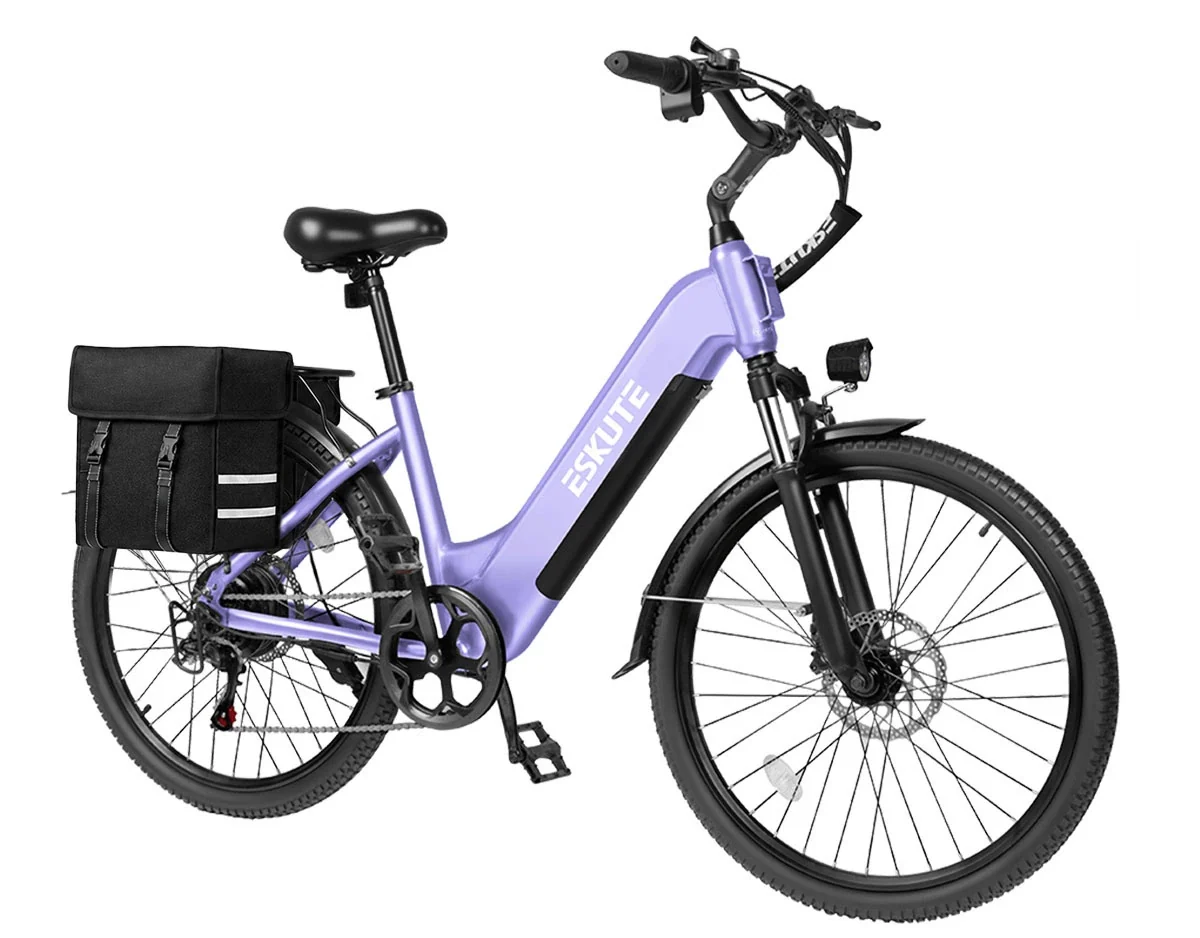
Mudguards, a rack and a pannier rather than a rucksack, which makes a commute considerably more pleasant.
WHERE TO BUY
Ready to shop Eskute? Use the link below to visit the official store.
→ Shop Eskute — official site
Visit this site
Visit store