health · Articles
Teeth Whitening: The Law and What Works
Teeth Whitening: The Law and What Works
 Transact Shopping
HEALTH · GLOBAL
Teeth Whitening: The Law and What Works
Who may legally whiten teeth, what the products contain, sensitivity and alternatives
Tooth whitening is one of the few cosmetic areas that is directly regulated, and the rules exist because of documented injuries.
The legal position
In the UK and EU, products containing or releasing more than 0.1 percent hydrogen peroxide may only be supplied by a dentist, who must carry out the first use or directly supervise it. Products above six percent cannot be used at all cosmetically.
Beauty salons and non-dental providers offering whitening are operating illegally, and prosecutions have followed. There have been real injuries including chemical burns to gums and lips.
Products sold online from outside these markets frequently exceed the permitted concentration, which is why a dramatic result from a cheap kit is a warning rather than a bonus.
What works and what does not
Peroxide-based whitening genuinely lightens the tooth itself. Whitening toothpastes remove surface staining and do not change the underlying colour, and abrasive ones wear enamel over years.
Charcoal has no evidence for whitening beyond surface stain removal, is abrasive, and contains no fluoride. Enamel does not grow back.
Sensitivity
Common during and after treatment and usually temporary. A dentist can manage it and can check first for decay, gum disease or cracks, which whitening would make painful.
What will not whiten
Crowns, veneers, fillings and bonding do not change colour, which is why a mismatch appears afterwards. Discuss the order of work with a dentist.
Before and after
Have a check-up and a hygienist appointment first, since whitening over decay or gum disease is painful and uneven. Stain removal alone lightens teeth noticeably for many people.
Avoid staining food and drink for a day or two afterwards, when teeth are most porous.
What causes staining
Tea, coffee, red wine, smoking and some mouthwashes stain the surface. Ageing thins enamel and reveals the darker dentine underneath, which is why teeth look yellower over decades and why whitening has limits.
Some discolouration is internal — from injury, antibiotics in childhood or fluorosis — and responds differently. A dentist can tell you which you have.
Sensitivity and enamel
Use a fluoride toothpaste, avoid brushing straight after acidic food or drink, and never use abrasive products to scrub teeth whiter. Enamel does not grow back.
Home kits sold legally
Kits available over the counter in the UK and EU are limited to 0.1 percent peroxide, which produces a very gradual effect at best. Anything promising a dramatic change at home is either above the legal limit or is removing surface stain.
Dentist-supplied trays with a professional gel are the regulated route to a meaningful change, and the trays are custom made to keep gel off the gums.
Keeping teeth lighter
Reduce tea, coffee, red wine and smoking, and clean properly twice a day between teeth. A hygienist appointment removes far more stain than any product.
See a dentist before starting anything.
WHERE TO BUY
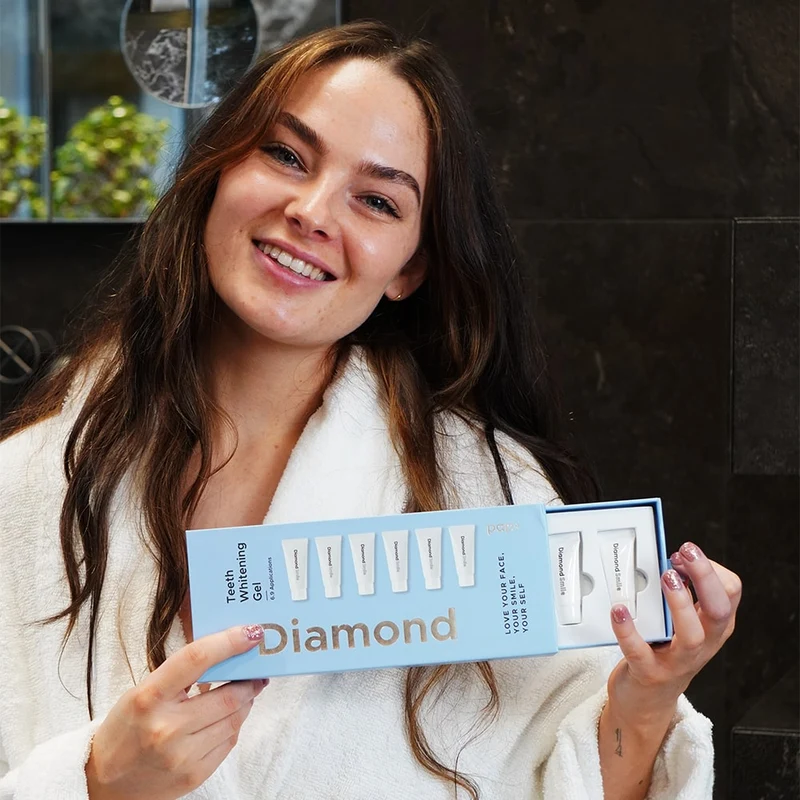
Ready to shop Diamondsmile? Use the link below to visit the official store.
→ Shop Diamondsmile — official site
Visit this site