
home · Articles
Cookware Materials Compared
Cookware Materials Compared
 Transact Shopping
HOME · GLOBAL
Cookware Materials Compared
Stainless, cast iron, hard anodised and non-stick, hob compatibility and care
A kitchen needs two or three types of pan rather than a matching set, because the materials do genuinely different jobs.
Stainless steel
Durable, oven safe, unreactive and sticks unless used correctly. Heat the pan first, then add oil, then the food, and wait for it to release rather than forcing it.
Look for a thick aluminium or copper core in the base, since stainless alone conducts heat poorly and produces hot spots.
Cast iron and carbon steel
Hold heat superbly, which is why they sear better than anything else. They need seasoning, must be dried immediately and last indefinitely — these are the pans that outlive their owners.
Heavy, slow to heat and reactive with acidic food until well seasoned.
Hard anodised aluminium
Aluminium treated electrochemically to produce a hard, non-reactive surface. It conducts heat well, is lighter than cast iron and is more durable than plain aluminium, and it is frequently coated with non-stick over the top.
Non-stick
For eggs, pancakes, fish and anything delicate at moderate heat. Never preheat empty, never use for high-heat searing, and never put under a grill, since overheated coatings release fumes that are fatal to pet birds.
Wood or silicone utensils, hand washing, and replacement every three to five years.
Hob compatibility
Induction needs a magnetic base — test with a fridge magnet. A warped base heats unevenly on induction and ceramic, so let pans cool before washing.
Looking after pans
Let pans cool before washing, since thermal shock warps bases. Avoid abrasive pads on anything coated, and dry immediately to prevent water marks on stainless and rust on iron.
Stack with a cloth between each pan so bases do not scratch coatings.
Heat control
Most home cooking is done on too high a heat. A pan that is properly preheated at medium cooks better than one blasted on maximum, and it is kinder to every coating and base.
Match the pan base to the ring size, since a small pan on a large ring wastes a great deal of heat.
Buying
Check the handle material and whether the pan is oven safe, the lid fit, and the weight, since a heavy pan you dislike lifting will not get used.
Knives and boards alongside
A sharp knife, a solid board and a decent pan do more than any set of gadgets. Blunt knives require force and slip, which is how most kitchen cuts happen.
Keep separate boards for raw meat, and never put good knives in a dishwasher.
Disposal
Worn pans go to scrap metal recycling rather than household waste, and many councils accept them at recycling centres.
Building a set
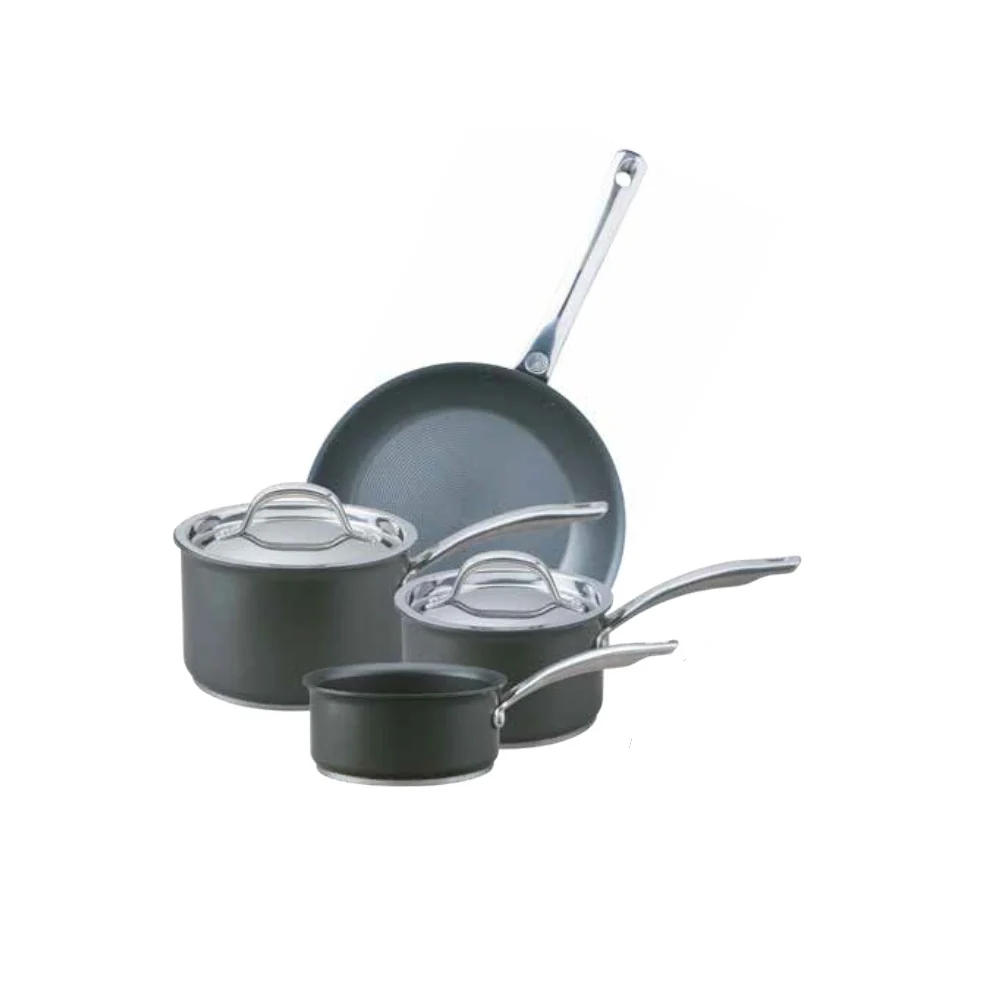
One good non-stick frying pan, one stainless or cast iron pan for searing, and two or three saucepans with lids covers almost everything.
WHERE TO BUY
Ready to shop Circulon? Use the link below to visit the official store.
→ Shop Circulon — official site
Visit this site