
home · Articles
Door Handles, Hinges and Ironmongery
Door Handles, Hinges and Ironmongery
 Transact Shopping
HOME · GLOBAL
Door Handles, Hinges and Ironmongery
Backset and spindle, finishes, matching a period property and fitting
Ironmongery is the part of a door people touch every day and the part specified last, which is why so much of it is wrong for the door it is on.
Measure before choosing
The backset is the distance from the edge of the door to the centre of the spindle, which determines whether a handle plate fits the existing latch. The spindle size and the distance between the handle and the keyhole matter too.
Handles on a rose and handles on a backplate are not interchangeable without filling and redrilling.
Finishes
Unlacquered brass and bronze develop a patina and can be polished back. Lacquered finishes stay bright until the lacquer wears, which it does unevenly on a handle.
Antique and aged finishes are applied and wear through over years. Chrome and stainless are hardest wearing and read as modern.
Keep finishes consistent through a room at least, including hinges, escutcheons and stops, which is what makes a house look considered.
Period properties
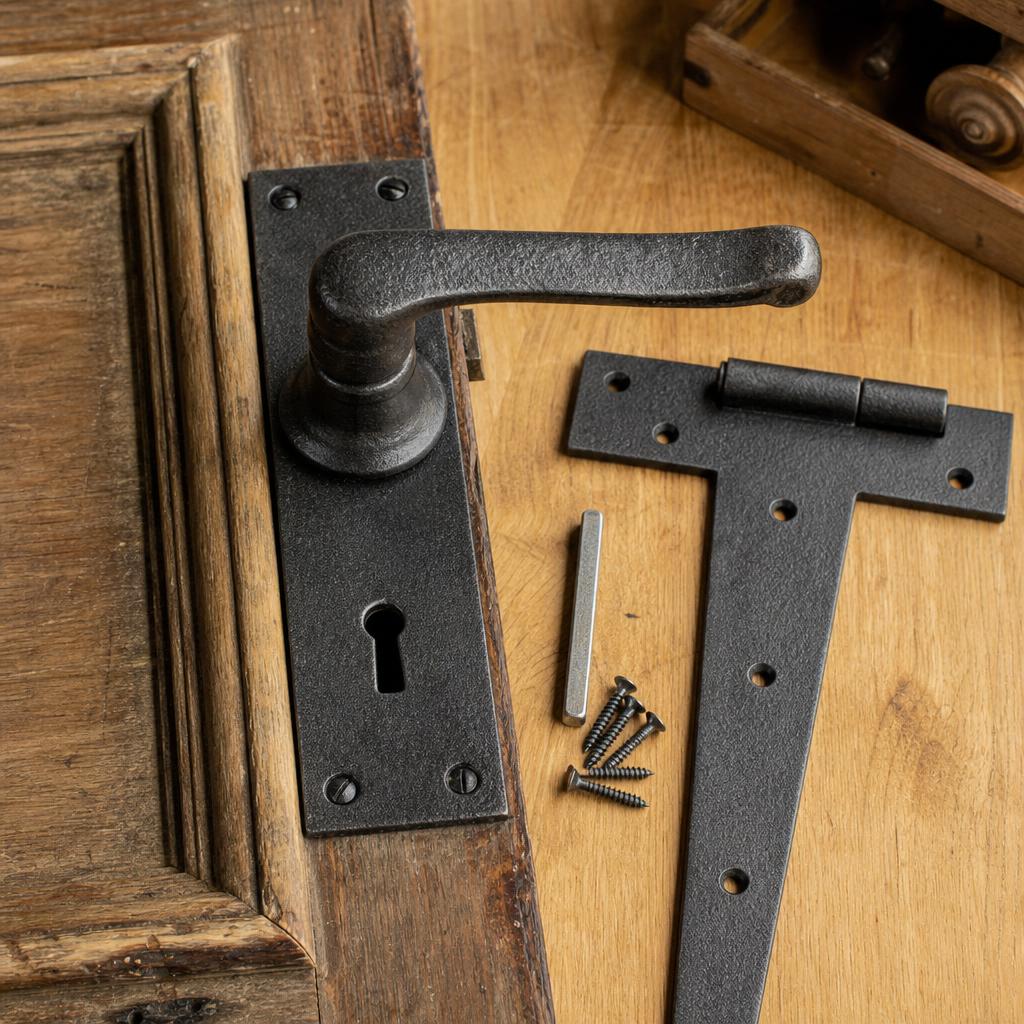
Rim locks sit on the face of the door and suit older houses. Black iron, unlacquered brass and porcelain each belong to particular periods, and matching the door's age matters more than matching a current trend.
In a listed building, replacing original ironmongery may need consent.
Hinges
Size and number should suit the door weight — heavy solid doors need three hinges rather than two. Match the hinge metal to the screws to avoid corrosion.
Fire doors
Ironmongery on a fire door must be fire rated and CE marked, including hinges and any intumescent pads. This is a regulatory matter rather than a choice.
Buying
Order a single handle first to check the finish and the feel before buying for a whole house, since photographs misrepresent both. Buy a few spares, since ranges are discontinued.
Keep the fixings supplied, which are frequently a specific length for the door thickness.
Door furniture that gets used
Lever handles are easier than knobs for children, older people and anyone with reduced grip, and are required in some accessibility contexts. Knobs on a latch door need a stronger grip than people expect.
Bathroom locks should have an emergency release that can be opened from outside with a coin or a screwdriver.
Maintenance
Oil hinges and latches occasionally, since a squeaking or stiff door is almost always a dry hinge or a misaligned strike plate rather than a worn handle or latch.
Fitting
Pilot holes for every screw, and the correct screwdriver, since burred screw heads ruin the look.
WHERE TO BUY
Ready to shop Cast In Style? Use the link below to visit the official store.
→ Shop Cast In Style — official site
Visit this site