
other · Articles
Trellis, Screening and Climbing Plants
Trellis, Screening and Climbing Plants
 Transact Shopping
GARDEN · GLOBAL
Trellis, Screening and Climbing Plants
What trellis is for, fixing it properly, plant types and height rules
Trellis adds privacy and grows a garden upwards, and the mistakes are about fixings and about which plants actually climb.
Fix it off the wall
Mount trellis on battens so there is a gap of a few centimetres behind it. That lets air circulate, keeps the wall dry and gives twining plants something to wrap around.
Trellis screwed flat to a wall traps damp against the brickwork and makes maintenance impossible.
Hinged panels
Fixing the bottom on hinges and the top with hooks lets the whole panel be lowered with the plant attached, so the wall behind can be painted or repointed. It takes ten extra minutes and saves a job later.
On top of a fence
Trellis toppers add height and catch wind. Use proper trellis clips and check the posts can take the extra leverage, since this is a common reason fences blow over in a gale.
Overall height including trellis counts towards permitted development limits, generally two metres in England, and one metre next to a highway. Check before adding it.
How plants climb
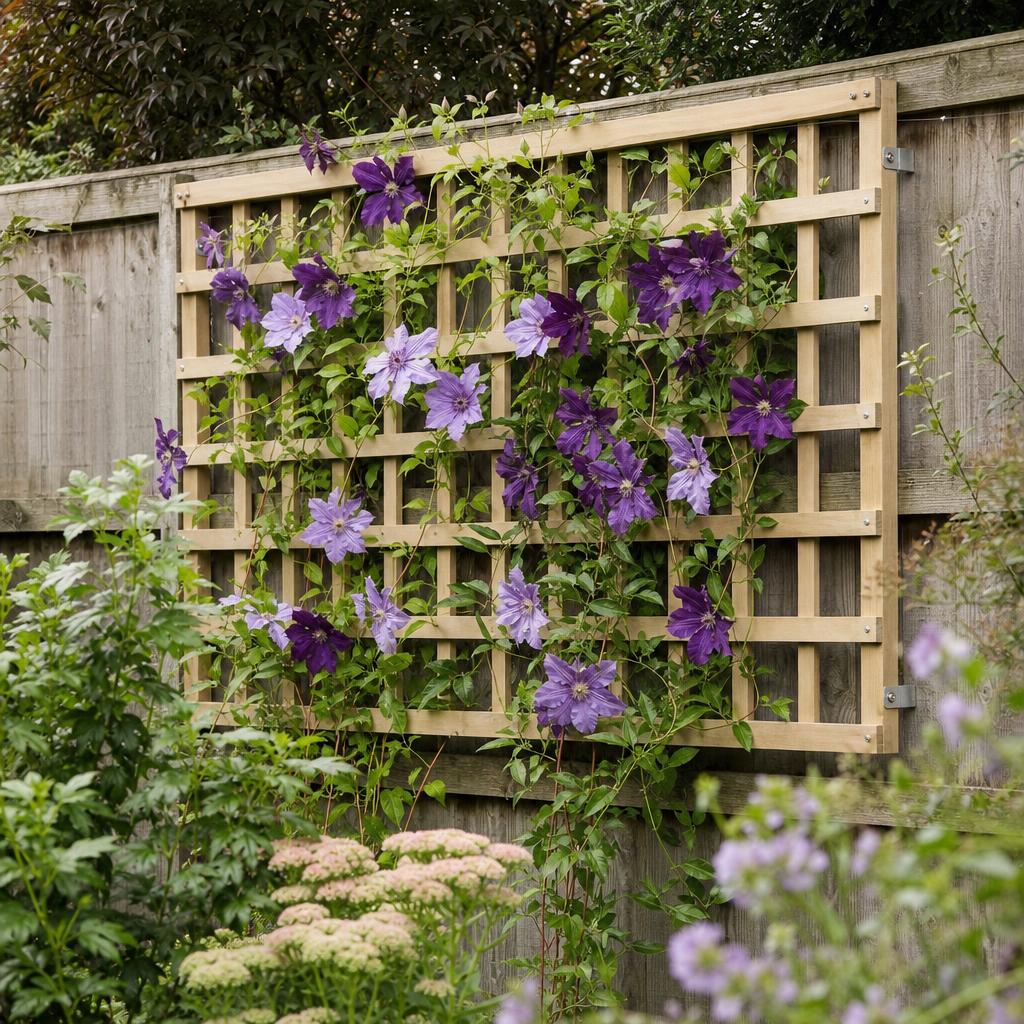
Twiners such as honeysuckle and clematis wrap around thin supports and need a gap behind. Self-clinging climbers such as ivy and climbing hydrangea attach directly and can damage poor pointing.
Wall shrubs and roses do not climb at all and must be tied in as they grow.
Choosing plants
Check the eventual size honestly. Russian vine and wisteria will overwhelm a small trellis, and a mature climber weighs a surprising amount when wet.
Privacy without height
A trellis panel with a climber gives privacy while letting light through, which a solid fence does not. Planting a small tree or a tall shrub in the right position screens a specific window more effectively than raising a whole boundary.
Talk to neighbours before changing a shared boundary, which prevents almost all the friction.
Fixing into different walls
Masonry needs the right plug and drill; anything into mortar rather than brick will pull out under a loaded climber. Check for cables and pipes before drilling.
Screening alternatives
Willow and reed screening attached to an existing fence is cheap, quick and lasts a few seasons. Bamboo screens are similar. Neither adds structural strength, so the fence behind still has to hold.
Pleached trees and tall grasses screen without the wind load of a solid panel and look considerably better.
Check the trellis is rated for the span, since thin lattice sags under a mature climber.
Maintenance
Treat timber before fitting including the cut ends, and check ties annually so they do not cut into stems.
Avoid cutting hedges and dense climbers during bird nesting season, roughly March to August.
WHERE TO BUY
Ready to shop Buy Fencing Direct? Use the link below to visit the official store.
→ Shop Buy Fencing Direct — official site
Visit this site