food · Articles
Honey: Types, Labels and Safety
Honey: Types, Labels and Safety
 Transact Shopping
FOOD · UNITED KINGDOM
Honey: Types, Labels and Safety
Raw and single-origin, crystallisation, the infant warning and health claims
Honey varies enormously by floral source and by how it is processed, and one safety point applies to every jar regardless of quality.
Never give honey to a baby under one
Honey can contain spores of Clostridium botulinum, which an infant gut cannot handle and which causes infant botulism. This applies to all honey including raw, pasteurised and organic.
Health services are unambiguous about this. After the first birthday it is fine.
Raw and processed
Raw honey is not heated much beyond hive temperature and is filtered lightly, keeping pollen and enzymes. Heavily processed honey is heated and finely filtered, which delays crystallisation and produces a uniform product.
Single-origin and monofloral honey tastes of its source — heather, borage, orange blossom — and costs more because the beekeeping is more involved.
Crystallisation is a good sign
Natural honey crystallises over time, and the speed depends on its sugar composition. It is not a fault and does not mean the honey has gone off.
Stand the jar in warm water to liquefy it. Do not microwave it or use boiling water, which destroys the aroma and the enzymes.
Labels worth reading
Blends of honey from several countries are common and legal, and the label will say so. A named country, region or apiary tells you considerably more.
Honey adulteration with syrups is a documented global problem, which is an argument for buying from a traceable source.
Health claims
Honey is sugar, and treating it as a health food is a stretch. It has some evidence for soothing coughs in adults and children over one.
Cooking with it
Honey browns faster than sugar, so reduce oven temperatures slightly when substituting and expect a moister result. It is sweeter than sugar by weight, so use less.
Adding honey to boiling liquid drives off the aroma, so stir it into tea once it has cooled slightly.
Bees and buying
Buying from small local beekeepers supports managed hives and gives you honey that tastes of where you live. Planting for pollinators does more for wild bees than buying honey does.
Allergies and pollen
The idea that local honey desensitises hay fever is not supported by good evidence, since the pollens that cause hay fever are wind-borne rather than the insect-pollinated ones bees collect.
Anyone with a pollen or bee product allergy should take care with raw honey, which contains pollen.
Using it well
Strong dark honeys such as heather and buckwheat stand up to cheese and strong flavours. Light delicate honeys are wasted in cooking and are better on toast or yoghurt.
Taste two side by side to see how different they actually are.
Storage
Sealed at room temperature, away from damp. Honey does not spoil, and a wet spoon in a jar can start fermentation.
WHERE TO BUY
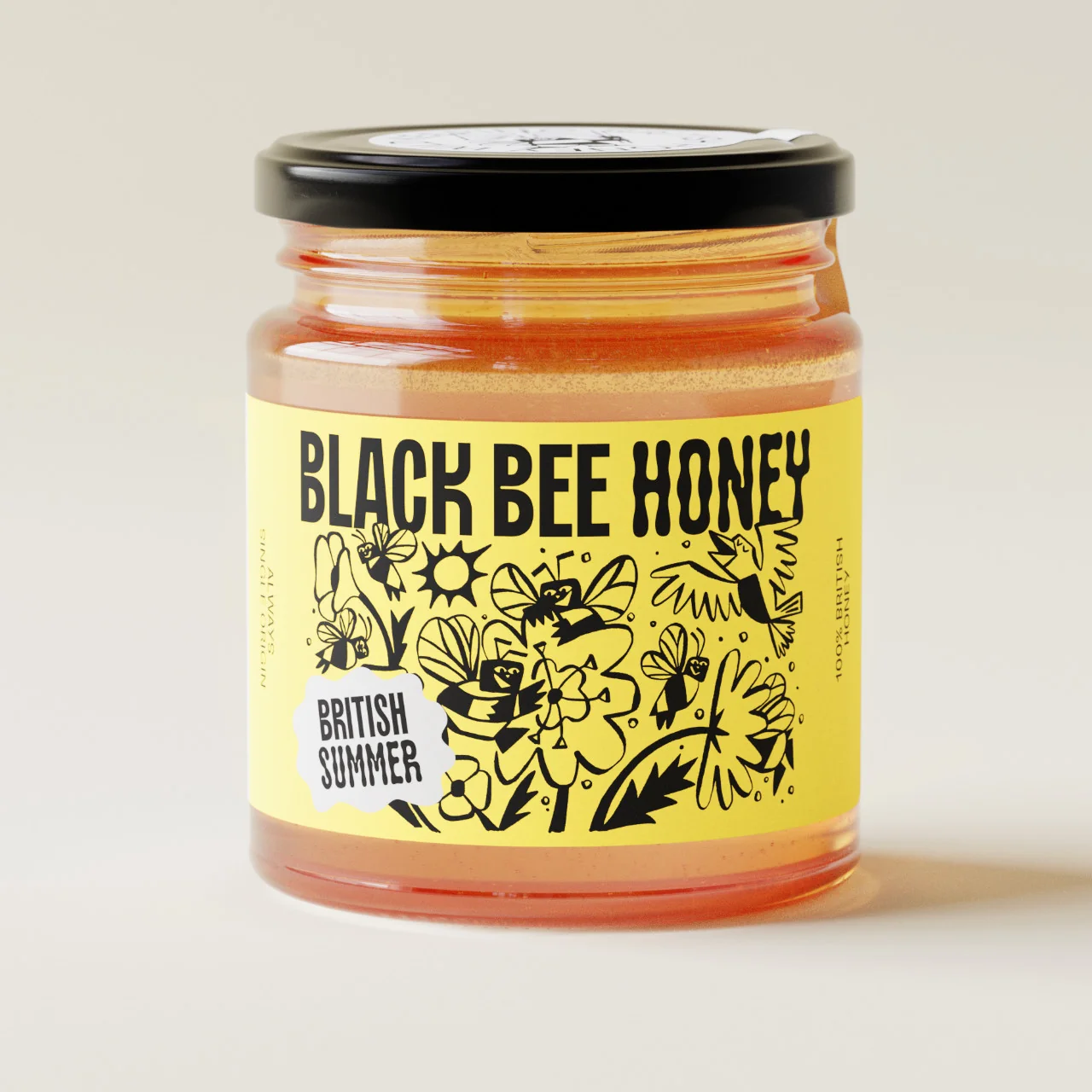
Ready to shop Black Bee Honey? Use the link below to visit the official store.
→ Shop Black Bee Honey — official site
Visit this site