
sports · Articles
Helmets for Children: Fit and Standards
Helmets for Children: Fit and Standards
 Transact Shopping
SPORT · UNITED KINGDOM
Helmets for Children: Fit and Standards
Certification, getting the fit right, when to replace and multi-sport use
A helmet only works if it fits and is worn correctly, and a poorly fitted helmet gives a false sense of protection.
Certification
Check the helmet carries the correct standard for the activity and the region — cycling helmets to EN 1078 in Europe, and separate standards exist for skating, snow sports and equestrian use.
A helmet certified for one sport is not automatically suitable for another. Equestrian and climbing helmets in particular are built for different impacts.
Fitting it
Level on the head, sitting about two finger widths above the eyebrows rather than tipped back. Side straps forming a V just below each ear. The chin strap tight enough that one finger fits underneath.
With the strap done up, the helmet should not move more than about an inch in any direction. Open the mouth wide — the helmet should pull down slightly.
Buy for the head, not to grow into
Measure the circumference just above the eyebrows and buy that size. An oversized helmet moves on impact and protects far less, and the dial adjuster is for fine tuning rather than for covering two sizes.
Replace after any impact
Expanded polystyrene liners crush once to absorb energy and do not recover, even where there is no visible damage. Replace after any meaningful impact.
Manufacturers generally advise replacement every three to five years regardless, since materials degrade.
Never modify it
No stickers unless the manufacturer allows them, no drilling, no paint. Solvents weaken the shell.
Making children wear one
Let them choose the colour or design within the sizes that fit, which removes most of the argument. Fit it properly every single time rather than leaving straps loose.
A helmet is compulsory for cycling in several countries and for under-eighteens in others, so check local rules before travelling.
Buying used
A second-hand helmet carries an unknown impact history, which is exactly the thing that matters. This is one item worth buying new.
Storage and care
Keep helmets out of hot cars and direct sun, which degrades the shell and the liner. Clean with mild soap and water rather than solvents.
Check the fit every few months as a child grows, since a helmet that fitted in spring may be loose by autumn.
Other protective kit
Wrist guards are the most useful addition for skating and scooting, since people instinctively put hands out and wrist fractures are the most common injury. Knee and elbow pads follow.
Gloves and proper footwear matter more than people expect for children learning on wheels.
Wearing it
Remove helmets in playgrounds and on climbing frames, where straps can catch. Adults wearing one is what makes children wear one.
WHERE TO BUY
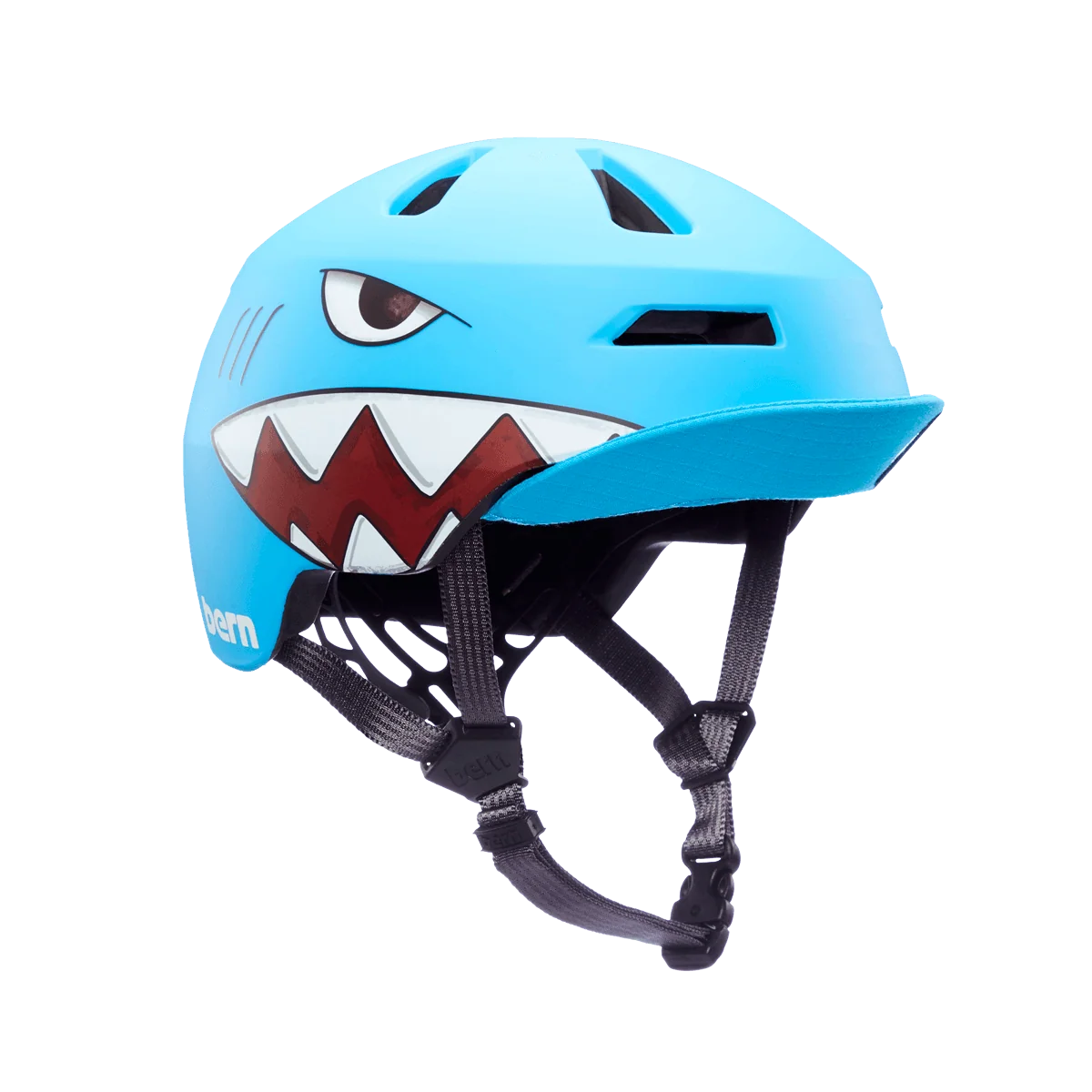
Ready to shop Bern Helmets? Use the link below to visit the official store.
→ Shop Bern Helmets — official site
Visit this site