
clothing · Articles
Pearls: Types, Quality and Care
Pearls: Types, Quality and Care
 Transact Shopping
JEWELLERY · GLOBAL
Pearls: Types, Quality and Care
Natural, cultured and imitation, judging quality, and why pearls need different care
Pearls are the only gem produced by a living animal, and they are also the most delicate thing most people own, which changes how they should be treated.
Natural, cultured and imitation
Natural pearls form without human intervention and are extremely rare. Almost every pearl sold today is cultured — a real pearl grown after a nucleus is inserted into a mollusc.
Imitation pearls are glass or plastic with a coating. The classic test is rubbing a pearl lightly against a tooth: real pearls feel slightly gritty, imitations feel smooth.
The main types
Akoya are round, white and lustrous, traditionally from Japan. Freshwater pearls are the most affordable and come in many shapes. South Sea pearls are the largest, and Tahitian pearls are naturally dark.
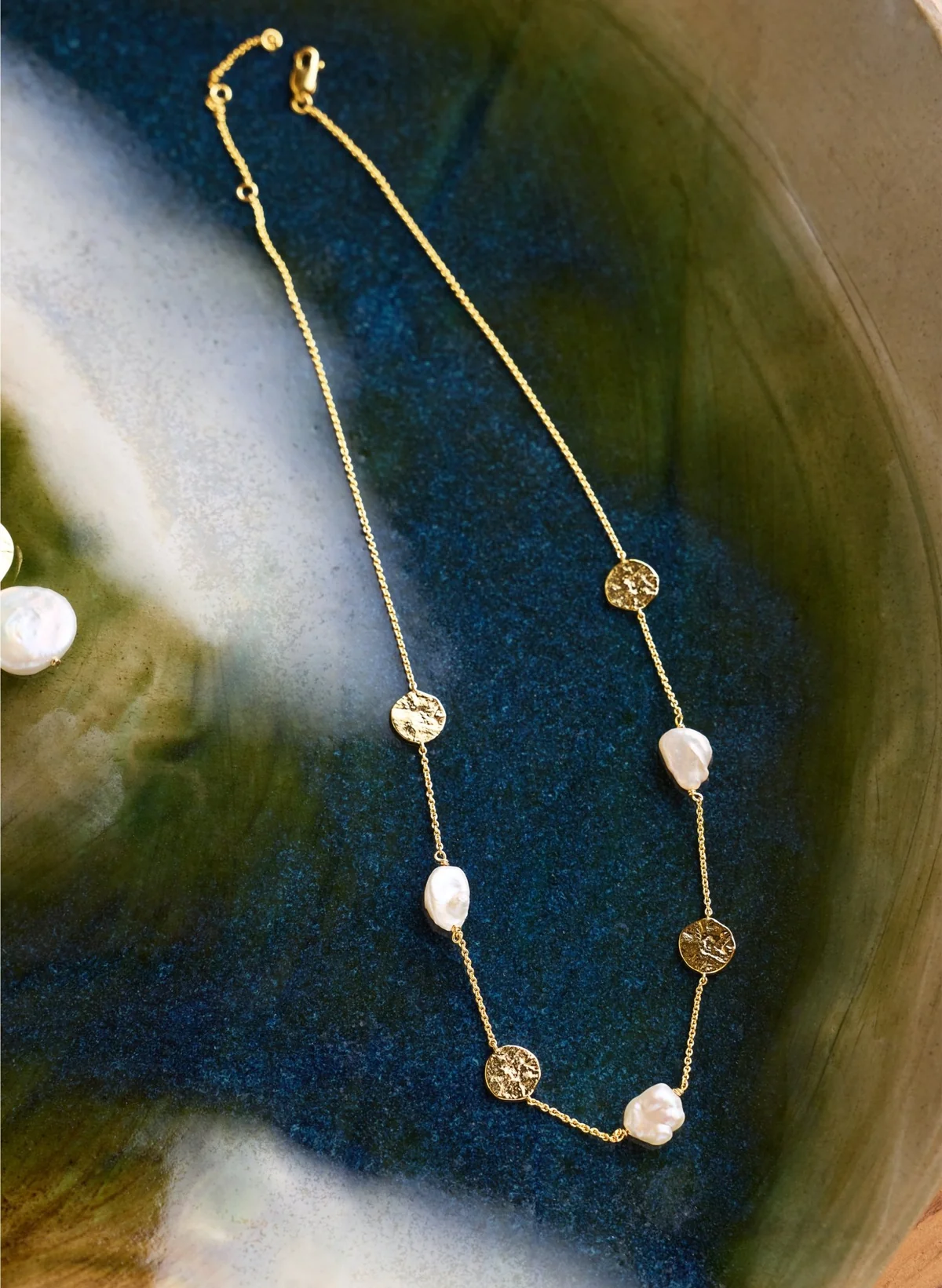
Keshi pearls form without a nucleus and are all nacre, which gives them unusual lustre and irregular shapes.
Judging quality
Lustre first — how sharply light reflects from the surface. Then surface cleanliness, shape, colour and size. Nacre thickness matters most for longevity, since a thin nacre wears through to the nucleus.
Pearls are soft
They sit around two and a half on the hardness scale, far softer than almost any other gem. They scratch easily and are damaged by acid, which includes perfume, hairspray, vinegar and sweat.
Put pearls on last, after everything else, and wipe them with a soft damp cloth after wearing.
Buying pearls
Ask whether pearls are cultured or imitation, what type they are, and the nacre thickness where it is stated. Look at the strand under a good light and check the lustre is consistent across it.
Keep any certification and the receipt, which matters for insurance and resale.
Wearing them
Pearls benefit from being worn, since skin contact maintains a little moisture. Wipe them after each wear and avoid wearing them for exercise or swimming.
Pearls as a gift
Necklaces and earrings avoid the sizing problem that makes rings risky, and a simple strand suits almost anyone. Keep the receipt, since pearl colour and size are personal.
Allow time for restringing or resizing, which a jeweller does in days rather than hours.
Insurance and records
Photograph pieces, keep receipts and any certification somewhere separate from the jewellery, and list anything significant with your insurer, since contents policies cap jewellery low.
Have valuable pieces revalued every few years.
Care
Never use ultrasonic cleaners, steam or any chemical cleaner. Store them separately and flat, in a soft pouch rather than an airtight box, since pearls need a little humidity.
Restring strands every few years, and knot between pearls so a broken strand does not scatter.
WHERE TO BUY
Ready to shop House of Baukjen? Use the link below to visit the official store.
→ Shop House of Baukjen — official site
Visit this site