
health · Articles
Collagen Supplements: What the Evidence Shows
Collagen Supplements: What the Evidence Shows
 Transact Shopping
HEALTH · GLOBAL
Collagen Supplements: What the Evidence Shows
What collagen is, whether eating it works, the trial evidence and alternatives
Collagen supplements are among the fastest-growing products in health, and the mechanism needs examining before the marketing does.
What happens when you swallow it
Collagen is a protein. Digestion breaks it into amino acids and short peptides, which the body uses wherever it needs them rather than directing them to skin or joints.
The more interesting argument is that specific collagen peptides survive digestion and act as signals to fibroblasts. That is plausible and is what the research has tested.
What the trials show
Several randomised trials report modest improvements in skin hydration and elasticity over eight to twelve weeks. Effect sizes are small, trial quality varies, and industry funding is common across the field.
For joint pain, the evidence is mixed with some positive findings in osteoarthritis and in athletes. Neither body of evidence is strong enough to promise a result.
Dose and form
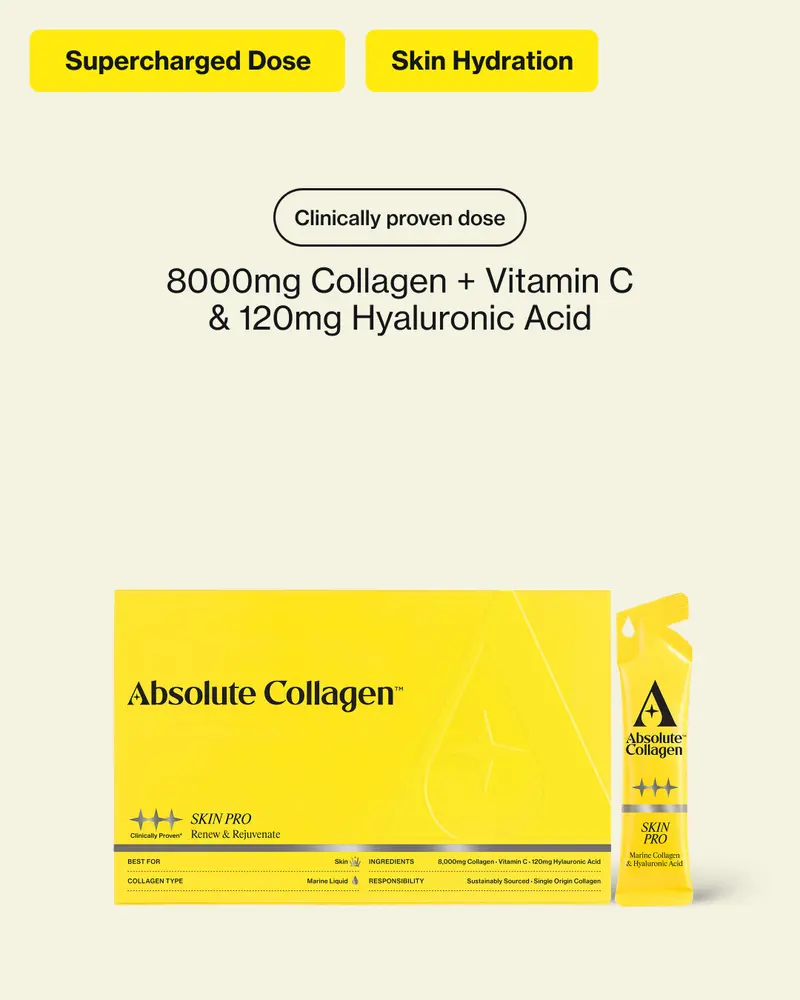
Studies typically use hydrolysed collagen peptides at around 2.5 to 10 grams daily. Check the actual collagen content per serving rather than the total powder or liquid volume.
Marine collagen comes from fish and is unsuitable for anyone with a fish allergy. Bovine collagen is not suitable for some diets, and there is no vegan collagen, only products claiming to support your own.
Cost
Work out the cost per gram and per month, which is frequently substantial for an uncertain benefit.
Reading a label
Look for the collagen peptide content in grams per serving, the source, and any third-party testing. A drink or powder with a large serving size and a small collagen content is the usual trap.
Added vitamin C is common and is inexpensive to obtain from food.
Protein in general
Collagen is not a complete protein and is a poor source of the amino acids used for muscle. Adequate total protein from food does more for skin, hair and recovery than a collagen supplement does.
Judging a health claim
Ask whether the research was in humans, how many people, for how long, what actually changed and who funded it. A biomarker moving is not the same as a health outcome changing.
In the UK and EU only authorised health claims may be made, which is why the wording on packaging is careful and vague.
Joints and skin
For joint pain, weight management, strengthening exercise and physiotherapy have far stronger evidence than any supplement. Persistent pain, swelling or stiffness warrants seeing a doctor.
For skin, ageing is driven mostly by sun exposure, which is why sunscreen outperforms everything else.
What has stronger evidence
Daily sunscreen, a retinoid, not smoking, adequate total protein and sleep.
Speak to a doctor about persistent joint pain rather than supplementing.
WHERE TO BUY
Ready to shop Absolute Collagen? Use the link below to visit the official store.
→ Shop Absolute Collagen — official site
Visit this site