
other · Articles
Joint Supplements for Dogs: What the Evidence Shows
Joint Supplements for Dogs: What the Evidence Shows
 Transact Shopping
PETS · GLOBAL
Joint Supplements for Dogs: What the Evidence Shows
What helps mobility, the ingredients studied, quality and when to see a vet
Joint supplements are among the most bought products for older dogs, and the evidence behind the ingredients varies considerably. Two things with strong support are frequently overlooked.
Weight is the biggest lever
Keeping a dog lean is the single most effective intervention for osteoarthritis, and studies in dogs have shown lean-fed animals living measurably longer with less joint disease.
You should feel the ribs easily without pressing hard and see a waist from above. Excess weight undoes what any supplement might achieve.
Controlled exercise
Regular moderate exercise maintains muscle supporting the joint. Short frequent walks suit arthritic dogs better than one long one, and swimming or hydrotherapy is low impact.
Omega-3 fatty acids
EPA and DHA from marine sources have the best evidence of any supplement here, with several controlled trials showing improved mobility in dogs with osteoarthritis.
Dose matters and the amounts studied are higher than many supplements provide. Check the EPA and DHA content rather than the total oil.
Glucosamine and chondroitin
The most commonly sold and the evidence is mixed. Some trials show modest benefit and others none, and they are generally regarded as safe to try.
Green-lipped mussel and undenatured collagen have some supporting research and less of it.
Quality and safety
Supplements are less regulated than medicines. Look for third-party testing and a named quantity of each active ingredient rather than a proprietary blend.
Tell your vet what you give, since some supplements interact with medication.
Home adaptations
Non-slip flooring or runners over smooth floors, a ramp instead of jumping into a car, a supportive bed out of any draught, and raised food bowls for some dogs, all of which help day to day. These do more day to day than most products.
Keep the nails trimmed short, since overlong nails change how a dog stands and how it loads its joints.
Recognising pain
Dogs hide pain. Slowing on walks, difficulty rising, reluctance on stairs, licking at a joint or a change in temperament are all worth a veterinary opinion.
Older dogs generally
Twice-yearly veterinary checks catch problems considerably earlier in senior dogs. Dental disease is extremely common and genuinely painful, and it is frequently missed because dogs carry on eating through it.
Cognitive decline exists in dogs too, and there are things that help, so mention any changes in behaviour or sleep to the vet.
See a vet
Prescription pain relief has far stronger evidence than any supplement, and untreated pain is a welfare issue.
Never give human painkillers to a dog under any circumstances, since ibuprofen and paracetamol are both toxic to them.
WHERE TO BUY
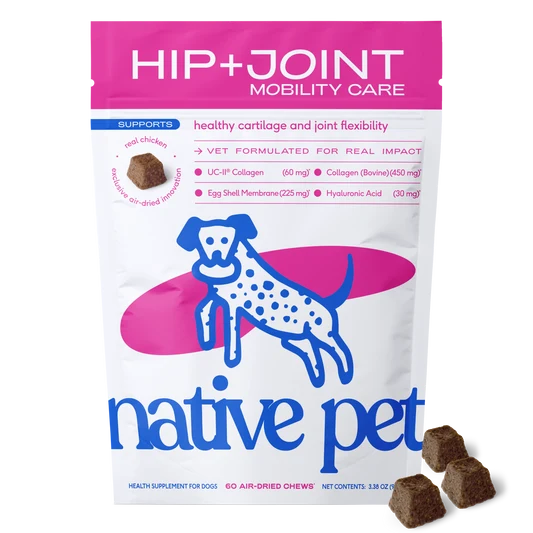
Ready to shop Native Pet? Use the link below to visit the official store.
→ Shop Native Pet — official site
Visit this site