
other · Articles
Measuring for Made-to-Measure Blinds
Measuring for Made-to-Measure Blinds
 Transact Shopping
HOME · GLOBAL
Measuring for Made-to-Measure Blinds
Inside or outside recess, the three-point rule, obstructions and cord safety
Made-to-measure blinds are not returnable, which makes measuring the whole job. It takes ten minutes and the method matters more than the tape.
Decide the fit first
Inside recess sits within the window opening and looks neat, and it lets a little light in at the edges. Outside recess mounts on the wall or frame above the window, covering it fully and blocking more light.
The measurements differ, so decide before you start rather than measuring both and confusing them.
Measure three times
For inside recess, measure the width at the top, middle and bottom and use the smallest. Measure the height at the left, centre and right and use the longest.
Older houses are rarely square, and a difference of a centimetre between top and bottom is normal. Using the wrong figure is what produces a blind that will not fit.
For outside recess
Add overlap at each side, commonly five to ten centimetres, and enough above for the bracket. Measure to where you want the blind to finish rather than to the sill.
Note the obstructions
Handles, vents, tiled sills, coving and anything that protrudes. Check the recess is deep enough for the blind's headrail, which the supplier will state.
Photograph the window from the front and the side and keep the photographs with the order.
Use a steel tape and millimetres
Fabric tapes stretch. Most suppliers work in millimetres, and converting introduces errors.
Cord safety is a legal requirement
Internal blinds must be supplied with safety devices, and cords and chains must be secured out of reach. Looped cords are a strangulation hazard to young children and have caused deaths.
Choose cordless or wand-operated blinds wherever a child sleeps or plays, and keep cots and furniture away from windows.
Choosing the type
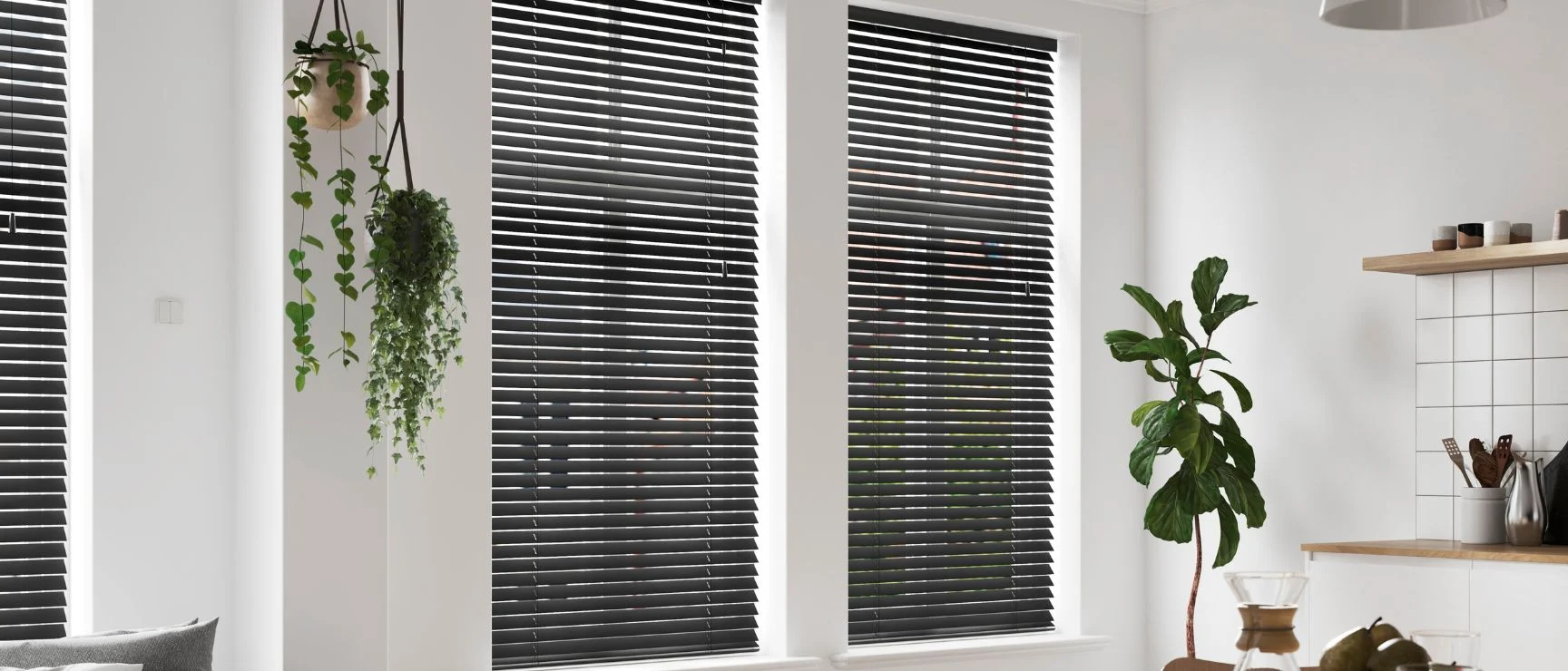
Rollers are simple and inexpensive. Venetian and faux wood control light by angle and wipe clean. Verticals suit large windows and patio doors. Romans are fabric and softer and block most light.
Faux wood and aluminium tolerate humidity in bathrooms and kitchens, where real wood warps and fabric holds cooking smells.
Fitting
Check what the frame or wall is made of before drilling, and check for cables and pipes. Use the brackets supplied and fit the safety device with them.
Fabric and light
Blackout linings block most light and rarely all of it at the edges, which matters in a child's bedroom. Dim-out and voile fabrics soften light without darkening a room.
Honeycomb and cellular blinds trap air and noticeably reduce heat loss through a window in winter.
Before ordering
Have someone check the figures, and confirm the control side.
WHERE TO BUY
Ready to shop Make My Blinds? Use the link below to visit the official store.
→ Shop Make My Blinds — official site
Visit this site