
other · Articles
Buying Shoes for Growing Feet
Buying Shoes for Growing Feet
 Transact Shopping
FAMILY · GLOBAL
Buying Shoes for Growing Feet
Measuring properly, growing room, when to replace and what to avoid
Children's feet are soft and still forming, and poorly fitting shoes cause problems that show up decades later. Measuring properly takes five minutes and is the whole of getting this right.
Measure both feet, standing
Feet are rarely the same size, so fit to the larger one. Measure standing with weight on the foot, since a foot spreads under load and a measurement taken sitting reads short.
Measure length and width. Width is where most problems come from and is the measurement most often ignored.
Growing room, not room to grow into
Allow roughly a thumb's width between the longest toe and the end of the shoe. That is enough.
Buying two sizes up so they last is a false economy — the child trips, the foot slides forward and the shoe wears unevenly. It is the most common mistake parents make.
Check the fit at the heel and instep
The heel should be held without slipping, and the fastening should hold the foot back in the shoe. Slip-on shoes with no fastening make the toes grip to keep them on, which changes how a child walks.
Velcro, laces or a buckle all work; nothing does not.
How often to measure
Every six to eight weeks for toddlers and every three months or so for older children. Growth happens in sudden bursts rather than steadily.
First walkers
Barefoot indoors is good for developing feet. First shoes should be light and flexible, bending at the ball of the foot rather than the middle.
School shoes and sports shoes
School shoes take daily abuse and need a proper fastening and a sole with grip. Sports shoes for a specific activity are worth having separately once a child plays regularly.
Check the school's rules before buying, since many specify colour and style.
Wellingtons and sandals
Wellingtons should be worn with thick socks and not all day, since they offer no support. Sandals need a back strap so the toes are not gripping to keep them on.
Signs a shoe no longer fits
Red marks or indentations after removal, the child taking shoes off constantly, worn patches at the toe of socks, or curled toes. Children rarely say a shoe is too small, so check rather than ask.
Check both the length and the width at every measurement, since children's feet widen as well as lengthen as they grow.
What to avoid
Hand-me-down shoes, which have moulded to another child's foot and worn unevenly. Wellingtons and plimsolls for all-day wear, which offer no support.
Check inside for anything a child would not mention, and ask them, though children rarely complain about shoes that are too small.
WHERE TO BUY
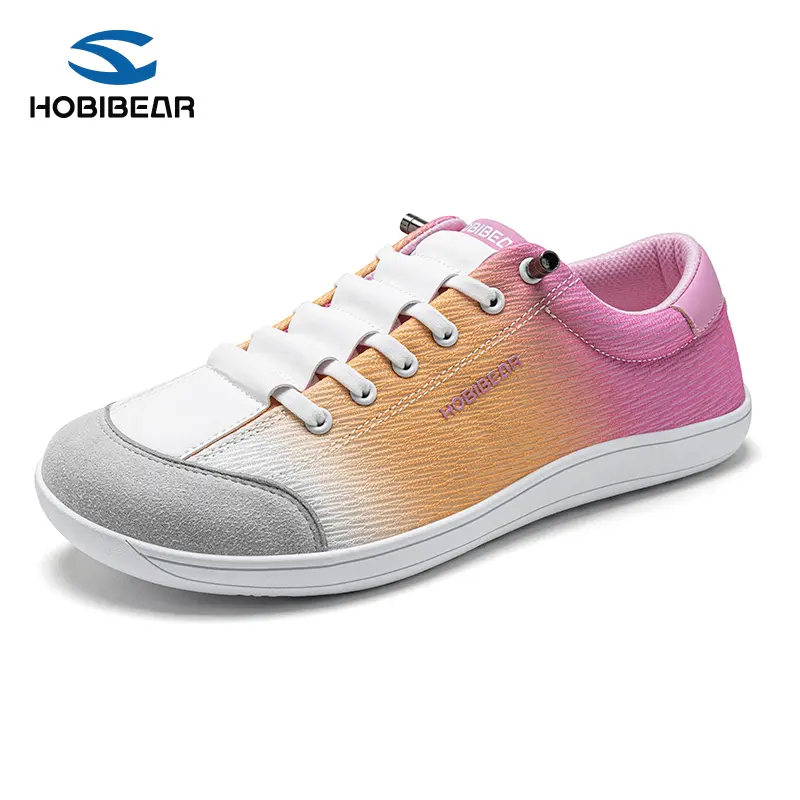
Ready to shop Hobibear? Use the link below to visit the official store.
→ Shop Hobibear — official site
Visit this site