
clothing · Articles
Safety Trainers Versus Safety Boots
Safety Trainers Versus Safety Boots
 Transact Shopping
BUSINESS · GLOBAL
Safety Trainers Versus Safety Boots
What the markings mean, when a trainer is appropriate, and fitting them
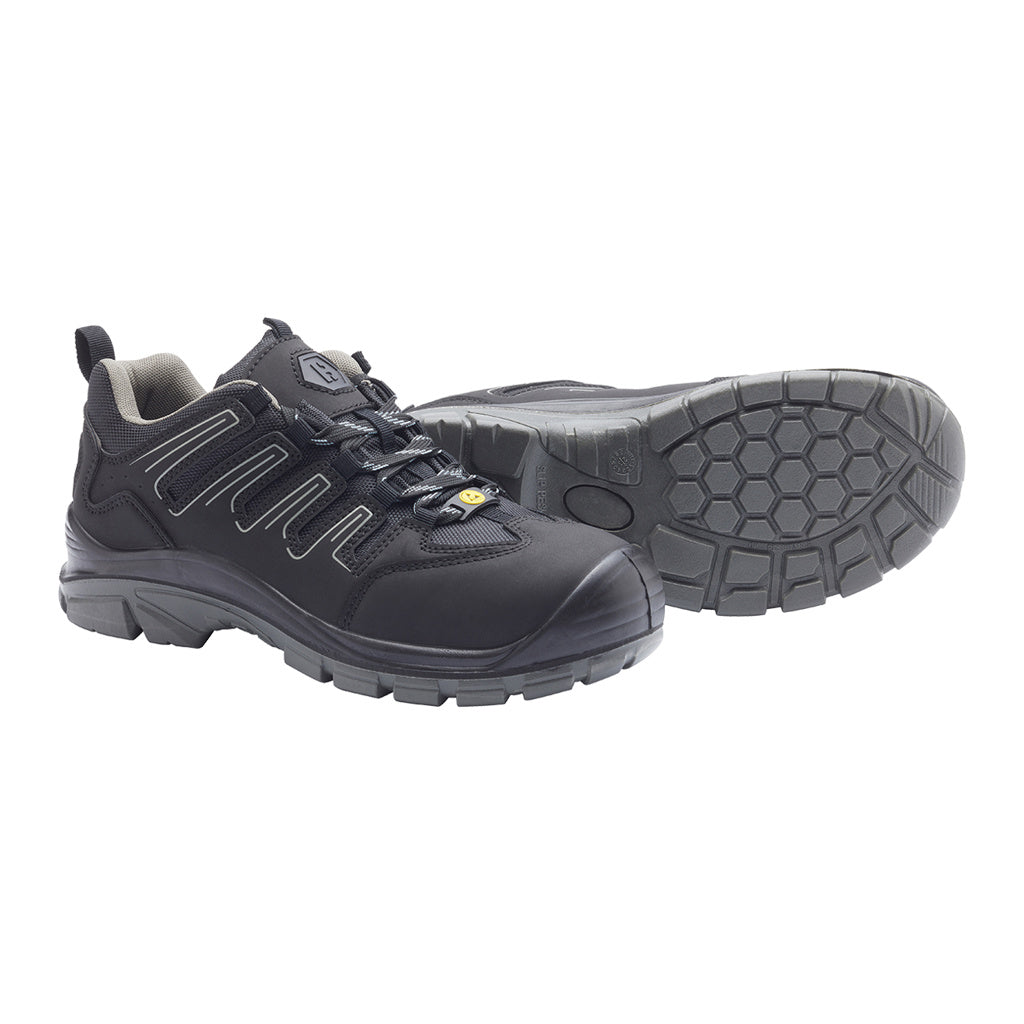
Safety trainers have become common on sites and in warehouses, and they meet the same standards as boots when properly certified. Whether they suit the job is a separate question from whether they are compliant.
The certification is the same
Safety footwear in the UK and EU is certified to EN ISO 20345 regardless of shape, requiring a toe cap resisting a 200 joule impact. A trainer without that marking is occupational footwear rather than safety footwear.
S1 adds antistatic properties and a closed heel, S1P adds midsole penetration resistance, and S3 adds water resistance and a cleated sole.
Where trainers suit
Warehousing, logistics, workshops, engineering and any role involving many miles on hard flat surfaces. They are lighter, more breathable and considerably more comfortable over a long shift.
Where boots are the right answer
Outdoor groundwork, uneven terrain, wet conditions and anywhere ankle support matters. A trainer offers no ankle protection, which is the main practical difference.
Check what your site specifies, since many require S3 rated boots regardless of preference.
Slip resistance
The SRC marking indicates testing on both ceramic and steel surfaces. For warehouse and kitchen floors this matters more than the toe cap, since slips cause more injuries than dropped objects.
Toe cap materials
Steel is strongest and heaviest and conducts cold. Composite caps are lighter, non-metallic and do not conduct temperature, which suits cold stores and anywhere metal detection is used.
Fitting
Try them at the end of the day with work socks and walk in them. Toes must not touch the cap when walking downhill, since that causes bruising and nail damage over a shift.
Socks and insoles
Wool or technical socks manage moisture far better than cotton, and dry feet are the main factor in blister prevention and in how long linings last.
Replacing the basic insole with a supportive pair transforms comfort on hard floors. Check the shoe still fits correctly with it in.
Other protective equipment
Eye protection, gloves and hearing protection each have their own standards and must suit the specific hazard. Employers must provide what a risk assessment identifies.
Fit and comfort over a shift
Try footwear at the end of the day, when feet are at their largest, and walk properly in it rather than standing still. Break new pairs in gradually rather than starting with a full shift.
Rotating two pairs lets each dry fully and extends both considerably.
Replacing them
Replace when the tread is worn smooth, the cap is exposed, or after any significant impact, since a deformed cap no longer protects.
Employers must provide required safety footwear at no cost to the worker in most jurisdictions.
WHERE TO BUY
Ready to shop GS Workwear? Use the link below to visit the official store.
→ Shop GS Workwear — official site
Visit this site