
jewellery · Articles
Understanding Watch Specifications
Understanding Watch Specifications
 Transact Shopping
ACCESSORIES · GLOBAL
Understanding Watch Specifications
Movement types, water resistance ratings, crystals and looking after one
Watch marketing uses terms precisely, and reading them correctly tells you what a watch actually is and how it should be treated. Two of them are routinely misunderstood.
Movement types
Quartz movements run on a battery, keep time to a few seconds a month and need almost nothing. Mechanical movements are powered by a wound spring and lose or gain seconds a day.
Automatic movements are mechanical and wind themselves from the motion of your wrist. They stop after a day or two of not being worn, which is normal rather than a fault.
Mechanical watches are bought for the craft rather than for accuracy. A cheap quartz keeps better time than almost any mechanical watch.
Water resistance is not what it sounds
The ratings are tested under static pressure in a laboratory, not under the conditions of swimming. 30 metres means splashes and rain only. 50 metres means brief shallow swimming.
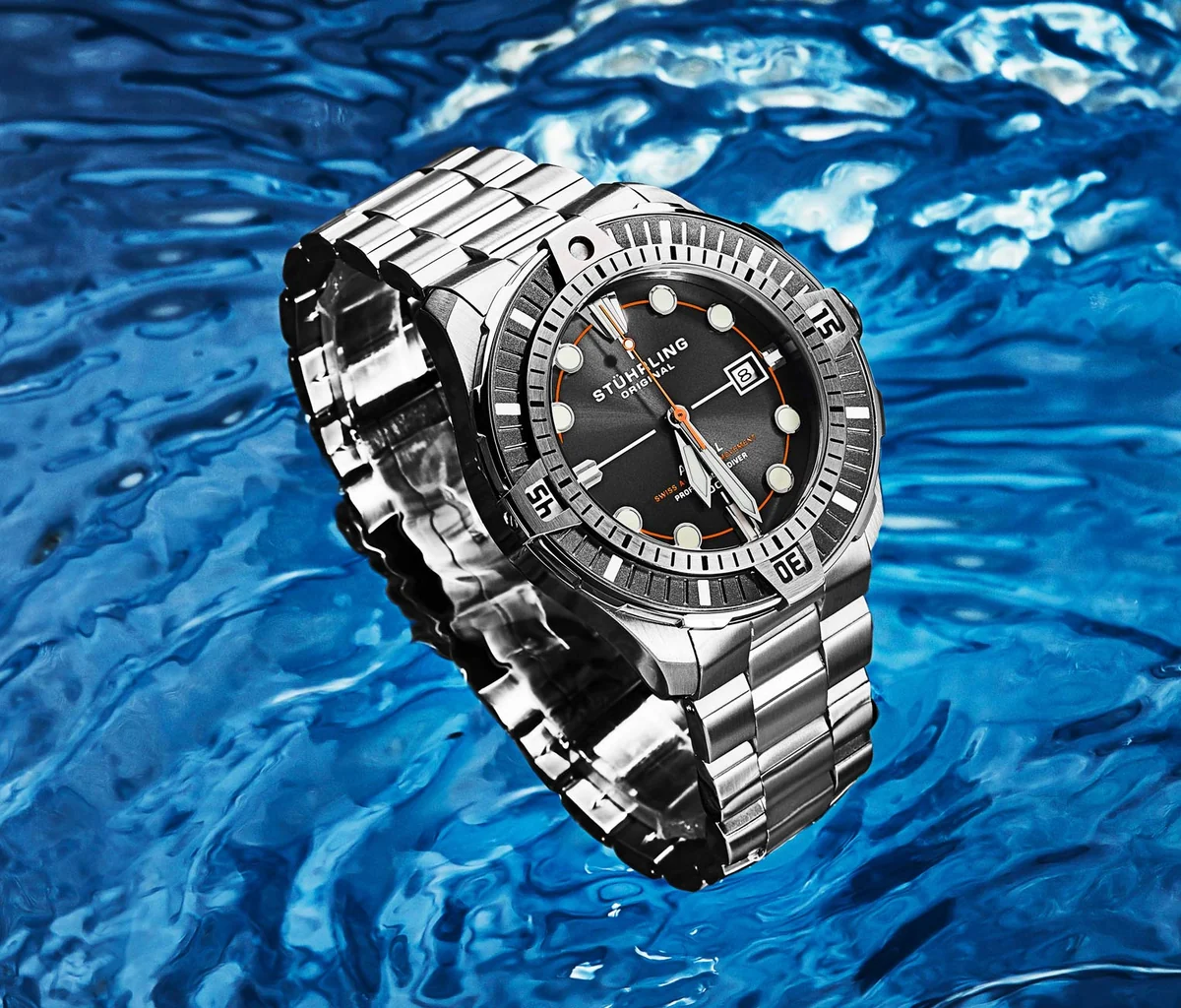
100 metres is the realistic minimum for swimming, and 200 metres and above for anything involving diving or sustained water pressure.
Never operate the crown or pushers underwater, and have the gaskets tested periodically, since seals perish with age.
Crystals
Sapphire is extremely scratch resistant and shatters more readily on impact. Mineral glass scratches more easily and resists impact better. Acrylic scratches easily and can be polished out.
Servicing
Mechanical watches need servicing every five years or so, and the cost is substantial. Quartz watches need a battery every few years, which should be fitted by someone who reseals the case properly.
Straps and sizing
A strap or bracelet should allow a finger to slide under it with the watch sitting on top of the wrist rather than rolling round. Most jewellers will remove links free at the point of purchase.
Quick-release spring bars let you change straps in seconds and completely change how a watch looks.
Buying online
Case diameter, lug-to-lug distance and thickness together determine whether a watch suits your wrist. Lug-to-lug matters most on a smaller wrist and is the figure most often omitted.
Where the money goes
At the lower end, most of the cost is the case, dial finishing and the strap rather than the movement. In-house mechanical movements, proper finishing and sapphire crystals are what raise prices at the middle.
Buy a watch you want to look at, since accuracy is not what you are paying for.
Living with one
Avoid magnets, which affect mechanical accuracy, and strong impacts. Rinse in fresh water after the sea, and keep leather straps out of water entirely.
Store away from heat and humidity, and keep the papers for anything valuable.
WHERE TO BUY
Ready to shop Stuhrling? Use the link below to visit the official store.
→ Shop Stuhrling — official site
Visit this site